CM Samrat Choudhary hails Green Energy Corridor Phase-III nod
Synopsis
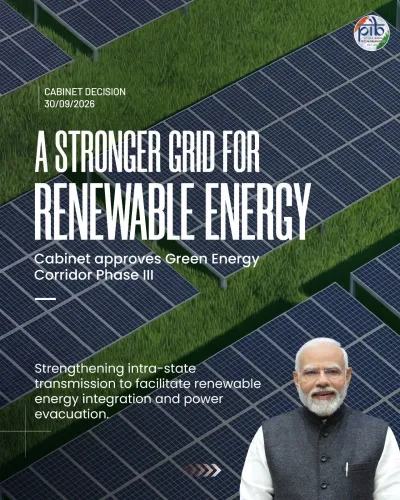
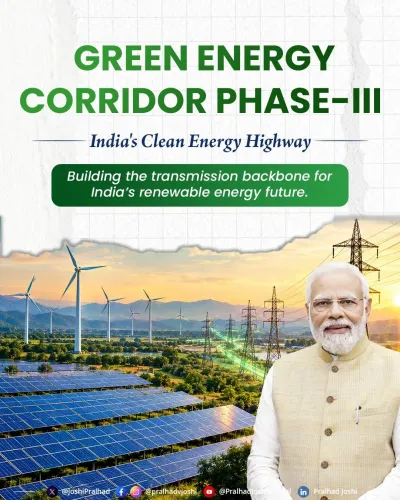
Bihar Chief Minister Samrat Choudhary has welcomed the Union Cabinet's approval of Green Energy Corridor Phase-III — a ₹1,86,405 crore scheme integrating BESS to enable 135 GW of interstate renewable power transfer by financial year 2032-33, advancing India's net-zero and Viksit Bharat goals.
Key Takeaways
The Union Cabinet approved Green Energy Corridor Phase-III , welcomed by Bihar CM Samrat Choudhary on 30 September 2026 .
The project carries a total outlay of ₹1,86,405 crore and targets completion by FY 2032-33 .
The corridor will integrate Battery Energy Storage Systems (BESS) to manage renewable intermittency at the interstate level.
Designed capacity: up to 135 GW of renewable energy transfer across states and union territories.
Phase-III builds on Green Energy Corridor Phase-I , first approved in 2015 , to bridge India's geographic gap between generation hubs and consumption centres.
The scheme supports India's targets of 500 GW non-fossil capacity by 2030 and net-zero emissions by 2070 .
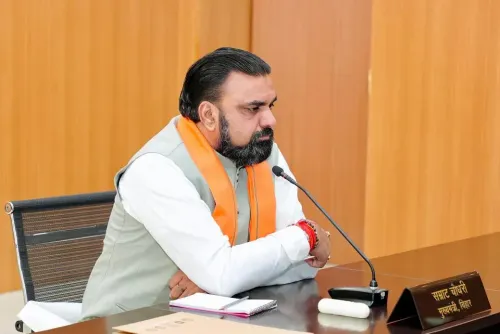
A ₹1,86,405 crore bet on clean power just cleared the Cabinet — and Bihar Chief Minister Samrat Choudhary wants every Indian to know what it means for the country's energy future. On Wednesday, 30 September 2026, Choudhary took to X to welcome the Union Cabinet's approval of Green Energy Corridor Phase-III, calling it a decisive step toward Prime Minister Narendra Modi's vision of a 'Viksit Bharat' and energy self-reliance.
Posting in Hindi, Choudhary wrote: 'हरित ऊर्जा से रोशन हो रहा नया भारत' — 'New India is being illuminated by green energy.' He described the Cabinet's decision as critical to realising the goal of energy aatmanirbharta (self-reliance), highlighting that the corridor will be equipped with Battery Energy Storage Systems (BESS) to enable the transfer of up to 135 GW of renewable power across states and union territories. The project is slated for completion by financial year 2032-33.
Why a dedicated corridor — and why BESS changes the game
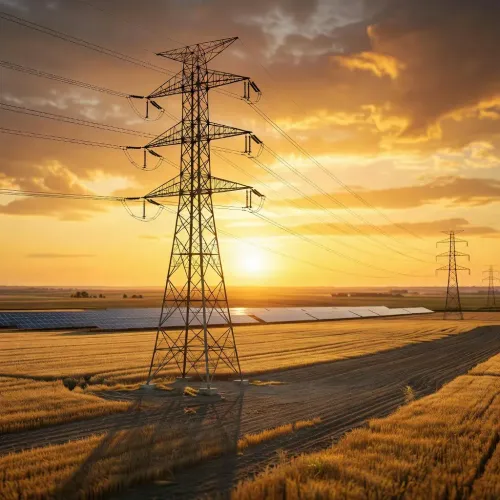
India's renewable energy paradox has always been geographic: the sun blazes hardest in Rajasthan, the wind is strongest off Gujarat's coast, but the biggest power-hungry cities sit hundreds of kilometres away. Since 2015, when Green Energy Corridor Phase-I was approved, India has been building dedicated transmission highways to bridge that gap — moving electrons from generation hubs to consumption centres without clogging the legacy grid.
Phase-III takes the architecture a step further by weaving in BESS at the interstate level. Storage is the missing piece that turns intermittent solar and wind into dispatchable, reliable power. When the sun sets or the wind drops, charged batteries can hold the grid steady — a capability that becomes non-negotiable as renewable share climbs toward 500 GW of non-fossil capacity by 2030, India's own declared target.
The ₹1,86,405 crore grid and what it must deliver by 2032-33
The project outlay — ₹1,86,405 crore — is one of the largest single infrastructure commitments in India's power sector. The corridor is designed to handle up to 135 GW of renewable transfer capacity, a number that reflects how aggressively India expects its clean-energy fleet to grow over the next decade. Getting that power from plant to plug, reliably and at scale, is precisely what Phase-III is engineered to do.
The broader policy arc connects directly to India's net-zero 2070 commitment made at COP26. Successive corridor phases are the physical spine of that pledge — without transmission muscle, even the most ambitious generation targets stall at the substation fence. State power utilities and private renewable developers are the two communities watching the detailed project reports and funding disbursement most closely.
Bihar's stake in a national green grid
Choudhary's enthusiasm is not purely rhetorical. Bihar sits among the states that stand to benefit from improved interstate transmission — a stronger national grid means more reliable, affordable power reaching eastern India, a region that has historically lagged in per-capita electricity access. For a Chief Minister anchoring his development pitch on industrial growth and jobs, a dependable power supply is foundational infrastructure, not a talking point.
The Cabinet decision also lands at a politically significant moment: with the #CabinetDecisions hashtag trending, BJP leaders across states have amplified the announcement, framing it as proof that the Modi government's energy agenda is moving from target-setting to brick-and-mortar delivery. Choudhary's post fits squarely into that coordinated narrative — but the underlying project numbers are substantial enough to stand on their own.
If the 2032-33 deadline holds and the grid performs as designed, India will have built the world's largest renewable transmission network in under a decade. The kicker: the real test is not the Cabinet approval — it is whether the detailed project reports, state-level timelines, and funding disbursements keep pace with the ambition.
Point of View
A shift that addresses the intermittency problem that has long been the Achilles heel of high-penetration renewable systems. For the BJP, the announcement is a political dividend: it allows state leaders like Choudhary to localise a national infrastructure win ahead of electoral cycles, framing a central scheme as directly relevant to their state's development. The ₹1,86,405 crore price tag, however, also raises legitimate questions about execution — India's large infrastructure projects have a mixed record on timelines and cost discipline, and the 2032-33 deadline will require sustained inter-ministerial and centre-state coordination. The real political and policy test will come not at the approval stage but when detailed project reports and disbursement schedules are published.
NationPress
30 Sept 2026
Frequently Asked Questions
What is Green Energy Corridor Phase-III?
Green Energy Corridor Phase-III is a central government scheme to build dedicated interstate transmission infrastructure — integrated with Battery Energy Storage Systems (BESS) — capable of transferring up to 135 GW of renewable energy across Indian states and union territories, at a project cost of ₹1,86,405 crore by FY 2032-33.
What is BESS and why is it included in the Green Energy Corridor?
BESS stands for Battery Energy Storage System. It stores surplus renewable electricity generated during peak production periods and releases it when generation drops, making intermittent solar and wind power dispatchable and grid-stable — essential as India scales toward 500 GW of non-fossil capacity.
Why did Bihar CM Samrat Choudhary comment on a national energy project?
As a senior BJP leader and Chief Minister of Bihar — a state that benefits from improved national grid connectivity — Choudhary welcomed the Cabinet decision as part of the party's broader effort to align state leaders with the Modi government's Viksit Bharat and energy self-reliance agenda.
How does Green Energy Corridor Phase-III connect to India's net-zero target?
India has committed to net-zero emissions by 2070 and 500 GW of non-fossil power capacity by 2030. The corridor provides the physical transmission backbone to move large volumes of renewable electricity from generation-rich states to high-consumption centres, making those targets operationally viable.
When was the first Green Energy Corridor approved?
Green Energy Corridor Phase-I was approved in 2015 to create transmission infrastructure connecting renewable energy hubs in western and southern India to the national grid. Phase-III extends and upgrades this architecture with storage integration and significantly larger capacity.