CM Samrat Choudhary Backs Rs 62,500 Cr Mobile Manufacturing Scheme
Synopsis
Bihar Chief Minister Samrat Choudhary on 15 July 2026 backed the Union Cabinet's Rs 62,500 crore Mobile Phone Manufacturing Scheme, saying it will accelerate India's rise as a global electronics hub and create jobs for youth under PM Modi's Atmanirbhar Bharat vision.
Key Takeaways
Bihar Chief Minister Samrat Choudhary publicly endorsed the Union Cabinet-approved Mobile Phone Manufacturing Scheme (MPMS) on 15 July 2026 .
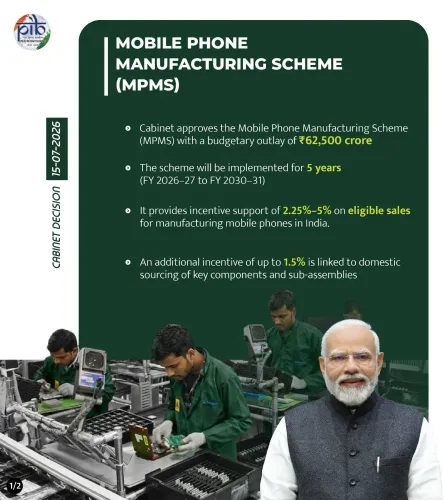
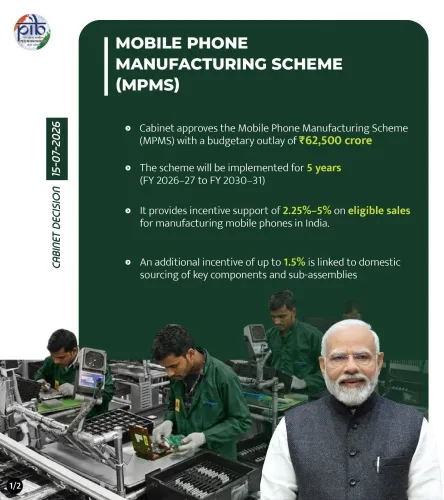
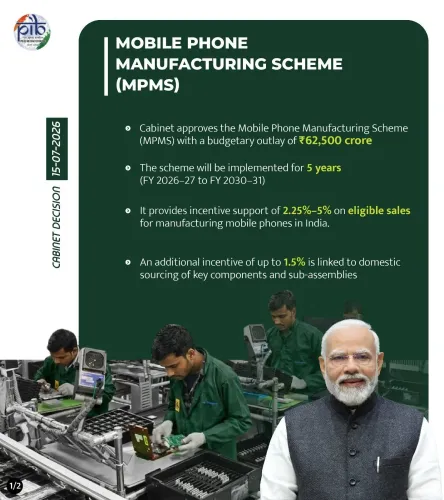
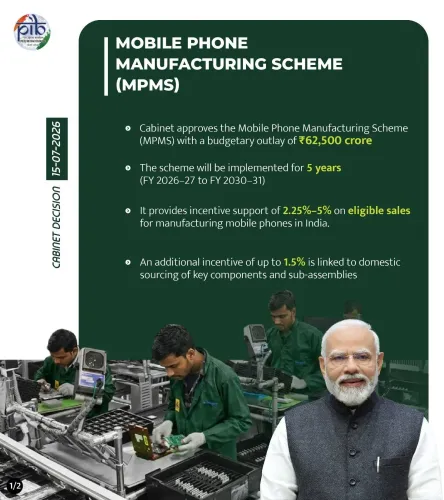
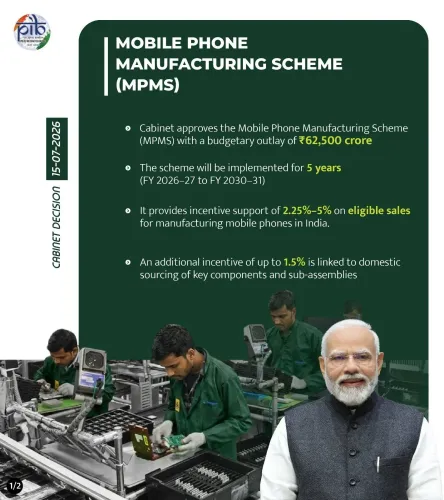
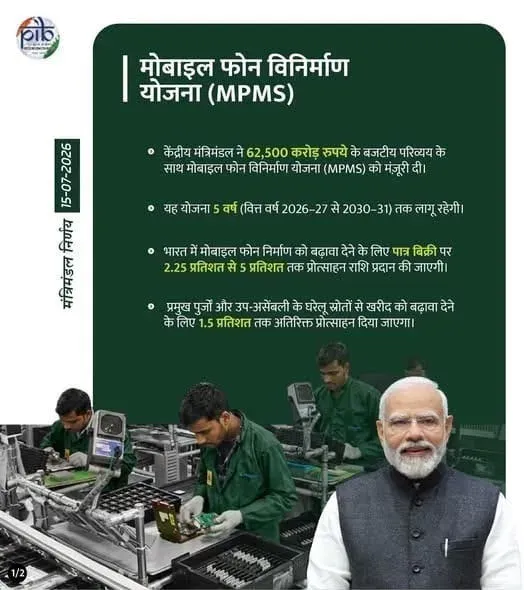
The scheme carries a fiscal outlay of Rs 62,500 crore , aimed at boosting domestic mobile phone manufacturing, exports, and employment.
Choudhary framed the scheme as an extension of PM Narendra Modi 's Atmanirbhar Bharat self-reliance agenda.
The MPMS follows the earlier PLI Scheme for mobile manufacturing, which had an outlay of Rs 40,000 crore and helped grow India's mobile exports from under $3 billion (FY20) to over $11 billion (FY24) .
Key stakeholders include electronics manufacturers, mobile exporters, and youth job-seekers, with Bihar's large youth population making the state a potential beneficiary.
Bihar Chief Minister Samrat Choudhary on Wednesday, 15 July 2026 welcomed the Union Cabinet's approval of the Mobile Phone Manufacturing Scheme (MPMS), calling the Rs 62,500 crore outlay a landmark step toward making India a global electronics manufacturing hub and generating new employment for youth.
Context
Choudhary posted on X in Hindi, stating: 'मोबाइल विनिर्माण के क्षेत्र में भारत की बढ़ती ताकत, विकसित भारत की नई पहचान' ('India's growing strength in mobile manufacturing — the new identity of a developed India'). He credited the scheme's provision of Rs 62,500 crore with giving fresh momentum to manufacturing, exports, and employment. The post was tagged #CabinetDecisions, placing it in the context of a formal Union Cabinet resolution.
The Chief Minister specifically invoked Prime Minister Narendra Modi's leadership, asserting that the 'Atmanirbhar Bharat ka sankalp' ('resolve of a self-reliant India') is 'continuously reaching new heights' under his direction.
Policy Backdrop
The MPMS builds on a series of production-linked incentive frameworks that the Union government has deployed since 2020. The original Production Linked Incentive (PLI) Scheme for mobile manufacturing and specified electronic components carried an outlay of Rs 40,000 crore and drew major global contract manufacturers — including suppliers to Apple, Samsung, and Dixon Technologies — to shift assembly operations to India from China.
Those successive incentive rounds helped lift India's mobile phone exports from under $3 billion in FY2020 to over $11 billion by FY2024. The expanded Rs 62,500 crore allocation under MPMS signals a step-up in ambition, targeting deeper component manufacturing alongside final assembly and higher export volumes.
Stakeholders and Impact
The scheme's primary beneficiaries are expected to be electronics manufacturers, mobile exporters, and youth employment seekers across India. Choudhary's endorsement is notable given Bihar's large youth demographic and the state's ongoing efforts to attract manufacturing investment as part of broader industrial development strategies.
Global and domestic electronics firms already operating under PLI frameworks stand to gain from the enhanced fiscal incentives, while new entrants may be drawn into India's supply chain ecosystem. The scheme's export orientation also positions India more directly against established electronics export economies in Southeast Asia.
What's Next
Analysts and industry observers will track quarterly mobile export figures and the pace of new investment proposals submitted under the expanded outlay. State-level implementation — including potential announcements from Bihar on industrial land allocation or skilling tie-ups — will be a key indicator of how the central scheme translates on the ground.
With India positioning itself as an alternative global electronics manufacturing destination, the MPMS's success will hinge on how quickly component localisation deepens beyond final assembly, a challenge that previous PLI rounds have only partially addressed.
Point of View
He connects state-level political capital to a Union government policy win. The move also reflects how BJP chief ministers increasingly function as amplifiers of Delhi's economic messaging, particularly on schemes that promise visible job creation. The broader arc here is India's sustained attempt to convert its PLI momentum into genuine supply-chain depth — a goal the MPMS's larger outlay is designed, but not guaranteed, to achieve.
NationPress
14 Oct 2026
Frequently Asked Questions
What is the Mobile Phone Manufacturing Scheme (MPMS)?
The Mobile Phone Manufacturing Scheme (MPMS) is a Union government incentive programme with an outlay of Rs 62,500 crore, designed to expand domestic mobile phone assembly, component manufacturing, and exports in India.
Why did Bihar CM Samrat Choudhary comment on the MPMS?
As a senior BJP leader and Bihar Chief Minister, Samrat Choudhary welcomed the Cabinet-approved scheme on X, citing its potential to boost manufacturing, exports, and youth employment under PM Modi's Atmanirbhar Bharat programme.
How does MPMS differ from the earlier PLI scheme for mobiles?
The earlier PLI Scheme for mobile manufacturing carried an outlay of Rs 40,000 crore; the MPMS represents an expanded allocation of Rs 62,500 crore, signalling greater ambition in component localisation and export targets.
What has India's mobile phone export growth looked like under PLI?
India's mobile phone exports grew from under $3 billion in FY2020 to over $11 billion by FY2024, driven largely by PLI-linked investments from global manufacturers including Apple suppliers, Samsung, and Dixon Technologies.
What is Atmanirbhar Bharat and how does MPMS relate to it?
Atmanirbhar Bharat, launched in 2020, is PM Narendra Modi's national self-reliance programme to strengthen domestic manufacturing and reduce import dependence; the MPMS is one of several schemes under this broader policy umbrella.