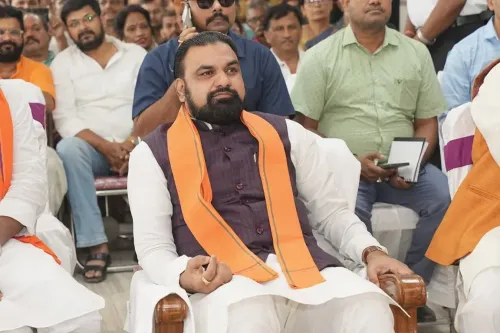
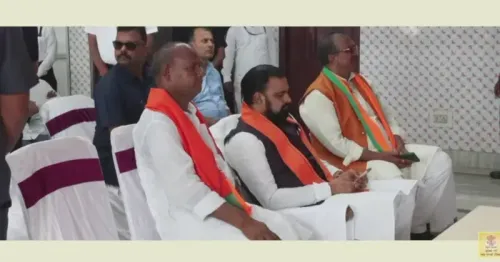
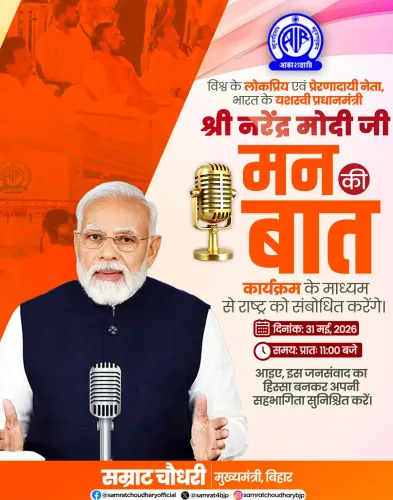
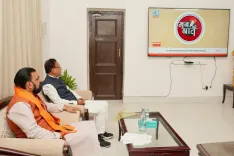
CM Samrat Choudhary marks Mann Ki Baat's 12 years
Synopsis
Bihar Chief Minister Samrat Choudhary marked 12 years of PM Narendra Modi's Mann Ki Baat on 25 October 2026, sharing a tribute that calls the All India Radio programme a dedicated channel for public participation and the inspiring stories of ordinary Indians.
Key Takeaways
Mann Ki Baat was launched by Prime Minister Narendra Modi on 3 October 2014 on All India Radio.
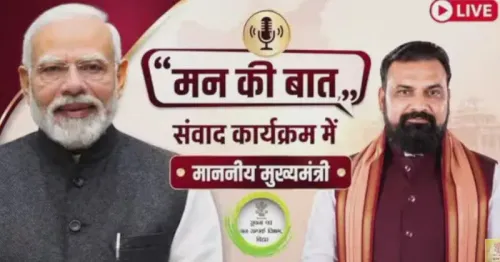
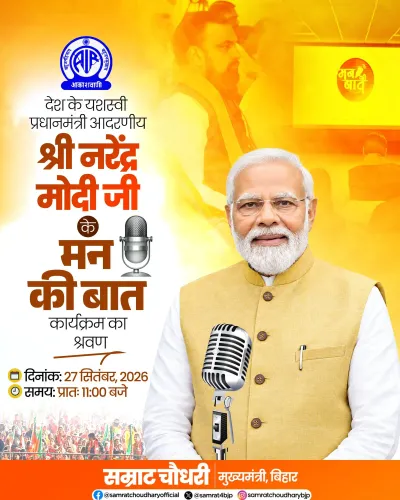
Bihar CM Samrat Choudhary marked its 12-year milestone on 25 October 2026 with a tribute post on X, sharing a video.
The programme is described as a vehicle for jan bhagidari (public participation) and highlighting selfless grassroots contributors.
All India Radio's wide network allows the show to reach audiences — especially in rural and remote areas — that digital platforms still struggle to penetrate.
State BJP leaders including Bihar's CM have periodically amplified Mann Ki Baat themes, signalling alignment with the Centre's governance narrative.
Twelve years of unscripted conversations between a Prime Minister and a billion citizens — and Bihar Chief Minister Samrat Choudhary marked the milestone on Sunday, 25 October 2026, with a tribute to the radio programme that turned grassroots stories into national headlines.
Sharing a video on X, Chief Minister Choudhary quoted Prime Minister Narendra Modi directly: 'मेरे लिए मन की बात के 12 वर्ष जनभागीदारी, जनसेवा और देशवासियों की प्रेरक कहानियों को समर्पित रहे हैं' — 'For me, the 12 years of Mann Ki Baat have been dedicated to public participation, public service, and the inspiring stories of the people of this country.' The programme, he added, has become a vehicle for bringing to light the selfless work of those toiling quietly for society and the nation, in every corner of India.
A radio programme that rewrote the PM-citizen channel
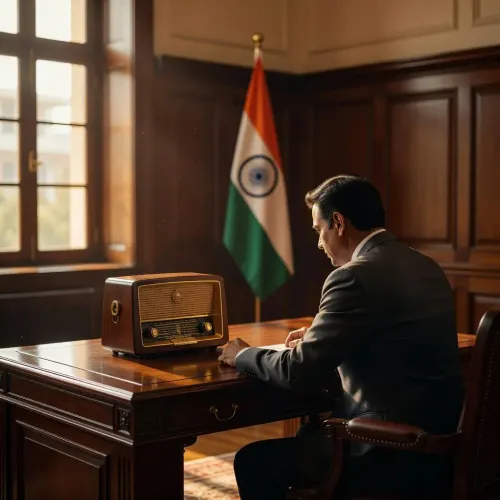
Prime Minister Modi launched Mann Ki Baat on 3 October 2014 on All India Radio as a direct, unmediated line to ordinary Indians. The format was deliberate: no anchors, no panel debates, just a Prime Ministerial voice and the stories of citizens — farmers, teachers, scientists, self-help-group members — who rarely saw themselves reflected in prime-time coverage. Over 12 years, the monthly broadcast has become one of the longest-running political communication exercises in independent India's history.
The programme's reach is structural, not incidental. All India Radio's network spans languages and terrains that television and digital platforms still struggle to penetrate — remote villages, hill districts, areas with patchy internet. That breadth is precisely why successive BJP leaders at the state level have amplified its themes: it signals alignment with the Centre while extending the message's geographic reach.
Bihar's echo of the national message
Bihar — with a population of over 120 million and deep rural penetration of radio — sits squarely in the demographic Mann Ki Baat was designed to reach. Chief Minister Choudhary's post is part of a recognisable pattern: state BJP leadership periodically echoing the programme's milestones to reinforce the jan bhagidari, or 'people's participation', framework that Modi has made central to his governance narrative.
The gesture is not merely ceremonial. In a state where local governance, welfare delivery, and public trust are live political battlegrounds, associating the state administration with a platform that celebrates unsung citizens carries its own signalling weight.
Twelve years in, the question Mann Ki Baat continues to answer is deceptively simple: whose story gets told? If the next episode is any guide, the answer remains — someone you've never heard of, doing something India needed done.
Point of View
It reflects a carefully coordinated messaging architecture that links Centre and state under a shared 'jan bhagidari' brand. Bihar, with its vast rural electorate and high radio penetration, is not a peripheral audience for this exercise — it is a core one. The programme's longevity is itself a political data point: it has outlasted multiple election cycles, signalling that the format continues to deliver perceived value to its architects.
NationPress
25 Oct 2026
Frequently Asked Questions
When was Mann Ki Baat started by PM Modi?
Mann Ki Baat was launched by Prime Minister Narendra Modi on 3 October 2014 on All India Radio as a monthly direct-address programme to Indian citizens.
What is the meaning of jan bhagidari in Mann Ki Baat?
'Jan bhagidari' means public participation. Mann Ki Baat uses the concept to highlight ordinary citizens — farmers, teachers, volunteers — who contribute selflessly to society and national development.
Why did Bihar CM Samrat Choudhary post about Mann Ki Baat?
Bihar CM Samrat Choudhary posted a tribute on X on 25 October 2026 to mark 12 years of the programme, quoting PM Modi's own words about its dedication to public service and inspiring citizen stories.
How long has Mann Ki Baat been running?
As of October 2026, Mann Ki Baat has been running for 12 years since its launch in October 2014, making it one of the longest-running direct-address political communication programmes in India.
Who is Samrat Choudhary?
Samrat Choudhary is the Chief Minister of Bihar and a senior leader of the Bharatiya Janata Party (BJP).