CM Samrat Choudhary shares Modi's words on colonial skill destruction
Synopsis
Bihar CM Samrat Choudhary shared PM Modi's remarks arguing that colonial invaders systematically destroyed India's traditional skill base, with the British dismantling indigenous craftsmanship to advance their own industry — framing the Skill India Mission as a corrective to this historical wound.
Key Takeaways
Bihar CM Samrat Choudhary shared a passage attributed to PM Narendra Modi on 21 November 2026 about colonial destruction of Indian skills.
PM Modi's quoted words argue that invaders and British colonial rulers deliberately targeted India's artisanal economy as their 'first blow' against the country.
The British are specifically cited for shipping Indian resources abroad to build their own industry while deindustrialising India's traditional craft base.
The passage identifies a lasting cultural legacy: paper-based, clerical work came to be valued over skilled trades — a mindset shift with deep economic consequences.
The Skill India Mission , launched in 2015 , is the policy response to this historical gap, targeting vocational training and workforce skill development.
Bihar , as a major source of India's migrant labour, has a direct stake in reversing the devaluation of skilled and artisanal work.
India's traditional mastery in crafts and manufacture was not lost by accident — it was systematically dismantled, first by invaders and then by British colonial policy. Bihar Chief Minister Samrat Choudhary on Saturday, 21 November 2026 shared a striking passage attributed to Prime Minister Narendra Modi that lays out this historical argument with unusual directness, calling the destruction of indigenous skill 'sabse pehli chot' — the very first blow struck against India by those who came to conquer it.
The argument: how colonisers targeted India's craft economy first
The quoted passage, shared by CM Choudhary on X, frames India's pre-colonial era as a golden age — a civilisation so prosperous it drew not just admiration but envy from the wider world. The core charge in PM Modi's words is precise: when invaders arrived, their first target was not armies or temples but skills and craftsmanship. The British, the passage continues, went a step further — they systematically hollowed out India's artisanal and manufacturing base to feed industry back home, shipping raw material and expertise outward while leaving deindustrialisation behind.
Perhaps the sharpest line in the passage is the one about paperwork: 'angrezone ke kagazi kaam ko samman ke saath dekha jane laga' — over time, clerical, paper-based work came to be seen as respectable, crowding out the dignity that once attached to skilled trades. It is a cultural diagnosis as much as an economic one.
Modi's recurring colonial-deindustrialisation argument and Skill India
This framing is not new for Prime Minister Modi, who has repeatedly drawn a direct line between British colonial economic policy and contemporary gaps in India's manufacturing and vocational base. The argument holds that the colonial period did not merely extract wealth — it also reshaped values, making white-collar credentialism the benchmark for social status while artisanal knowledge was quietly devalued.
The Skill India Mission, launched in 2015, sits at the institutional end of this narrative: a structured push to rehabilitate vocational training, re-attach prestige to trades, and equip Indian youth and traditional artisans with certified, market-relevant skills. By invoking the historical wound, BJP leaders — including CM Choudhary in sharing this post — reinforce the ideological rationale for such programmes as acts of cultural as well as economic repair.
Bihar's stake in the skills conversation
Bihar carries particular resonance in any national conversation about skilled labour. The state has historically been one of India's largest suppliers of migrant workers — a demographic reality that underscores exactly the structural gap Modi's quoted words describe: generations trained for paper-based employment pipelines, with traditional craft knowledge either lost or undervalued. For CM Choudhary, amplifying this message is both a political alignment with the BJP's national narrative and a signal of intent about where Bihar's workforce development priorities lie.
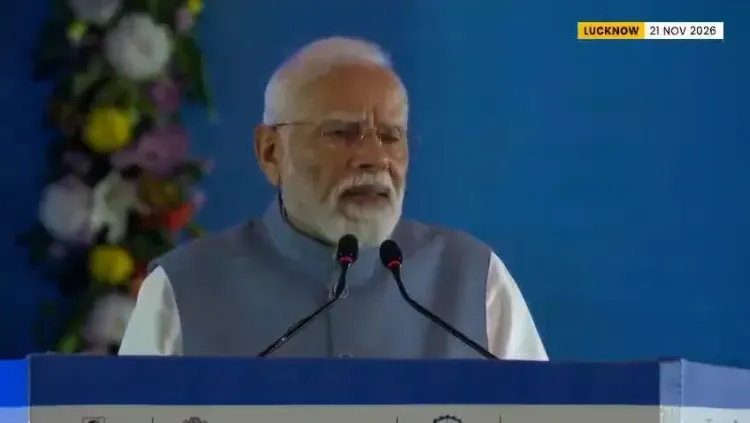
Whether the quote is drawn from a formal address, a campaign speech, or an institutional event, its circulation by the Chief Minister gives it fresh currency — placing a historical-economic argument back at the centre of the public conversation about where India's skill crisis truly began.
The colonial ledger is long. Settling it, the argument goes, starts with naming what was taken — and that naming is still political work in 2026.
Point of View
CM Samrat Choudhary is doing double political work: reinforcing the BJP's core civilisational narrative — that India's contemporary development challenges have deep historical roots in deliberate colonial extraction — while anchoring Bihar's own skills agenda to that larger ideological frame. The move is consistent with a broader BJP pattern of using historical grievance to build normative support for present-day schemes like Skill India. The sharp cultural critique embedded in the passage — that British rule made paperwork respectable and craft invisible — is a rhetorically powerful way to challenge the status hierarchies that still depress demand for vocational education in India's heartland states.
NationPress
21 Nov 2026
Frequently Asked Questions
What did PM Modi say about colonial destruction of skills in India?
PM Modi argued that when invaders arrived in India, their first target was the country's traditional skills and craftsmanship. He specifically stated that the British dismantled India's artisanal base to advance their own industry, took resources out of India, and over time made clerical, paper-based work more socially respected than skilled trades.
Why did Bihar CM Samrat Choudhary share this post about skills?
CM Samrat Choudhary shared PM Modi's remarks as part of the BJP's broader narrative linking India's skill development challenges to colonial history. Bihar, as a state with a large migrant workforce, has a direct stake in vocational training and workforce skilling policies.
What is the Skill India Mission and how does it connect to this?
The Skill India Mission was launched in 2015 to promote vocational training and address workforce skill gaps. BJP leaders frame it as a corrective to the colonial-era destruction of India's indigenous artisanal economy, aiming to restore both economic capability and social dignity to skilled trades.
What was India's economic status before colonial rule according to this narrative?
According to the passage quoted by CM Choudhary, India was in a 'golden age' before invaders arrived — so prosperous and advanced that it was both an attraction and a source of envy for the rest of the world.
How did British rule affect India's traditional industries?
According to the historical argument presented in the post, British colonial policy deliberately destroyed India's indigenous skill and manufacturing base, extracted resources and expertise to build British industry, and left behind a cultural legacy that devalued artisanal work in favour of clerical employment.