CM Samrat Choudhary links Gandhi's swadeshi call to Modi's Atmanirbhar Bharat
Synopsis
Bihar Chief Minister Samrat Choudhary invoked Mahatma Gandhi's 1930 swadeshi call to amplify PM Modi's Atmanirbhar Bharat message, urging Indians to carry the self-reliance vision into every home — framing contemporary economic nationalism as a continuation of the freedom struggle.
Key Takeaways
Bihar CM Samrat Choudhary shared PM Modi's words on 19 November 2026 connecting Gandhi's 1930 swadeshi appeal to present-day Atmanirbhar Bharat.
Mahatma Gandhi 's swadeshi campaign in the 1920s–30s promoted boycott of foreign goods and economic self-sufficiency as a tool of the independence movement.
PM Narendra Modi launched Atmanirbhar Bharat Abhiyan in May 2020 on five pillars: economy, infrastructure, system, demography, and demand.
The BJP regularly links Gandhi's swadeshi legacy to current production-linked incentive and import substitution policies to build cross-partisan public support.
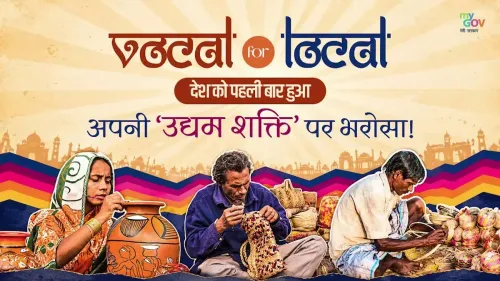
CM Choudhary called on citizens to take the self-reliance message 'to every home' — घर-घर में पहुंचाओ — signalling a grassroots outreach push.
Further expansion of production-linked incentives and new self-reliance targets are expected in the upcoming Union Budget .
Nearly a century after Mahatma Gandhi rallied India around the idea of swadeshi self-sufficiency, Bihar Chief Minister Samrat Choudhary is drawing a direct line from that 1930s call to Prime Minister Narendra Modi's modern Atmanirbhar Bharat mission — and asking every household to carry the message forward.
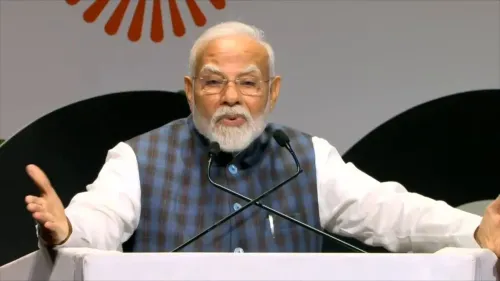
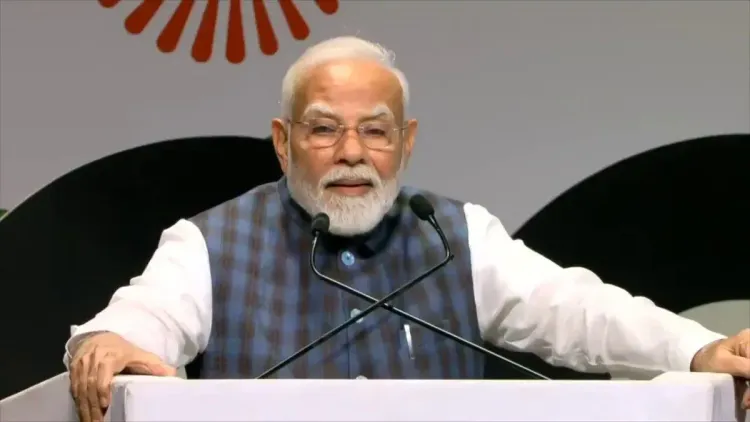
Sharing what he described as PM Modi's own words, CM Choudhary posted on Thursday, 19 November 2026: 'सोचिए, 100 साल हो गए...' ('Think about it — 100 years have passed... but in 1930 Gandhi left with this very message, and today, so many years later, I too have to say the same thing. Don't take my word for it — take Gandhi's. He also left behind the call for swadeshi and self-reliant India. Take this message to every home.')
Gandhi's 1930 swadeshi movement and its modern echo
Gandhi's swadeshi campaign was not mere symbolism. During the 1920s and 1930s, it meant boycotting foreign cloth, spinning khadi, and building village economies from the ground up — a disciplined economic insurgency wrapped inside a moral argument. The core idea: a nation that makes what it needs cannot be colonised by what it consumes. That argument, the post suggests, has lost none of its force.
PM Modi launched Atmanirbhar Bharat Abhiyan in May 2020, anchoring it on five pillars — economy, infrastructure, system, vibrant demography, and demand. The programme combined production-linked incentive schemes, import substitution targets, and a push to make India a global manufacturing hub. The rhetorical architecture was deliberate: self-reliance as patriotic duty, not just industrial policy.
BJP's established playbook — and why it resonates in Bihar
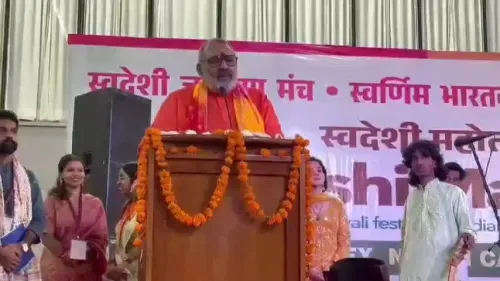
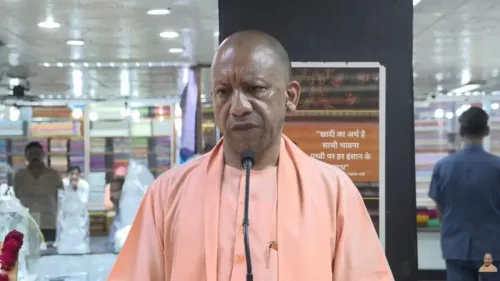
The linkage between Gandhi's swadeshi and Modi's self-reliance agenda is not new, but it is consistent. The BJP has regularly deployed this historical framing to build a broad coalition — from rural artisans who recognise the khadi legacy to urban manufacturers who benefit from production-linked incentives. By invoking Gandhi specifically, the message reaches beyond the party's base.
Bihar, with its large labour force and significant dependence on migrant employment, has a direct stake in domestic manufacturing growth. Every factory that opens inside India is a potential job that does not require a Bihari worker to leave home. CM Choudhary's amplification of the message carries that sub-text even if it is not stated explicitly.
The appeal to carry the message 'to every home' — घर-घर में पहुंचाओ — signals a grassroots mobilisation intent, turning a policy narrative into a people's campaign in the Gandhi mould itself.
With the next Union Budget on the horizon and production-linked incentive schemes due for review, the political drumbeat for self-reliance is only going to get louder. Gandhi's 1930 message, it turns out, has been given a 2026 deadline.
Point of View
Bihar CM Samrat Choudhary is doing more than amplifying a policy line — he is weaving economic nationalism into a moral and historical continuum that is difficult to oppose without seeming to oppose Gandhi himself. This rhetorical strategy has been a consistent feature of the BJP's communication architecture since Atmanirbhar Bharat's 2020 launch. The 'carry it to every home' appeal transforms a top-down policy message into a participatory movement, echoing the volunteer-driven spread of the original swadeshi campaign. As production-linked incentives come up for Budget review, this groundwork of popular legitimacy matters enormously for sustaining political will behind import substitution.
NationPress
19 Nov 2026
Frequently Asked Questions
What is Atmanirbhar Bharat Abhiyan?
Atmanirbhar Bharat Abhiyan is a self-reliance economic programme launched by PM Narendra Modi in May 2020, built on five pillars — economy, infrastructure, system, vibrant demography, and demand — aiming to boost domestic manufacturing and reduce import dependence.
What was Gandhi's swadeshi movement?
Mahatma Gandhi's swadeshi movement in the 1920s and 1930s called for boycotting foreign-made goods, promoting khadi and village industries, and building India's economic self-sufficiency as a cornerstone of the independence struggle.
What did Bihar CM Samrat Choudhary post about Gandhi and Modi?
On 19 November 2026, CM Samrat Choudhary shared a quote attributed to PM Modi drawing a parallel between Gandhi's 1930 swadeshi call and the current Atmanirbhar Bharat mission, urging citizens to spread the self-reliance message to every household.
Why does the BJP connect Gandhi's swadeshi to Atmanirbhar Bharat?
The BJP frames Atmanirbhar Bharat as a continuation of Gandhi's economic nationalism to build broad public support, presenting import substitution and production-linked incentives as a patriotic legacy rather than purely partisan policy.
What are production-linked incentive schemes in India?
Production-linked incentive (PLI) schemes offer manufacturers financial incentives tied to incremental production output in sectors like electronics, pharmaceuticals, and textiles, forming a central plank of India's self-reliance industrial strategy.