CM Conrad Sangma Inaugurates B.B. Lyngdoh Memorial Hall in Laitlyngkot
Synopsis
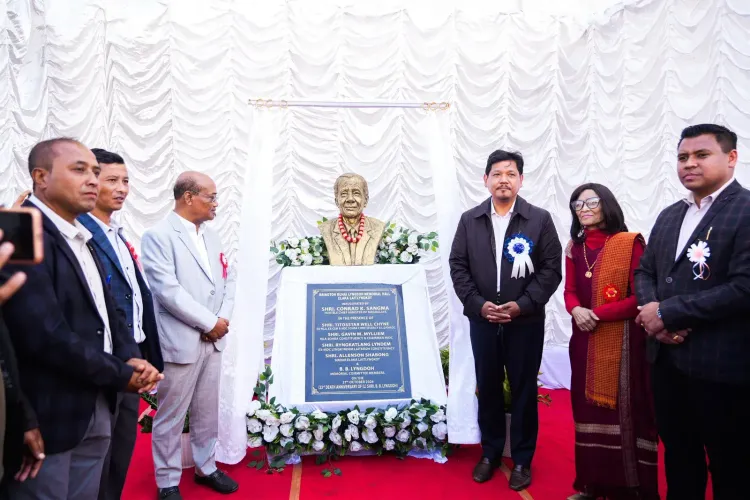
Meghalaya CM Conrad Sangma inaugurated the Brington Buhai Lyngdoh Memorial Hall at Laitlyngkot on the 23rd death anniversary of the former Chief Minister, honouring the man credited as the Father of Coalition Politics and a key figure in the state's 1972 statehood movement.
Key Takeaways
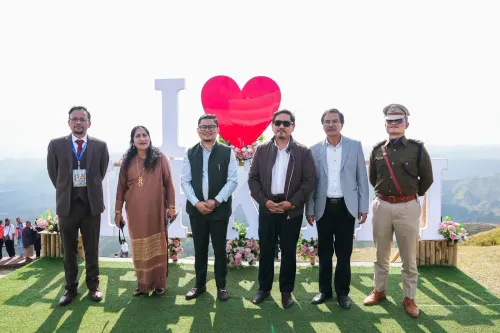
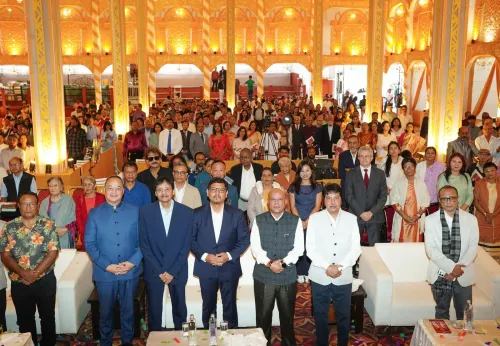
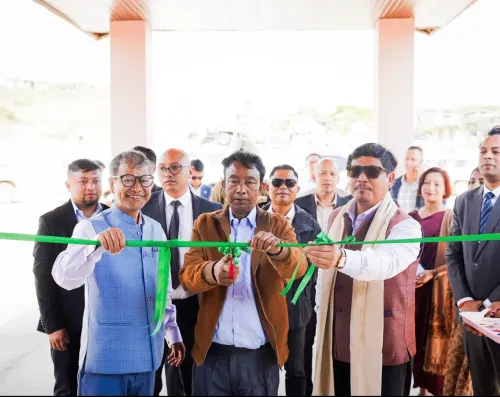
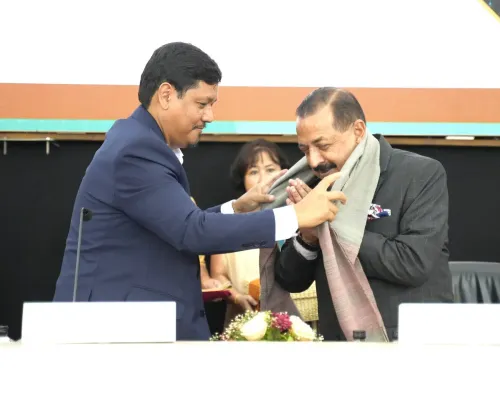
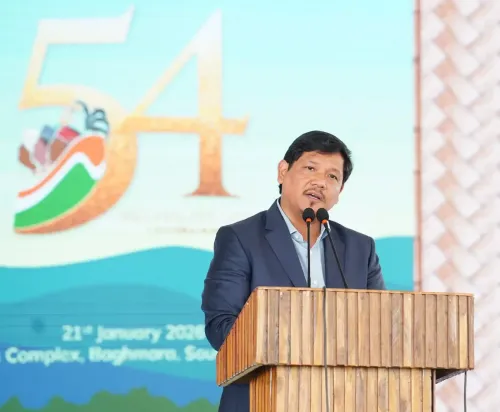
Meghalaya CM Conrad Sangma inaugurated the Brington Buhai Lyngdoh Memorial Hall at Laitlyngkot , Meghalaya, on 27 October 2026 .
The inauguration coincided with the 23rd death anniversary of former Chief Minister B.
Lyngdoh is widely remembered as the 'Father of Coalition Politics' for stabilising multi-party governance in Meghalaya.
He was an active participant in the Meghalaya statehood movement , which resulted in full statehood on 21 January 1972 .
Laitlyngkot is Lyngdoh's birthplace, making the site choice a deliberate act of geographic and historical grounding.
Sangma framed the memorial as a resource for future generations to draw inspiration from Lyngdoh's vision.
On the 23rd death anniversary of one of Meghalaya's most consequential statesmen, Meghalaya Chief Minister Conrad Sangma travelled to Laitlyngkot — the birthplace of former Chief Minister Brington Buhai Lyngdoh — to inaugurate a memorial hall bearing his name, ensuring the man known as the 'Father of Coalition Politics' is not reduced to a footnote in the state's official memory.
Sangma, who also serves as national president of the National People's Party, described the occasion as 'particularly meaningful,' noting that the hall was being dedicated on the very anniversary of Lyngdoh's passing. 'From the Statehood movement to institution-building and ensuring political stability,' Sangma said, 'his leadership has left an enduring mark on our state.'
From Statehood Struggle to the Halls of Coalition Arithmetic
B. B. Lyngdoh was a central figure in the movement that culminated in Meghalaya's full statehood on 21 January 1972 — a hard-won transition from a sub-state within Assam to a full-fledged state of the Indian Union. But it was what came after statehood that cemented his singular reputation. In a state defined by a mosaic of tribal communities, regional identities, and competing interests, Lyngdoh became the architect of a working coalition culture — threading together disparate political forces into functional governments rather than letting fragmentation paralyse governance. That instinct earned him the title 'Father of Coalition Politics,' a moniker that carries real descriptive weight in Meghalaya's political history.Why Laitlyngkot, Why Now
The choice of Laitlyngkot as the site for the memorial hall is itself a statement. By anchoring the tribute in the village that produced Lyngdoh, the state government roots the commemoration in lived geography rather than a distant capital building. Memorial inaugurations on death anniversaries are a well-established practice in Indian state politics — a way for sitting administrations to connect themselves to a state's foundational generation and to signal continuity of purpose. For Sangma, invoking Lyngdoh's coalition legacy carries a particular resonance: Meghalaya's politics today remains a coalition affair, and the current administration governs through exactly the kind of multi-party arrangement Lyngdoh spent his career perfecting.A Legacy the Next Generation Is Asked to Carry
Sangma framed the inauguration not merely as a backward-looking tribute but as a forward charge, saying the hall should ensure 'future generations continue to draw inspiration from his vision and leadership.' That language of intergenerational transmission — turning a political biography into civic curriculum — is precisely what memorial infrastructure is designed to do. Whether the Brington Buhai Lyngdoh Memorial Hall becomes a living centre of civic engagement or a ceremonial landmark will depend on the programming and political will the state channels into it long after the inauguration day photographs have faded. The 'Father of Coalition Politics' now has a permanent address in the hills of Meghalaya. The harder work is making sure his lesson travels beyond the walls.Point of View
Himself the steward of a coalition administration, invokes the original coalition architect to signal ideological continuity. It also reflects a broader Northeastern Indian pattern where regional governments invest in founder-generation memorials to consolidate a distinct state identity separate from pan-national narratives. The timing on a death anniversary amplifies the emotional register without requiring new policy announcements. What will ultimately matter is whether the hall becomes an active civic institution or a photo-opportunity that fades once the anniversary cycle moves on.
NationPress
27 Oct 2026
Frequently Asked Questions
Who was B. B. Lyngdoh?
Brington Buhai Lyngdoh was a former Chief Minister of Meghalaya who played a key role in the state's statehood movement and is known as the 'Father of Coalition Politics' for his work in building stable multi-party governments in the state.
Where is the Brington Buhai Lyngdoh Memorial Hall located?
The memorial hall is located at Laitlyngkot , a village in Meghalaya and the birthplace of B. B. Lyngdoh.
Why is B. B. Lyngdoh called the Father of Coalition Politics?
B. B. Lyngdoh earned the title because he was instrumental in forging and sustaining coalition arrangements among regional parties in Meghalaya, ensuring political stability in a state marked by diverse tribal communities and competing interests.
When did Meghalaya become a full state?
Meghalaya attained full statehood on 21 January 1972 , following a sustained statehood movement in which B. B. Lyngdoh was an active participant.
Who inaugurated the B. B. Lyngdoh Memorial Hall?
Meghalaya Chief Minister Conrad Sangma , who also serves as national president of the National People's Party , inaugurated the Brington Buhai Lyngdoh Memorial Hall on 27 October 2026 .