CM Conrad Sangma lays foundation for DIET Nongstoin CoE

Synopsis
Meghalaya Chief Minister Conrad Sangma laid the foundation stone for DIET Nongstoin as a Centre of Excellence on October 15, 2026, under the Ministry of Education's second-phase DIETs of Excellence programme for 2025–26, aiming to strengthen teacher training across three Khasi Hills districts.
Key Takeaways
DIET Nongstoin was selected under the second phase of the Ministry of Education's DIETs of Excellence programme for 2025–26 .
The Centre of Excellence will serve educators across West Khasi Hills, Eastern West Khasi Hills and South West Khasi Hills .
Key functions will include in-service training, mentoring, curriculum development, research and innovation .
The initiative aligns with NEP 2020 's mandate to modernise District Institutes of Education and Training nationwide.
DIETs have existed since the National Policy on Education 1986 ; the CoE upgrade represents a significant quality enhancement for a four-decade-old institution.
CM Conrad Sangma tagged Union Minister Pralhad Joshi in the announcement, signalling central-state coordination on the project.
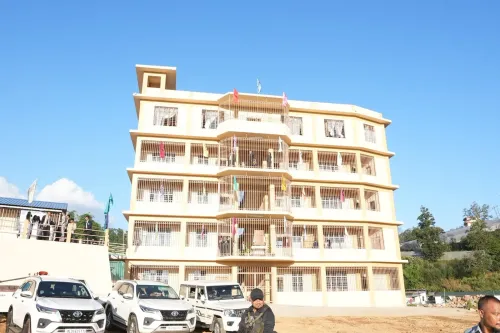
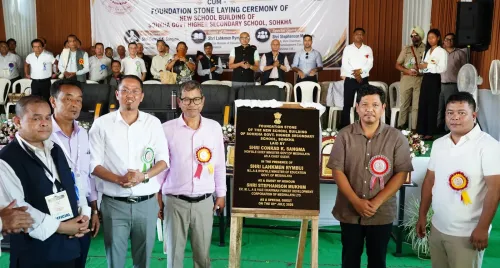
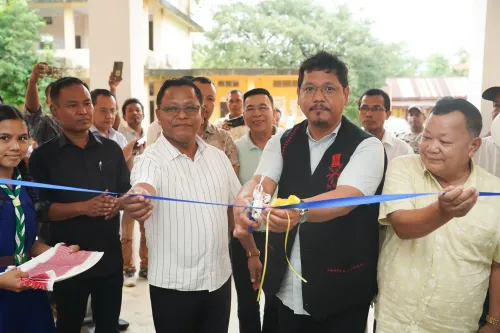
A foundation stone laid in Nongstoin on Thursday, October 15, 2026 signals a concrete step in upgrading teacher education across three Khasi Hills districts — as Meghalaya Chief Minister Conrad Sangma inaugurated the groundwork for the District Institute of Education and Training (DIET) Nongstoin as a Centre of Excellence.
DIET Nongstoin's selection under phase two of the national programme
The institution was selected under the second phase of the Ministry of Education's DIETs of Excellence programme for 2025–26, a national initiative designed to lift District Institutes of Education and Training from functional training units to high-impact hubs of pedagogy and research. CM Sangma, who tagged Union Minister Pralhad Joshi in his post, described the upgrade as one that 'will strengthen teacher training, curriculum development, research and innovation.'
The DIETs of Excellence scheme sits squarely within the implementation architecture of the National Education Policy 2020, which explicitly calls for modernising teacher education institutions at the district level. DIETs themselves date back to the National Policy on Education 1986 — meaning the infrastructure has existed for four decades, but the quality upgrade is a distinctly 21st-century push.
Three Khasi Hills districts and the teachers they depend on
Geography matters here. DIET Nongstoin is the anchor institution for educators across West Khasi Hills, Eastern West Khasi Hills and South West Khasi Hills — a wide, hilly tract where reaching a training centre is no small logistical feat for a classroom teacher. The upgraded Centre of Excellence will provide in-service training, mentoring and teaching resources, targeting the practical gap between a teacher's initial qualification and the evolving demands of the classroom.
In-service support — upgrading skills of teachers already working in schools — is widely recognised as one of the highest-leverage interventions for learning outcomes in underserved regions. Making that support locally anchored, rather than requiring travel to a distant state capital, materially increases the likelihood that teachers actually access it.
NEP 2020's district-level bet on teacher quality
The central government's phased approach to DIET upgrades reflects a deliberate sequencing: identify institutions with reach, inject research and curriculum capacity, and use them as multipliers across entire districts. The second phase for 2025–26 extends that strategy to newer geographies, with Meghalaya now formally in the fold.
For a state like Meghalaya — where dispersed hill communities, tribal governance structures and multilingual classrooms create distinct pedagogical challenges — having a district-level CoE rather than relying solely on state-level resources could meaningfully shift how quickly and consistently teacher quality improves on the ground.
The foundation has been laid. What gets built on top of it — and how fast it reaches the teachers waiting in classrooms across the Khasi Hills — is the real test that begins now.
Point of View
District-anchored teacher support carries outsized value that state-capital institutions alone cannot replicate. CM Sangma's public tagging of Union Minister Pralhad Joshi underlines the centre-state co-ownership that NEP 2020 implementation increasingly demands — political visibility for both sides, programmatic accountability for neither yet. The real measure will arrive when in-service training numbers and learning outcome data from the three Khasi Hills districts are independently assessed in the years ahead.
NationPress
15 Oct 2026
Frequently Asked Questions
What is DIET Nongstoin and why was a foundation stone laid there?
DIET Nongstoin is the District Institute of Education and Training serving West Khasi Hills, Eastern West Khasi Hills and South West Khasi Hills in Meghalaya. On October 15, 2026, Meghalaya CM Conrad Sangma laid its foundation as a Centre of Excellence after it was selected under the second phase of the Ministry of Education's DIETs of Excellence programme for 2025–26.
What is the DIETs of Excellence programme?
The DIETs of Excellence programme is a Ministry of Education initiative that upgrades selected District Institutes of Education and Training across India into high-quality centres focused on teacher training, curriculum development, research and innovation, in line with the National Education Policy 2020.
Which districts will benefit from DIET Nongstoin becoming a Centre of Excellence?
Three districts in Meghalaya's Khasi Hills region will benefit: West Khasi Hills, Eastern West Khasi Hills and South West Khasi Hills. The upgraded DIET will provide in-service training, mentoring and teaching resources to educators across all three districts.
How does the DIET upgrade connect to NEP 2020?
The National Education Policy 2020 explicitly calls for strengthening and modernising District Institutes of Education and Training. The DIETs of Excellence programme is one of the key implementation vehicles for that mandate, upgrading DIETs in phases to raise teacher quality at the district level.
Who is Pralhad Joshi and why was he tagged in Conrad Sangma's post?
Pralhad Joshi is a Union minister who was tagged by CM Conrad Sangma in the announcement, indicating central government involvement and coordination in the DIET Nongstoin Centre of Excellence project.