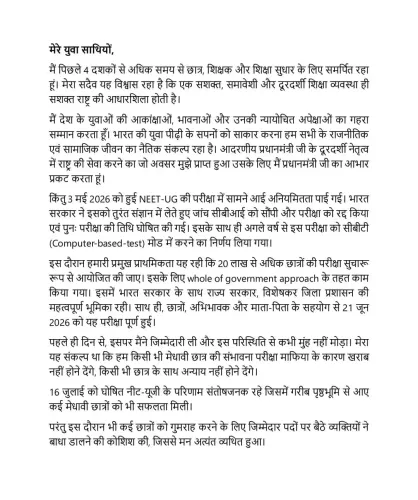
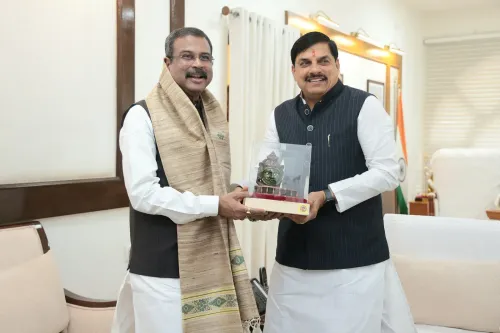
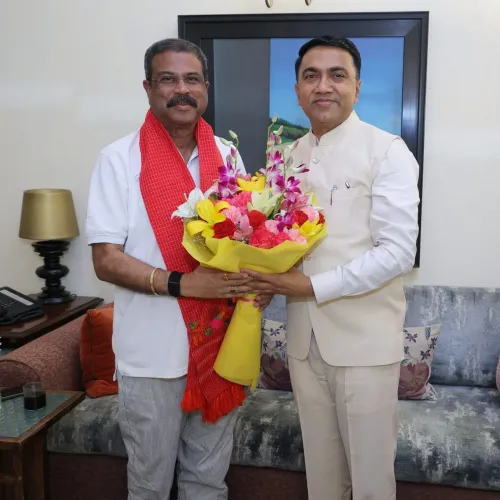
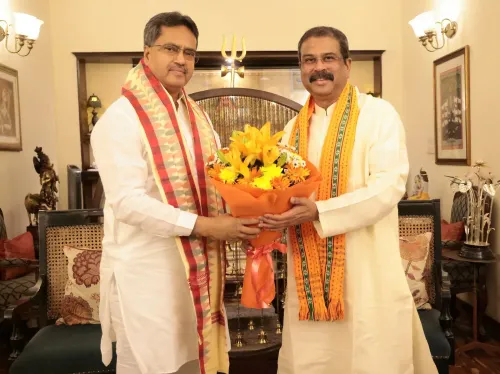
Pradhan, Meghalaya CM Discuss NEP2020 and Skills Push
Synopsis
Union Education Minister Dharmendra Pradhan and Meghalaya Chief Minister Conrad Sangma held discussions on NEP2020 implementation, mother-tongue instruction in Khasi and Garo, skills integration, and the role of AI in shaping a future-ready generation for Viksit Bharat 2047.
Key Takeaways
Dharmendra Pradhan and Meghalaya CM Conrad Sangma met on 25 May 2026 to discuss the state's education reforms under NEP2020 .
Discussions covered integration of skills, sports, physical education, horticulture, and local livelihoods into the school curriculum.
Meghalaya is strengthening mother-tongue instruction in Khasi and Garo , in line with NEP2020 's mandate for mother-tongue education up to Grade 5 .
The two leaders discussed expanding Artificial Intelligence and computational thinking within the learning ecosystem to align education with youth aspirations.
The initiatives were framed as contributing to the Viksit Bharat 2047 vision of building a skilled and empowered generation.
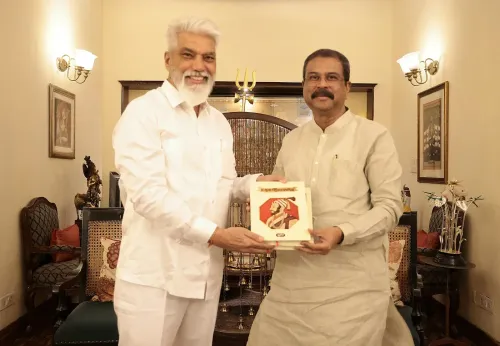
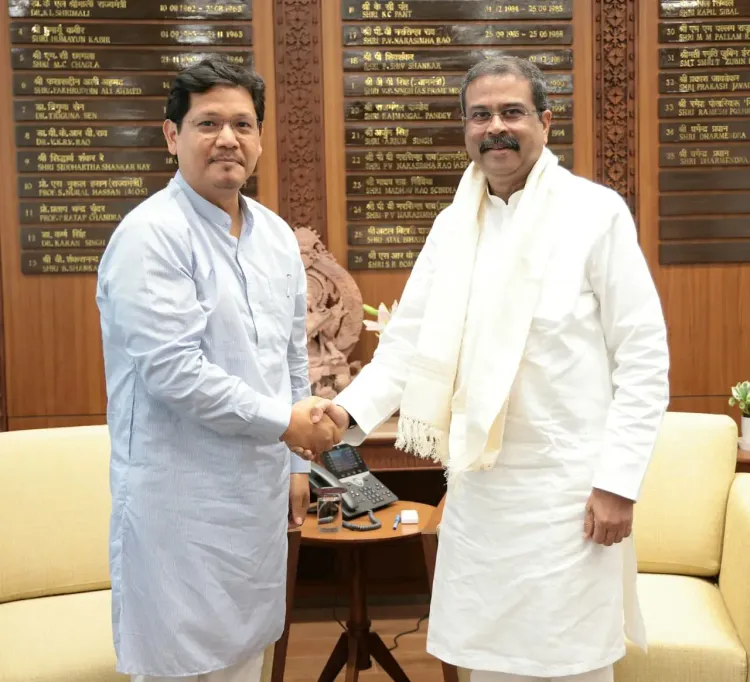
Union Education Minister Dharmendra Pradhan met with Meghalaya Chief Minister Conrad Sangma on Monday, 25 May 2026, for a discussion on the state's evolving education landscape, covering the rollout of the National Education Policy 2020 (NEP2020), mother-tongue instruction in Khasi and Garo, and the integration of skills, sports, and emerging technologies into formal schooling.
Context
Pradhan described the exchange as an 'engaging' one, noting that the two leaders discussed Meghalaya's efforts to weave skills, sports, physical education, horticulture, and local livelihood opportunities into its learning ecosystem. He highlighted the state's emphasis on strengthening instruction in Khasi and Garo as reflecting a 'holistic and culturally rooted approach to education.' The meeting underscores the Centre's ongoing engagement with northeastern states on NEP2020 implementation.
Policy Backdrop
NEP2020, approved in July 2020, replaced India's 1986 National Education Policy and mandated mother-tongue instruction up to Grade 5, alongside a shift toward multidisciplinary and vocational learning. The policy also opened the door for integrating emerging subjects such as Artificial Intelligence and computational thinking at the school level. The Skill India Mission, launched in 2015, had earlier sought to embed vocational training within formal schooling — a thread that NEP2020 carried forward and deepened.
Meghalaya, a northeastern state with significant Khasi and Garo tribal populations, has been among the states prioritising culturally rooted curricula. Its focus on horticulture and local livelihoods as part of the school curriculum reflects both the state's agrarian character and the flexibility NEP2020 grants to states in designing contextually relevant programmes.
Stakeholders and Impact
The primary beneficiaries of these reforms are students across Meghalaya and, more broadly, youth in northeastern India who stand to gain from an education system aligned with local languages, livelihoods, and emerging technology skills. Pradhan noted that a greater focus on Artificial Intelligence and computational thinking, blended with traditional knowledge and skills, 'can further expand opportunities for the youth and align education with their aspirations.'
Conrad Sangma, who has led Meghalaya since 2018 as the head of the National People's Party, has been steering the state's education reforms within the broader national framework. His engagement with the Union Education Minister signals continued coordination between the state government and the Centre on NEP2020 targets.
What's Next
Pradhan framed such 'future-ready and inclusive initiatives' as a 'strong pillar in building a skilled, confident and empowered generation' for Viksit Bharat 2047 — the government's vision for India to achieve developed-nation status by the centenary of Independence. Progress on NEP2020 implementation in northeastern states, including any state-specific action plans or funding allocations, is expected to feature in upcoming parliamentary discussions and budget deliberations on education in the region.
Point of View
An NDA ally — illustrates the Centre's strategy of using cooperative federalism to advance NEP2020 across ideologically diverse state governments. The emphasis on Khasi and Garo mother-tongue instruction is politically astute in a state where tribal identity is central to governance. Folding in AI and computational thinking alongside horticulture and local livelihoods signals an attempt to bridge the aspirational gap between northeastern youth and the national skills economy. Taken together, this positions the Education Ministry's northeastern outreach as both a policy imperative and a soft-power exercise ahead of the Viksit Bharat 2047 narrative.
NationPress
13 Oct 2026
Frequently Asked Questions
What did Dharmendra Pradhan and Conrad Sangma discuss about education?
They discussed the implementation of NEP2020 in Meghalaya , including mother-tongue instruction in Khasi and Garo , integration of skills, sports, horticulture, and local livelihoods into schooling, and the potential of Artificial Intelligence and computational thinking for youth.
What is NEP2020 and how does it apply to Meghalaya?
NEP2020 , approved in July 2020 , is India's comprehensive education reform that mandates mother-tongue instruction up to Grade 5 and promotes vocational and multidisciplinary learning. Meghalaya is applying it with a focus on Khasi and Garo languages and locally relevant skills such as horticulture.
What is Viksit Bharat 2047?
Viksit Bharat 2047 is the Indian government's vision to make India a developed nation by 2047 , the centenary of Independence. Education and skilling reforms are considered key pillars of this goal.
Why is mother-tongue education important in Meghalaya?
Meghalaya has significant Khasi and Garo tribal populations whose primary languages are not Hindi or English. Instruction in these languages is seen as improving learning outcomes and preserving cultural identity, consistent with NEP2020 's culturally rooted approach.
What role does AI play in the new education framework discussed?
Artificial Intelligence and computational thinking are being considered as emerging areas to be integrated into school curricula, with the aim of expanding opportunities for youth and aligning education with future job markets, as discussed by Pradhan and Sangma .