CM Conrad Sangma releases book, hosts UNESCO evaluator for Living Root Bridges
Synopsis
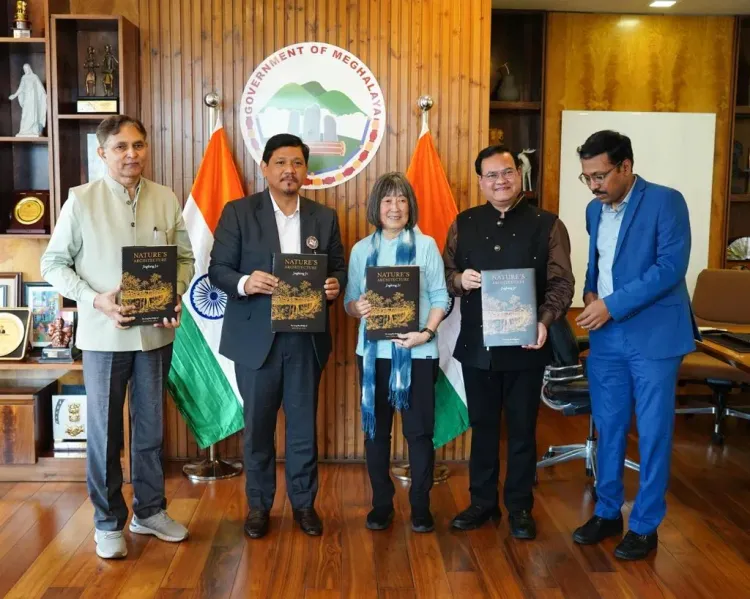
Meghalaya CM Conrad Sangma hosted ICOMOS expert Dr. Nobuko Inaba for the technical evaluation mission of the Jingkieng Jri living root bridges — India's UNESCO World Heritage nominee — and released 'Nature's Architect', a book on the iconic structures.
Key Takeaways
CM Conrad Sangma met Prof.
Nobuko Inaba of ICOMOS for the on-site technical evaluation of the Jingkieng Jri / Lyu Chrai Cultural Landscape on October 14, 2026 .
The meeting included community members, the Syrwet U Barim Mariang Jingkieng Jri Cooperative Federation Ltd. , and MBDA officials.
CM Sangma released 'Nature's Architect' , a new book on Meghalaya's living root bridges, at the event.
The living root bridges are India's current nomination to the UNESCO World Heritage Site list, representing Khasi biocultural heritage.
The ICOMOS technical mission is a mandatory step before the UNESCO World Heritage Committee makes its final inscription decision.
An ancient forest engineering tradition, woven over generations from the roots of rubber trees, is now one step closer to global recognition. Meghalaya Chief Minister Conrad Sangma on Wednesday, October 14, 2026, met with Professor Dr. Nobuko Inaba, the ICOMOS expert leading the technical evaluation mission for the Jingkieng Jri / Lyu Chrai Cultural Landscape — Meghalaya's living root bridges — and released a new book celebrating these extraordinary natural structures.
ICOMOS mission at the root of the nomination
The meeting was held alongside community members, representatives of the Syrwet U Barim Mariang Jingkieng Jri Cooperative Federation Ltd., and officials of the Meghalaya Basin Development Authority (MBDA). The gathering signals a pivotal phase in the formal evaluation process: under UNESCO's World Heritage nomination procedure, ICOMOS — the International Council on Monuments and Sites — conducts on-site technical evaluations before the World Heritage Committee makes its final inscription decision. Dr. Inaba's visit is precisely that on-the-ground assessment in motion.
The living root bridges of Meghalaya are not built — they are grown. Khasi communities in the region's rainforests have, for centuries, trained the aerial roots of Ficus elastica (rubber fig trees) across rivers and ravines, creating bridges that strengthen over time. The nomination, filed as India's candidate for the UNESCO World Heritage Site list, frames the bridges as a cultural landscape — not merely a structure, but an entire ecosystem of traditional knowledge and community stewardship.
'Nature's Architect' — the knowledge put into print
Alongside the ICOMOS mission, CM Sangma released 'Nature's Architect', a book dedicated to the living root bridges. Describing the structures in the post, Sangma called them a reflection of 'the remarkable traditional knowledge, ingenuity and deep connection between our communities and nature,' adding that their nomination 'is a tribute to the knowledge of our forefathers.'
The release is well-timed: a dedicated publication on the bridges at the precise moment an international evaluator is conducting an on-site mission underscores Meghalaya's institutional seriousness about the nomination. Books, documentation archives, and community participation records form part of the broader dossier that ICOMOS weighs in its technical advisory to UNESCO.
Northeast India's push for heritage recognition
India has increasingly sought UNESCO recognition for sites that showcase indigenous ecological knowledge — particularly from the Northeast, a region whose living cultural traditions have historically received less global visibility than the country's monumental architectural heritage. A successful inscription of the Jingkieng Jri Cultural Landscape would mark a significant moment for community-based, biocultural nominations — where the 'site' is as much a practice and a people as it is a place.
Sangma's post closes on a note of patient expectation: 'As we hopefully await the prestigious nomination, we remain committed to preserving this unique cultural heritage and ensuring its legacy for future generations.' The final word now rests with the UNESCO World Heritage Committee, whose decision follows the ICOMOS technical recommendation.
If the bridges earn inscription, the vines that took generations to grow into pathways will carry a new kind of weight — as a globally recognised testament to human ingenuity in harmony with nature.
Point of View
Boots-on-ground assessment. CM Sangma's choice to simultaneously release a dedicated book signals Meghalaya's strategy to build a robust public and documentary record around the nomination. For India's Northeast, a successful UNESCO inscription would challenge the narrative that the region's heritage is peripheral to national cultural identity. The nomination also fits a broader global shift in UNESCO's criteria — from built monuments toward living, community-managed biocultural landscapes where the people are inseparable from the site.
NationPress
14 Oct 2026
Frequently Asked Questions
What are the living root bridges of Meghalaya?
The living root bridges of Meghalaya are natural bridges created by Khasi communities over centuries by training the aerial roots of rubber fig trees across rivers and ravines. They strengthen with age and represent a unique form of biocultural engineering.
Why are Meghalaya's living root bridges nominated for UNESCO World Heritage status?
The bridges, known as Jingkieng Jri in Khasi, were nominated as India's candidate for the UNESCO World Heritage list because they embody exceptional traditional ecological knowledge, community stewardship, and a living cultural landscape unique to Meghalaya.
What is ICOMOS and why is its evaluation important?
ICOMOS — the International Council on Monuments and Sites — is the body that advises UNESCO on World Heritage nominations. Its on-site technical evaluation, currently being led by Dr. Nobuko Inaba , is a mandatory step before the UNESCO World Heritage Committee makes a final inscription decision.
What is the book 'Nature's Architect' about?
'Nature's Architect' is a book released by Meghalaya CM Conrad Sangma focused on the living root bridges of Meghalaya, documenting their history, traditional knowledge, and cultural significance.
What happens after the ICOMOS evaluation of the living root bridges?
After the ICOMOS technical mission concludes, the advisory body submits its recommendation to the UNESCO World Heritage Committee , which then takes the final decision on whether to inscribe the site on the World Heritage list.