CM Dhami approves free online coaching scheme for Uttarakhand youth
Synopsis
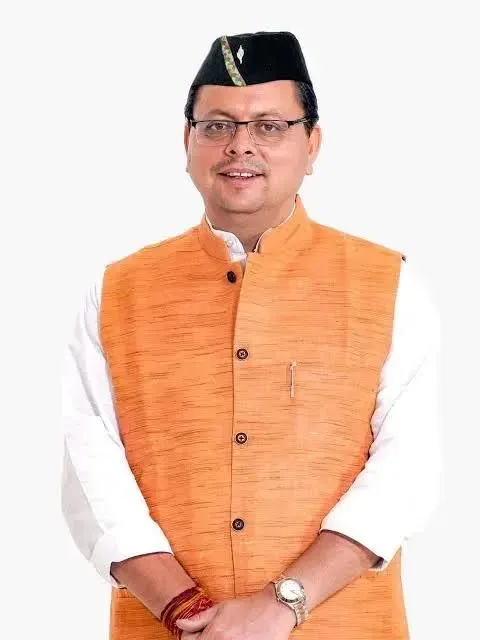
Uttarakhand's Chief Minister Pushkar Singh Dhami has approved the 'Mukhyamantri Yuva Bhavishy Nirman Yojana-2026', a free online coaching programme for students in state universities and aided colleges preparing for UPSC, banking, GATE, NET, and other competitive exams. A formal launch date will be announced shortly.
Key Takeaways
CM Pushkar Singh Dhami has approved the Mukhyamantri Yuva Bhavishy Nirman Yojana-2026 ; a formal launch date is to be fixed soon.
The scheme provides free online coaching to students in state universities and government or government-aided colleges in Uttarakhand.
Exams covered include UPSC/PSC, CDS, banking, railway, SSC, CAT, MAT, GATE, NET, and CSIR-NET .
The programme specifically targets students in remote mountainous districts who lack access to physical coaching centres.
Students unable to afford expensive private coaching are a primary beneficiary group identified by the government.
Online modules will begin rolling out through existing college infrastructure once the scheme is officially inaugurated.
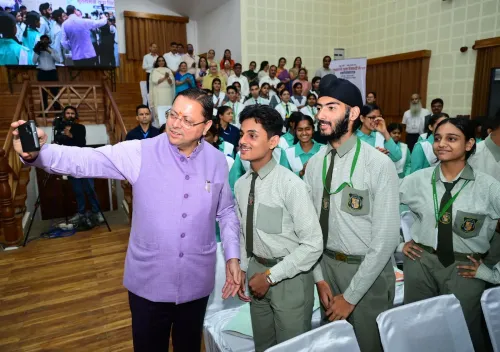
A student perched in a Pithoragarh hostel room, no coaching centre within a hundred kilometres, competing against aspirants from Delhi and Pune — that gap is exactly what Uttarakhand is now moving to close. The Chief Minister's Office of Uttarakhand announced on Tuesday, 11 August 2026 that the 'Mukhyamantri Yuva Bhavishy Nirman Yojana-2026' ('Chief Minister Youth Future-Building Scheme-2026') has received formal approval from Chief Minister Pushkar Singh Dhami and is set for an imminent official launch.
What the scheme promises — and who it targets
At its core, the scheme offers free online coaching to students enrolled in state universities and government or government-aided colleges across Uttarakhand. The coverage is deliberately wide: UPSC and state PSC civil services, CDS defence exams, banking, railway, and SSC recruitments, and entrance or eligibility tests for premier institutions — CAT, MAT, GATE, NET, and CSIR-NET. Quality guidance and study material will be delivered digitally, meaning a student does not need to relocate or pay for a private coaching institute.
The announcement specifically flags two overlapping disadvantages the scheme is designed to neutralise: geographic isolation in Uttarakhand's remote Himalayan districts, and economic inability to afford commercial coaching. Both barriers, the government argues, have historically kept meritorious students out of the national competition pool.
Why Uttarakhand's mountain geography makes this harder than most states
Uttarakhand is not a typical plains state where a student can bus into a city coaching hub every weekend. Large swathes of Garhwal and Kumaon are connected by mountain roads that close in winter, and the nearest serious coaching cluster for most aspirants is either Dehradun or cities outside the state entirely. That geography has long depressed the state's representation in UPSC and banking selections relative to its literacy rates. An online-first delivery model, piggybacking on existing college infrastructure, sidesteps that physical constraint directly.
Several Indian states have piloted similar digital coaching interventions in recent years, but Uttarakhand's decision to route the programme through existing higher-education institutions — rather than building standalone centres — is a lean implementation choice that could accelerate rollout.
What happens next before the first module goes live
CM Dhami is expected to fix a formal launch date shortly; the announcement confirms the date has not yet been set. Once the scheme is inaugurated, online coaching modules will begin reaching enrolled students. The specifics of the implementing agency, curriculum partners, and budget have not been disclosed in the announcement.
The scheme's name carries the year 2026, signalling it is conceived as a structured, time-bound programme rather than an open-ended subsidy. Whether it seeds a longer institutional habit — or remains a single-cycle intervention — will depend on what the formal launch reveals.
For now, the approval is real, the direction is clear, and the students waiting in those mountain hostels have a concrete reason to watch the next announcement from Dehradun.
Point of View
Low-friction welfare announcement that directly addresses a grievance Uttarakhand's educated youth have long voiced. By routing delivery through existing colleges rather than new infrastructure, the government reduces implementation risk but also shifts accountability onto institutions whose digital readiness varies considerably. The online-only model is the right call for a mountain state, but its success will hinge entirely on curriculum quality and whether the implementing agency can sustain engagement beyond the launch event — two details conspicuously absent from the announcement.
NationPress
11 Aug 2026
Frequently Asked Questions
What is Mukhyamantri Yuva Bhavishy Nirman Yojana 2026?
It is a free online coaching scheme approved by Uttarakhand Chief Minister Pushkar Singh Dhami for students in state universities and government-aided colleges, covering competitive exams such as UPSC, banking, SSC, GATE, NET, and CDS.
Who is eligible for the Uttarakhand free online coaching scheme?
Students currently enrolled in Uttarakhand's state universities and government or government-aided colleges are eligible. The scheme especially targets students in remote mountainous areas and those who cannot afford private coaching.
Which exams are covered under the Uttarakhand youth coaching scheme?
The scheme covers UPSC and state PSC civil services, CDS defence exams, banking, railway, SSC, and entrance or eligibility tests including CAT, MAT, GATE, NET, and CSIR-NET.
When will the Mukhyamantri Yuva Bhavishy Nirman Yojana be launched?
Chief Minister Dhami will fix a formal launch date shortly; as of the announcement on 11 August 2026, the exact date has not been disclosed. Online coaching will begin rolling out to students after the official inauguration.
How will the free coaching be delivered to students in Uttarakhand's hill districts?
Coaching will be delivered entirely online through existing state universities and colleges, allowing students in remote Himalayan districts to access quality guidance and study material without relocating to urban centres.