CM Dhami Visits Ancient Baleshwar Temple in Champawat

Synopsis
Uttarakhand CM Pushkar Singh Dhami visited the 12th-century Baleshwar Temple in Champawat on 3 August 2026, praising its Kumaoni stone carvings and urging visitors to experience the shrine as part of the state's push to promote heritage tourism beyond the Char Dham circuit.
Key Takeaways
CM Pushkar Singh Dhami visited the Baleshwar Temple in Champawat district and shared his experience on 3 August 2026 .
The temple dates to the 12th-13th centuries and is celebrated for its intricate Kumaoni stone carvings and ancient architecture.
Champawat was historically the capital of the Kumaon kingdom and hosts multiple ancient religious and heritage sites.
Dhami's post is part of a consistent effort to promote Uttarakhand's religious and cultural identity as Devbhoomi beyond the main Char Dham pilgrimage circuit.
The visit highlights a state push to diversify tourism footfall to lesser-known hill districts like Champawat.
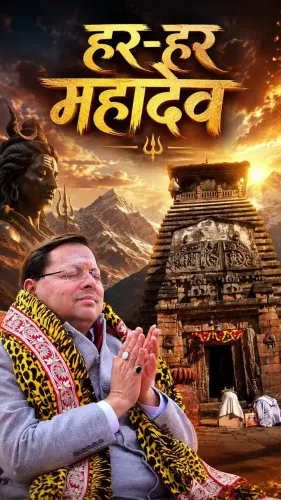
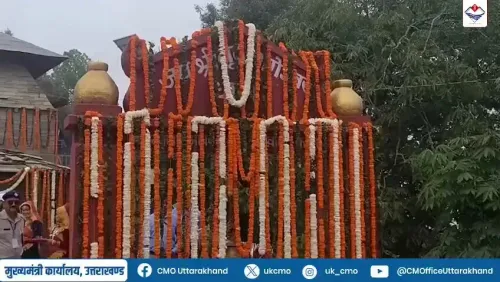
Carved in stone over eight centuries ago, the Baleshwar Temple in Champawat has quietly outlasted kingdoms — and Uttarakhand Chief Minister Pushkar Singh Dhami wants every visitor to the district to know it. On Monday, 3 August 2026, Dhami shared a personal account of his visit to the ancient Shiva shrine, calling it an unforgettable encounter with spiritual peace and the state's living cultural heritage.
In his post, Dhami described the Baleshwar Temple as 'bhagwan Shiv ki divya aastha, samridh itihas aur adbhut sthapatya kala ka anupam sangam' — 'an unmatched confluence of Lord Shiva's divine faith, rich history, and remarkable architecture.' He urged anyone visiting Champawat district to make the temple a mandatory stop for its stone carvings, ancient craftsmanship, and the spiritual calm it offers.
Eight Centuries of Stone: What Makes Baleshwar Stand Apart
Built between the 12th and 13th centuries, the Baleshwar Temple complex is one of the finest surviving examples of Kumaoni temple architecture in the Himalayan foothills. Its defining feature is the intricate stone-relief work — panels of deities, celestial figures, and geometric motifs chiselled with a precision that has endured centuries of mountain weather. Champawat itself carries deep historical weight, having once served as the capital of the Kumaon kingdom before the region passed through successive rulers.
Devbhoomi Beyond Char Dham: Dhami's Wider Tourism Push
Dhami has regularly used social media to spotlight religious and heritage sites that sit outside Uttarakhand's dominant Char Dham pilgrimage circuit — Badrinath, Kedarnath, Gangotri, and Yamunotri — which draws the bulk of the state's annual pilgrim traffic. Posts highlighting lesser-known temples in hill districts like Champawat form a consistent thread in his outreach, part of a broader state effort to spread tourism footfall and economic benefit to more remote corners of Devbhoomi, the 'Land of the Gods.'
For Champawat district, increased visibility from the chief minister's platform could translate into renewed interest from heritage tourists and pilgrims who have traditionally bypassed the region on their way to more celebrated shrines. Whether that attention is followed by concrete conservation funding or tourism infrastructure investment in the district remains the next question to watch.
A temple that has stood since the medieval era deserves more than a passing mention — and Dhami is making the case that Champawat is worth the detour.
Point of View
The CM signals a tourism-diversification agenda that could ease overcrowding at the four main dhams while channelling economic activity to underserved areas like Champawat. The post stops short of announcing policy action, but it functions as soft political branding — associating the BJP-led state government with cultural custodianship. Whether such visibility converts into budgetary commitment for temple conservation or district tourism infrastructure will be the real measure of intent.
NationPress
17 Sept 2026
Frequently Asked Questions
Where is the Baleshwar Temple located?
The Baleshwar Temple is located in Champawat district of Uttarakhand, a town that once served as the capital of the Kumaon kingdom.
How old is the Baleshwar Temple in Champawat?
The Baleshwar Temple complex dates to the 12th and 13th centuries, making it roughly 800 years old and one of the finest examples of Kumaoni temple architecture.
Why is the Baleshwar Temple famous?
The temple is dedicated to Lord Shiva and is renowned for its intricate stone-relief carvings, ancient craftsmanship, and Kumaoni architectural style that has survived centuries.
What did CM Dhami say about the Baleshwar Temple?
CM Pushkar Singh Dhami described the temple as an unmatched confluence of Lord Shiva's divine faith, rich history, and remarkable architecture, and urged visitors to Champawat to make it a mandatory stop.
Is Champawat worth visiting for tourists in Uttarakhand?
Yes, Champawat district is home to several ancient temples and historical sites, including the Baleshwar Temple, and is being promoted as a heritage tourism destination beyond the Char Dham circuit.