CM Dhami at Dehradun Beneficiary Meet: UCC, Madrasa Reform
Synopsis
Chief Minister Pushkar Singh Dhami addressed a beneficiary conference in Dehradun organised by the Minority Morcha, reiterating Uttarakhand's abolition of the Madrasa Board, the launch of a State Minority Education Authority, and the state's historic implementation of the Uniform Civil Code.
Key Takeaways
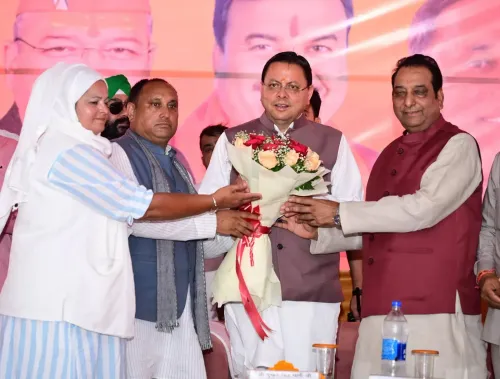
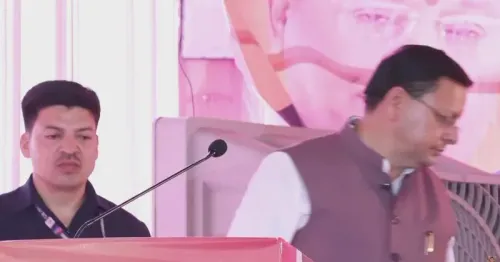
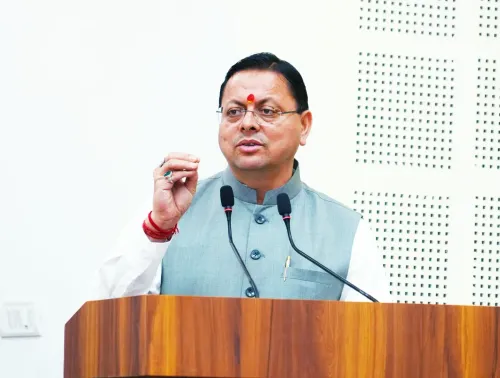
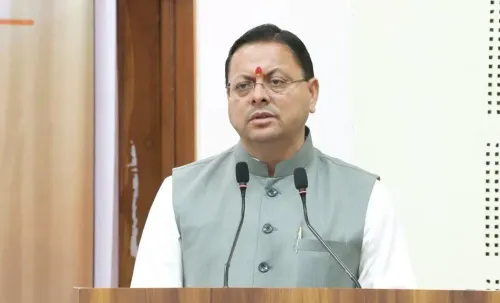
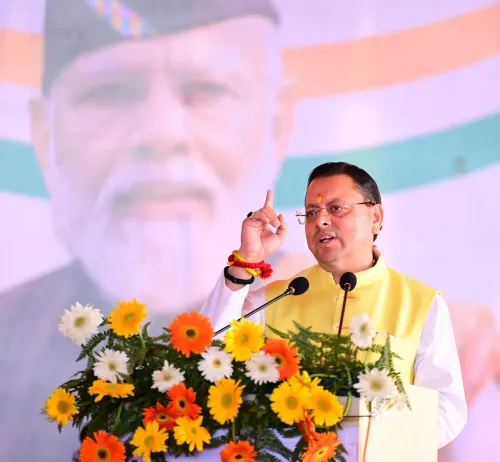
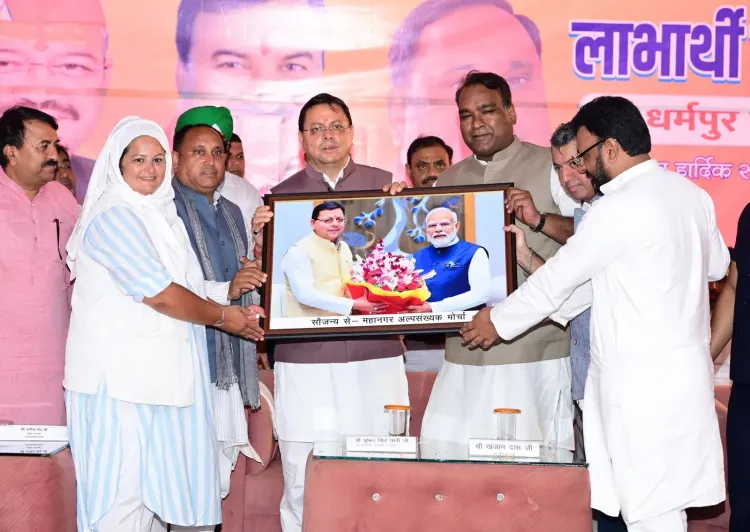
Pushkar Singh Dhami attended the Labhaarthi Sammelan in Dehradun organised by Minority Morcha Mahanagar on 2 August 2026 .
Beneficiaries shared positive experiences from Pradhan Mantri Awas Yojana , Ujjwala Yojana , Ayushman Bharat , and skill development schemes.
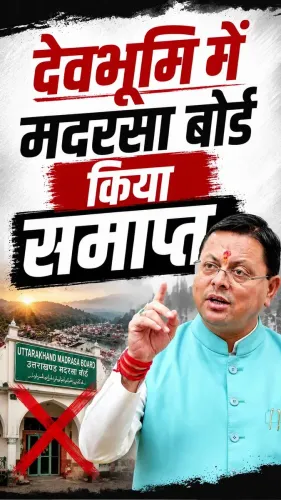
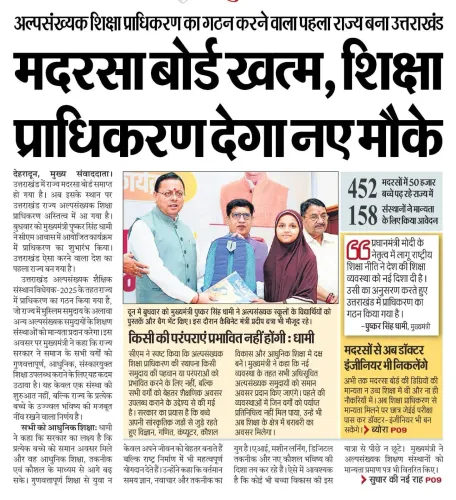
The Uttarakhand Madrasa Board has been dissolved and replaced by a State Minority Education Authority to provide modern, employment-oriented education.
Uttarakhand became the first state in India to implement the Uniform Civil Code , enacted in February 2024 , aimed at equal rights for women across communities.
Dhami urged beneficiaries to spread awareness of government schemes to other eligible citizens in their communities.
Cabinet Minister Khajan Das , MLA Vinod Chamoli , and Mayor Saurabh Thapliyal were among the dignitaries present.
Beneficiaries from across Dehradun gathered Sunday to tell Chief Minister Pushkar Singh Dhami how government schemes had changed their lives — and he listened, then made news of his own. At a Labhaarthi Sammelan (beneficiary conference) organised by the Minority Morcha Mahanagar, Dehradun, Dhami spotlighted two state-level moves that go well beyond routine welfare delivery: the abolition of the Uttarakhand Madrasa Board and the implementation of the Uniform Civil Code, positioning the state as a laboratory for social reform under the BJP's national agenda.
What beneficiaries said — and what the CM heard
Participants at the conference shared first-hand accounts of upliftment through Pradhan Mantri Awas Yojana, Ujjwala Yojana, Ayushman Bharat, and skill development and self-employment programmes. Education, health, housing, and economic security were the recurring themes. Dhami, responding to the testimonies, said the government's greatest asset is public trust — 'sarkar ki sabse badi punji janta ka vishwas hai' ('the government's greatest capital is the people's trust') — and that this trust drives effective implementation of welfare schemes.
He credited Prime Minister Narendra Modi with establishing a governance culture in which scheme benefits reach eligible individuals directly, cutting out intermediaries. The message was deliberate: direct benefit transfer as both policy and politics.
Madrasa Board dissolved, new Minority Education Authority formed
The most consequential announcement Dhami reiterated at the event was the state's decision to dissolve the Uttarakhand Madrasa Board and replace it with a State Minority Education Authority. The stated aim is to bring minority-community students into mainstream, modern, employment-oriented education — covering science, technology, skill development, and competitive exam preparation. Dhami framed this as a 'far-reaching and historically significant' step, arguing that education is the most powerful vehicle for social transformation and that every child deserves a future built on quality learning, not institutional isolation.
The move is politically charged. Madrasa boards are sensitive terrain in Indian educational policy, and Uttarakhand's decision to replace its board with a secular authority mirrors broader debates at the national level about the integration of religious minority education into the mainstream system.
UCC: Uttarakhand's first-mover claim
Dhami also invoked the Uniform Civil Code (UCC), which Uttarakhand enacted in February 2024, making it the first state in independent India to implement such a law. He described it as a landmark step toward equal rights, dignity, security, and justice for women, and said the UCC strengthens social harmony, transparency, and equal opportunity for all citizens regardless of religion or community.
The UCC replaces religion-specific personal laws governing marriage, divorce, inheritance, and adoption with a single civil code applicable to all. Its rollout — and early family-law cases filed under it — will be closely watched as a test case for whether such reform can be implemented without social disruption.
Who was in the room
Cabinet Minister Khajan Das, MLA Vinod Chamoli, former cabinet minister and office-bearer Dinesh Aggarwal, and Dehradun Municipal Corporation Mayor Saurabh Thapliyal were among those present, alongside Minority Morcha office-bearers, elected representatives, party workers, and a large number of beneficiaries.
Dhami closed with a call to action: beneficiaries should spread awareness of government schemes to other eligible citizens in their communities, so more families can access what is already available to them. Welfare saturation, he suggested, is not just a government job — it is a community responsibility. The state, he said, is continuously refining schemes based on public feedback and lived experience. With the UCC live and a new minority education authority taking shape, Uttarakhand is betting that social reform and welfare delivery can move together — and that the results will speak for themselves.
Point of View
Reaching out to the very communities most directly affected. Uttarakhand is being positioned as a model state for the BJP's national governance narrative ahead of future electoral cycles. Whether the new State Minority Education Authority delivers measurable improvements in learning outcomes, and whether UCC enforcement proceeds smoothly in family courts, will determine if the policy substance matches the political messaging.
NationPress
2 Aug 2026
Frequently Asked Questions
What is the Uttarakhand State Minority Education Authority?
The State Minority Education Authority is a new body formed by the Uttarakhand government after dissolving the Uttarakhand Madrasa Board. Its stated aim is to provide minority-community students with modern, quality, and employment-oriented education in science, technology, skill development, and competitive academics.
Is Uttarakhand the first state to implement the Uniform Civil Code?
Yes. Uttarakhand enacted the Uniform Civil Code in February 2024 , making it the first state in independent India to implement such a law. The UCC replaces religion-specific personal laws with a single civil code applicable to all citizens.
What schemes did beneficiaries mention at the Dehradun conference?
Beneficiaries at the conference cited Pradhan Mantri Awas Yojana , Ujjwala Yojana , Ayushman Bharat , self-employment and skill development schemes, and social security programmes as having improved their quality of life.
What did CM Dhami say about PM Modi at the beneficiary conference?
CM Dhami credited Prime Minister Narendra Modi with establishing a governance culture in which welfare scheme benefits reach eligible individuals directly, without intermediaries, through direct benefit transfer systems.
Who attended the Minority Morcha beneficiary conference in Dehradun?
Cabinet Minister Khajan Das , MLA Vinod Chamoli , former cabinet minister Dinesh Aggarwal , Dehradun Mayor Saurabh Thapliyal , Minority Morcha office-bearers, elected representatives, and a large number of beneficiaries attended the event.