CM Dhami at Khatima Chhath, unveils ₹300 cr flood plan
Synopsis
Chief Minister Pushkar Singh Dhami attended the Chhath Mahotsav in Khatima, Udham Singh Nagar, inaugurated a Ghat beautification project, and announced a ₹300 crore drainage plan to permanently address the town's annual flooding, alongside several road and education schemes.
Key Takeaways
CM Pushkar Singh Dhami participated in the Chhath Mahotsav organised by Purvanchal Seva Samiti, Khatima on 15 November 2026 .
He inaugurated the Chhath Ghat beautification near Ward No.
14, Sanjay Railway Park, Khatima.
A ₹300 crore drainage plan for Khatima's perennial flood problem has been approved; a ground-breaking ceremony will follow shortly.
Road projects totalling ₹34 crore on the Nanaksagar-to-17 Mile stretch are under way, along with hotmix surfacing and road widening in town.
Border villages including Melghat, Sisaiya, and Nagla Tarai have received ₹12 crore development proposals under the 'Pratham Gaon' designation.
An additional ₹10 crore announced for the Eklavya Model Residential School ; the new Kendriya Vidyalaya building in Khatima is complete.
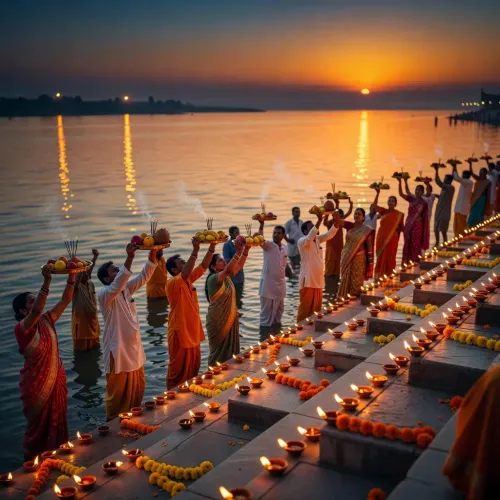
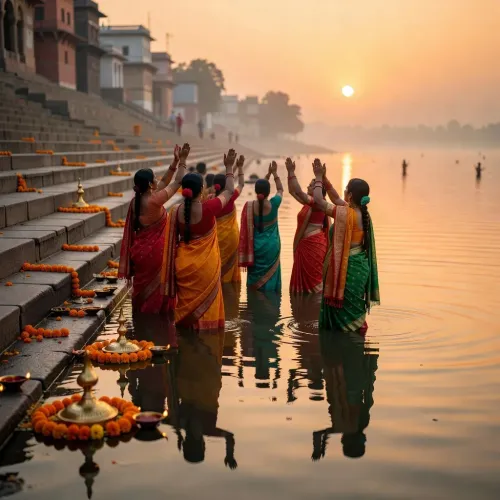
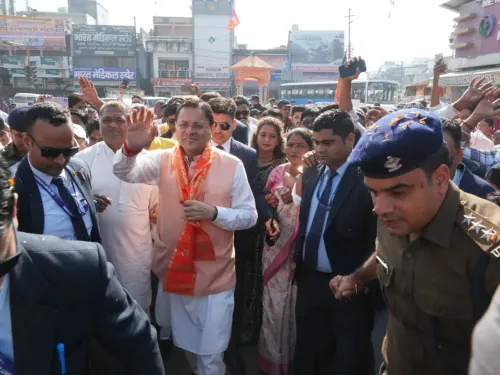
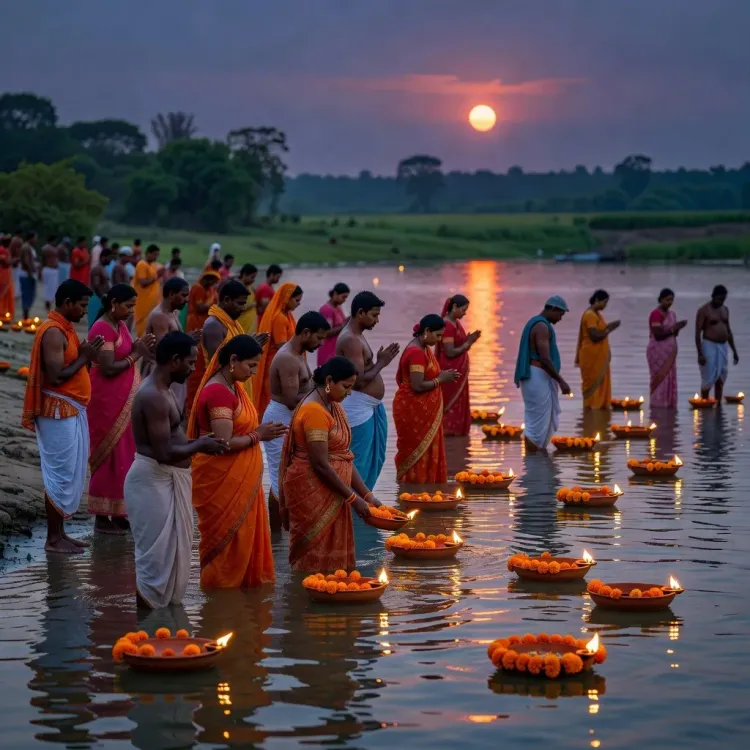
At dusk on Sunday, 15 November 2026, Uttarakhand Chief Minister Pushkar Singh Dhami waded into the festival grounds of the Chhath Mahotsav in Khatima, Udham Singh Nagar — offering prayers to the setting sun and, in the same breath, unveiling a ₹300-crore drainage plan that the town has waited years to see. Faith and infrastructure, in one evening.
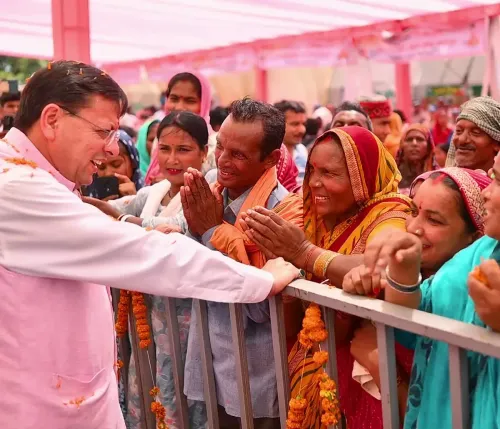
The event was organised by the Purvanchal Seva Samiti, Khatima — a community body representing families who migrated from eastern Uttar Pradesh and have made Uttarakhand's Terai belt their home. CM Dhami offered puja-archana (ritual prayers) to Bhagwan Surya Narayan, sought blessings for the state's prosperity, and also performed the inauguration of the beautification of Chhath Ghat near Ward No. 14, Sanjay Railway Park.
What Dhami said about the sun and the struggling
Speaking at the gathering, the Chief Minister drew a pointed philosophical message from the central Chhath ritual — the offering of arghya (water oblation) to both the rising and the setting sun. 'This tradition teaches us,' he said, 'that respect should not be reserved only for those at the peak — it must be accorded to every person who has walked through hard struggle.' The remark, directed at the Purvanchal migrant community in the audience, landed as both cultural affirmation and political solidarity.
He praised the festival as 'aastha, anushasan, tapasya aur prakriti ke prati kritagyata ka anootha sangam' — a unique confluence of faith, discipline, penance, and gratitude to nature — and described Chhath as a living bridge between the cultures of Uttarakhand and Purvanchal, a 'beautiful example of unity in diversity.'
₹300 crore to end Khatima's annual flood nightmare
Khatima sits in the low-lying Terai plains abutting the Nepal border, and recurring monsoon flooding has long disrupted life and commerce here. Dhami announced that a drainage plan worth more than ₹300 crore has been approved for a permanent solution to the town's flood problem — and that a bhoomi pujan (ground-breaking ceremony) will be held shortly.
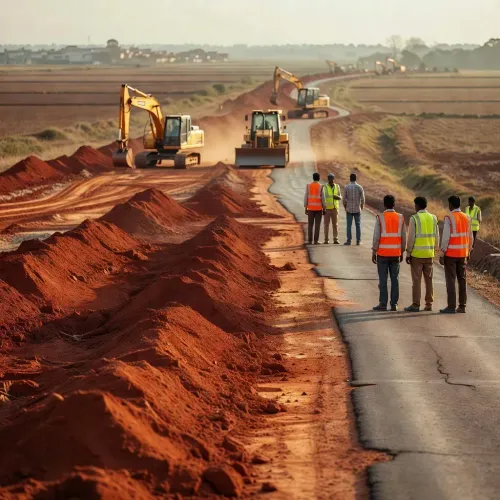
Alongside the drainage plan, he listed a clutch of road projects already under way: hotmix surfacing from Khatima Chauraha to Mela Ghat Road, road widening from the main chauraha to Tharu Vikas Bhavan, and new road construction on Majola Road and the Nanaksagar-to-17 Mile stretch at a cost of ₹34 crore. For border villages — which the government now designates as 'Pratham Gaon' (First Village) — development proposals worth ₹12 crore have been prepared for Melghat, Sisaiya, and Nagla Tarai.
Schools, temples, and the 'Vikas bhi, Virasat bhi' thread
Invoking Prime Minister Narendra Modi's governing mantra of 'Vikas bhi aur Virasat bhi' — development as well as heritage — Dhami situated each announcement within a larger framework of state-building that refuses to treat culture and concrete as opposites. A new building for the Kendriya Vidyalaya in Khatima is already complete. An additional ₹10 crore has been announced by a Union minister for the Eklavya Model Residential School in the area — a central scheme targeting tribal education. Beautification and development work at the Van Chetna Maidan and Vankhandi Mahadev Temple in Chakrapur is progressing rapidly, with plans to establish it as a major spiritual tourism hub.
Officials and a physician were also felicitated at the event for distinguished service. Senior district officials present included DM Nitin Singh Bhadauria and SSP Ajay Ganapati, alongside elected representatives including Zila Panchayat President Ajay Maurya and Municipal Council President Ramesh Chandra Joshi.
When the land-breaking for Khatima's drainage plan finally happens, it will be the clearest test yet of whether this festive evening's promises translate into the kind of change that outlasts the festival lights.
Point of View
Maximising both optics and outreach among the Purvanchal migrant vote bank that is numerically significant in Udham Singh Nagar. The ₹300 crore drainage pledge, if executed, would be one of the most consequential interventions in Khatima's recent history, addressing a chronic problem that past governments identified but never resolved. The 'Pratham Gaon' framing for border villages also signals a deliberate effort to tie local development to national security optics — a pattern consistent with the BJP's broader narrative on border-area infrastructure. Whether the flurry of announcements translates to on-ground delivery before the next election cycle will determine their lasting political weight.
NationPress
15 Nov 2026
Frequently Asked Questions
What did CM Dhami announce at the Khatima Chhath Mahotsav?
CM Pushkar Singh Dhami announced a ₹300 crore drainage plan to permanently solve Khatima's annual flood problem, inaugurated a Chhath Ghat beautification project, and listed several road construction and school development schemes for the area.
What is the ₹300 crore drainage plan for Khatima?
The plan is a government-approved flood-mitigation drainage scheme for Khatima in Udham Singh Nagar, designed to end the town's recurring monsoon flooding. A ground-breaking ceremony is expected to be held soon.
What is the Purvanchal Seva Samiti that organised the Chhath Mahotsav?
The Purvanchal Seva Samiti, Khatima, is a community organisation representing migrants from eastern Uttar Pradesh who have settled in Uttarakhand's Terai region. It organises the annual Chhath Mahotsav to preserve their cultural traditions.
What is the 'Pratham Gaon' designation mentioned by CM Dhami?
'Pratham Gaon' — meaning 'First Village' — is a designation given by the Uttarakhand government to border villages near the Nepal frontier, recognising their strategic importance and prioritising their development with dedicated funding.
What education announcements were made for Khatima?
CM Dhami said the new Kendriya Vidyalaya building in Khatima is already complete, and an additional ₹10 crore has been announced by a Union minister for the Eklavya Model Residential School, a central scheme focused on tribal education.