Amit Shah Accuses Rahul Gandhi of Anti-India Remarks Abroad
Synopsis
Union Home Minister Amit Shah accused Rahul Gandhi of channelling frustration over serial electoral losses into anti-India statements at international conferences, escalating the BJP-Congress rivalry into a sharp debate over acceptable opposition conduct on foreign soil.
Key Takeaways
Amit Shah posted on November 15, 2026 accusing Rahul Gandhi of making anti-India remarks at international conferences.
Shah explicitly linked Gandhi's overseas conduct to what he called 'frustration from repeatedly losing elections.' The accusation follows a recurring BJP pattern of criticising opposition leaders for statements made on foreign platforms.
The Indian National Congress had not issued a formal response at the time of publication.
The episode reignites a wider debate in Indian politics over the limits of opposition criticism abroad.
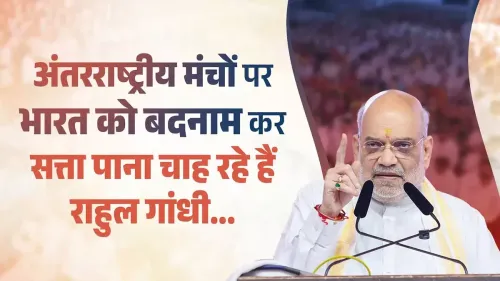
A politician's frustration, Union Home Minister Amit Shah argues, has found an unlikely outlet — international conference stages where, he charges, Rahul Gandhi is venting serial electoral defeats through remarks that run against India's interests. Shah made the pointed accusation on Sunday, November 15, 2026, in a post on X that cuts straight to one of the BJP-Congress rivalry's sharpest fault lines.
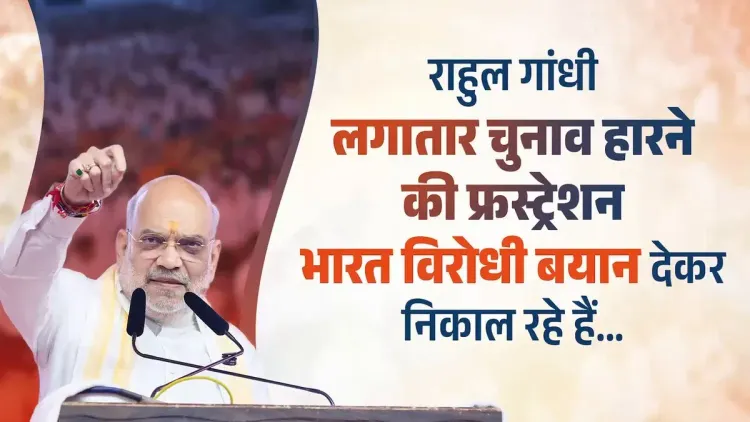
Translated from Hindi, Shah's post reads: 'Rahul Gandhi is venting his frustration from repeatedly losing elections by making anti-India statements at international conferences.' The charge is blunt, two-pronged, and deliberate — linking electoral performance directly to conduct on foreign soil.
The Pattern Behind the Accusation
This is not the first time senior BJP leaders have trained their fire on Congress figures for statements made on overseas platforms. Ruling-party voices have periodically accused opposition leaders of making critical remarks abroad — framing such interventions as damaging to national interests and inconsistent with the convention that domestic political disputes should not be exported to international audiences.
The charge carries particular weight in an era of heightened geopolitical sensitivity, where statements made at global forums can be amplified far beyond their original context. For the BJP, the 'anti-India abroad' accusation serves as a dual rebuke — questioning both patriotic intent and political judgment in a single stroke.
Rahul Gandhi's Electoral Record and the Frustration Framing
Rahul Gandhi, a senior leader of the Indian National Congress and former party president, has faced significant electoral setbacks across multiple cycles — a track record that BJP leaders have consistently used to question his political standing. Shah's framing explicitly ties that electoral history to Gandhi's overseas conduct, suggesting the two are causally connected — frustration producing damaging rhetoric.
It is a framing designed to simultaneously diminish Gandhi's credibility as a critic and position any overseas statement he makes as the product of personal grievance rather than principled engagement with policy.
Congress Yet to Respond
As of the time of publication, Congress party spokespersons had not issued a formal response to Shah's post. The party has in the past pushed back sharply against similar accusations, arguing that questioning government policy on global platforms is a democratic right, not a betrayal of national interest. Any congressional response — and the parliamentary debate it could trigger on acceptable norms for opposition conduct abroad — will be worth watching closely.
When a Home Minister frames an opposition leader's overseas remarks as electoral frustration made dangerous, the subtext is a live debate India keeps revisiting: where does legitimate criticism of government end, and where does it cross a line? That line, and who draws it, remains fiercely contested.
Point of View
Memorable frame. By tying overseas remarks to 'frustration,' he pre-empts Congress's ability to position Gandhi's international interventions as principled dissent, recasting them instead as wounded ego. The absence of a specified conference or quote is intentional: the charge is designed to seed doubt broadly, not win a narrow factual argument. This exchange reflects a deeper structural tension in Indian democracy — over whether the opposition's right to critique government policy extends to foreign audiences, and who gets to adjudicate that boundary.
NationPress
15 Nov 2026
Frequently Asked Questions
What did Amit Shah say about Rahul Gandhi on November 15 2026?
Amit Shah posted on X accusing Rahul Gandhi of making anti-India statements at international conferences, claiming Gandhi was venting frustration from repeatedly losing elections.
Why is Amit Shah criticising Rahul Gandhi's foreign statements?
Shah and the BJP have a long-standing position that opposition leaders making critical remarks about India on overseas platforms damages national interests; Shah linked this specifically to Gandhi's electoral losses.
What is Rahul Gandhi's response to Amit Shah's accusation?
As of November 15 2026, the Congress party had not formally responded to Shah's post; the party has historically pushed back on such accusations by asserting the democratic right to critique government policy globally.
Is it common for BJP leaders to accuse opposition figures of anti-India statements abroad?
Yes, ruling-party figures have periodically made this accusation against opposition leaders, particularly around periods of electoral setbacks for the Congress party.
What could follow from Amit Shah's remarks about Rahul Gandhi?
Political analysts are watching for a Congress rebuttal and the possibility of parliamentary debates on norms governing opposition conduct at international forums.