Amit Shah Flags Off Indigenous 5.56mm Rifles for UPSTF in Pune
Synopsis
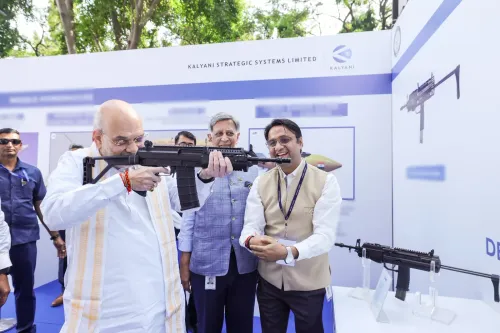
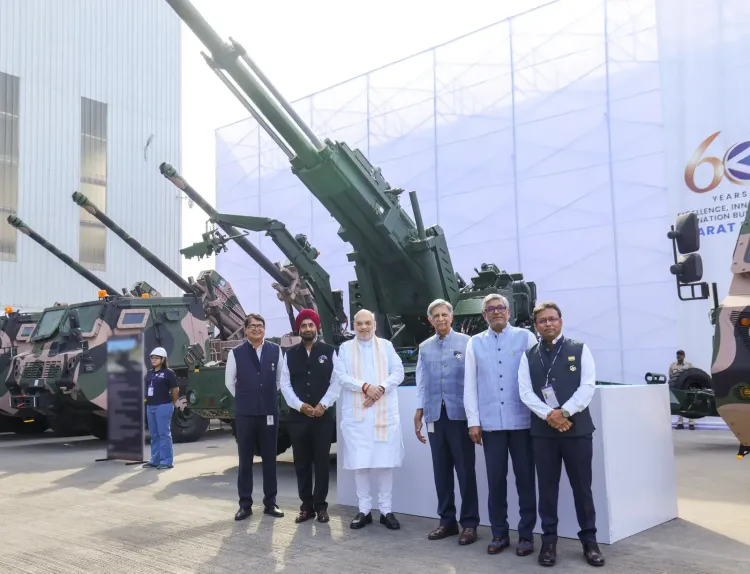
Union Home Minister Amit Shah flagged off indigenously manufactured 5.56×45mm rifles at Bharat Forge's Kalyani facility in Pune, fulfilling a UPSTF order and marking a milestone in India's Aatmanirbhar Bharat defence self-reliance push under PM Modi.
Key Takeaways
Union Home Minister Amit Shah flagged off 5.56 × 45 mm rifles manufactured by Bharat Forge at its Kalyani facility in Pune on 15 November 2026 .
The rifles were ordered by the Uttar Pradesh Special Task Force (UPSTF) , marking a significant state-level procurement from a private Indian defence manufacturer.
Bharat Forge , part of the Kalyani Group , is among India's leading private-sector defence and forging companies.
The delivery advances PM Modi's Aatmanirbhar Bharat initiative (launched May 2020 ) and the Make in India defence push (since 2014 ), which opened procurement to private firms.
The 5.56 × 45 mm calibre is the global benchmark for police and light infantry assault rifles, and domestic sourcing closes a critical supply-chain gap.
Further state-force orders and updates to the Defence Production and Export Promotion Policy will determine how far this trend scales.
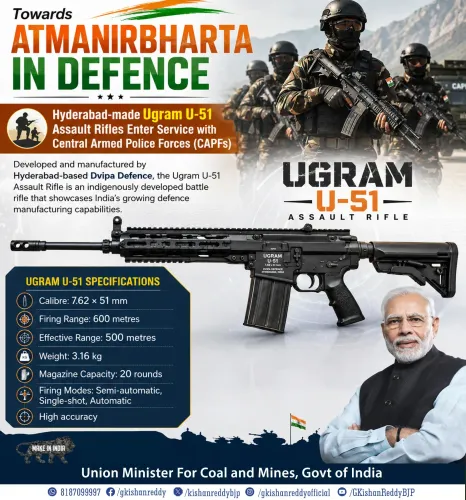
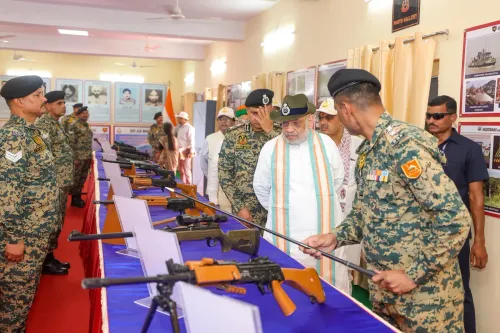
A batch of domestically manufactured 5.56 × 45 mm rifles rolled out of a Pune facility on Sunday, 15 November 2026 — a moment Union Home Minister Amit Shah marked in person, flagging off the consignment ordered by the Uttar Pradesh Special Task Force (UPSTF) from the Kalyani–Bharat Forge plant. The delivery is a concrete step in India's long-running push to put homegrown weapons in the hands of its own security forces.
Bharat Forge delivers on a state-police order
Bharat Forge, the flagship manufacturing arm of the Kalyani Group and one of India's largest private-sector defence producers, manufactured the rifles at its facility in Pune, Maharashtra. The UPSTF — Uttar Pradesh's elite counter-terrorism and organised-crime unit — placed the order, making it one of the more prominent state-level procurement decisions to land with a private Indian manufacturer rather than a traditional government ordnance supplier.
Shah described the development as Bharat Forge 'advancing Modi Ji's vision of an Aatmanirbhar Bharat through indigenous manufacturing of arms and ammunition while adding steel to the strength of our forces.' The phrasing was deliberate: 'steel to the strength' nods directly to Bharat Forge's forging heritage while framing the rifles as a capability upgrade for frontline personnel.
Private sector muscle in the Aatmanirbhar Bharat arc
Prime Minister Narendra Modi unveiled the Aatmanirbhar Bharat initiative in May 2020, with defence manufacturing identified as a priority pillar from day one. The logic was straightforward: India was then one of the world's largest arms importers, and cutting that dependence would simultaneously strengthen strategic autonomy and build domestic industrial capacity. The Make in India defence push, which predates Aatmanirbhar by six years — launched in 2014 — had already begun opening procurement doors to private firms.
Under updated defence procurement rules, central and state security agencies have progressively placed orders with private players, a shift that marks a structural departure from the decades-old dominance of government ordnance factories. The UPSTF–Bharat Forge deal fits neatly into that pattern: a state police force, not the Army or a central paramilitary, choosing an indigenous private supplier for a standard infantry calibre.
What the 5.56 × 45 mm calibre signals
The 5.56 × 45 mm NATO round is the global benchmark for assault rifles used by police and light infantry — the same calibre as the INSAS rifle that has equipped Indian security forces for decades. A domestic source for both the weapon and the ammunition closes a supply-chain loop that previously relied partly on imports or state-run factories. For a unit like the UPSTF, which operates in high-threat environments, reliable, locally serviced rifles matter operationally, not just symbolically.
The broader watch-point is whether this order triggers a cascade: other state task forces and paramilitary units evaluating indigenous small arms, and whether Bharat Forge's capacity scales to meet them. The Defence Production and Export Promotion Policy provides the regulatory runway; actual orders are what convert policy intent into industrial reality.
Point of View
The Home Ministry is signalling that Aatmanirbhar Bharat has moved from a slogan to an operational supply chain. Shah's personal presence at the event stakes political ownership of a defence-industrial milestone that cuts across the Home and Defence ministries' portfolios. The key question now is replicability: if the UPSTF order proves a template, dozens of state task forces and paramilitary units represent an enormous domestic market that could genuinely de-risk India's dependence on imported small arms.
NationPress
15 Nov 2026
Frequently Asked Questions
What rifles did Amit Shah flag off at Bharat Forge in Pune?
Union Home Minister Amit Shah flagged off indigenously manufactured 5.56 × 45 mm rifles produced by Bharat Forge at the Kalyani facility in Pune on 15 November 2026 , ordered by the Uttar Pradesh Special Task Force.
What is the UPSTF and why did it order rifles from Bharat Forge?
The Uttar Pradesh Special Task Force (UPSTF) is an elite state police unit focused on counter-terrorism and organised crime. It placed an order with Bharat Forge for domestically made 5.56 × 45 mm rifles as part of India's broader push to source security equipment from indigenous private manufacturers.
What is Bharat Forge's role in India's defence manufacturing?
Bharat Forge , part of the Kalyani Group based in Pune, is one of India's largest private-sector defence manufacturers. It produces arms, ammunition, and forged components for the Indian military and security forces, contributing to the government's Aatmanirbhar Bharat and Make in India goals.
What is the Aatmanirbhar Bharat initiative in defence?
Aatmanirbhar Bharat ('self-reliant India') was launched by Prime Minister Narendra Modi in May 2020 , with defence manufacturing as a core pillar. It aims to reduce India's dependence on arms imports by boosting domestic production, including by opening government procurement to private companies.
What is the significance of the 5.56×45mm calibre for Indian security forces?
The 5.56 × 45 mm round is the global standard calibre for assault rifles used by police and light infantry, including India's INSAS rifle platform. Domestic production of both the weapon and ammunition in this calibre reduces import dependence and strengthens India's internal security supply chain.