CM Dhami at PM Kisan Utsav: ₹161 Cr Reaches Uttarakhand Farmers
Synopsis
At PM Kisan Utsav Divas in Dehradun, CM Pushkar Singh Dhami witnessed the 24th PM-KISAN installment transfer ₹161 crore to over 8.8 lakh Uttarakhand farmers, part of a ₹18,690 crore nationwide DBT release to 9.34 crore beneficiaries by PM Modi.
Key Takeaways
The 24th PM-KISAN installment was released on 30 October 2026 by Prime Minister Modi at a national event in Gujarat.
A total of ₹18,690 crore was transferred via DBT to 9.34 crore-plus farmers across India in a single disbursement.
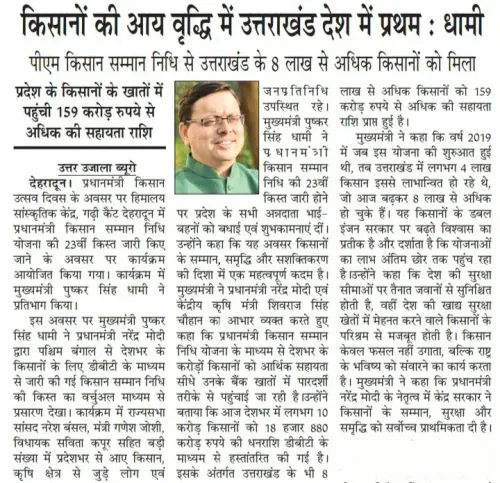
Uttarakhand received ₹161 crore , benefiting 8.8 lakh-plus registered farmer families in the state.
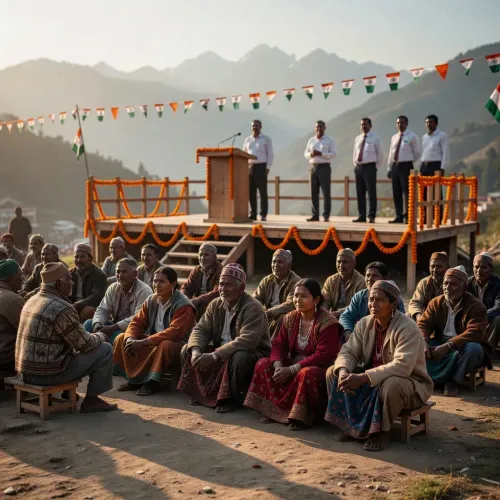
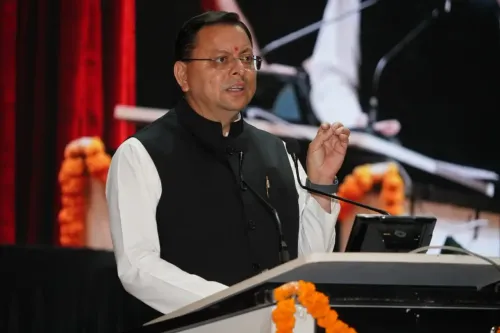
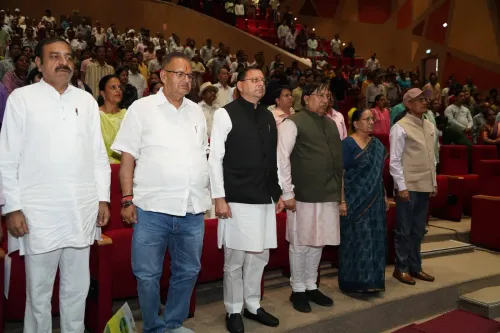
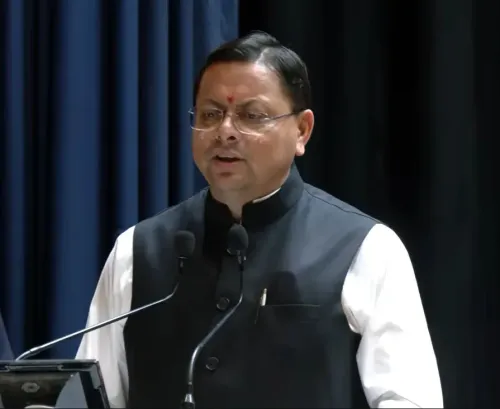
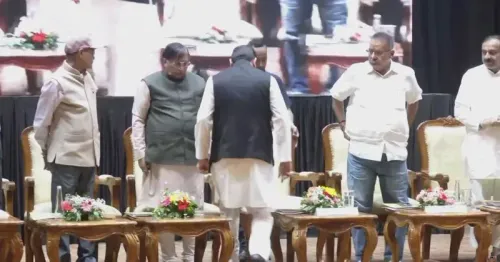
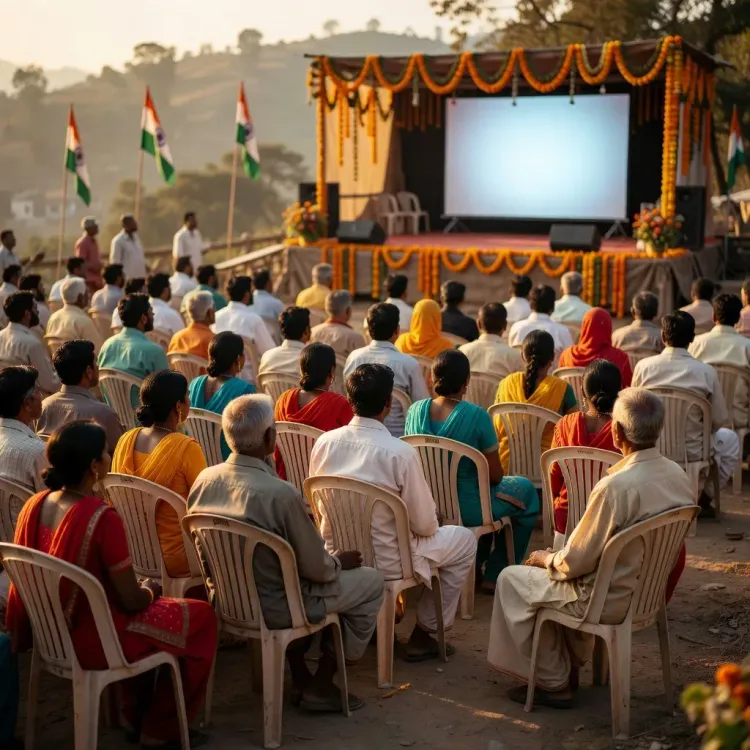
CM Dhami attended the state-level PM Kisan Utsav Divas event in Dehradun and addressed beneficiary farmers.
PM-KISAN has been running since February 2019 , providing ₹6,000 per year to eligible landholding households in three installments.
The DBT mechanism ensures direct account credit with no intermediary, a core design feature of the scheme since launch.
Over 8.8 lakh Uttarakhand farmers woke up to a direct cash transfer on Friday, 30 October 2026 — and Uttarakhand Chief Minister Pushkar Singh Dhami was on stage in Dehradun to witness it happen in real time. At the state-level PM Kisan Utsav Divas event, Dhami addressed farmers as the 24th installment of the Pradhan Mantri Kisan Samman Nidhi (PM-KISAN) scheme landed simultaneously in accounts across the country.
₹18,690 Crore Released Nationwide in a Single Click
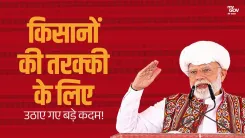
Prime Minister Narendra Modi, joining virtually from a parallel event in Gujarat, triggered the transfer of ₹18,690 crore to the accounts of 9.34 crore-plus farmers across India through Direct Benefit Transfer (DBT). CM Dhami and the Dehradun audience tuned in to Modi's address via virtual link-up — a format the central government has used consistently to give the nationwide rollout a simultaneous, unified feel.
Of that national pool, ₹161 crore flowed directly into Uttarakhand. The state's 8.8 lakh-plus beneficiary farmers received their share under the scheme's fixed rhythm of ₹6,000 per year disbursed in three equal tranches — no middleman, no delay.
PM-KISAN's Seven-Year Arc and the 24th Tranche
PM-KISAN was launched in February 2019 as a central sector scheme designed to deliver direct income support to eligible landholding farm families. The DBT architecture was the centrepiece of its design — a mechanism built explicitly to cut leakage and ensure every rupee reaches the intended account.
Reaching a 24th installment marks more than a calendar milestone. It signals that the administrative pipeline — registration, verification, bank linkage — has held together for over seven years and across hundreds of millions of individual transactions. For a scheme this scale, that continuity is itself a policy outcome.
Dhami's Address to Uttarakhand's Farm Families
Speaking at the Dehradun event, Dhami described the assembled gathering as 'देवतुल्य जनता' ('godlike people') — the kind of register that signals a politician treating a welfare delivery moment as a cultural compact, not just a logistics exercise. He underlined the state-specific numbers, making clear that Uttarakhand's hill farmers — many of them smallholders on fragmented terrain — are counted within the national tally.
With agriculture in Uttarakhand shaped by small landholdings, difficult terrain, and limited market access, direct cash support carries a disproportionate weight compared to larger agrarian states. The ₹161 crore figure, modest against the national total, represents a meaningful floor of income certainty for over eight lakh households.
The next PM-KISAN installment — and whether Uttarakhand's registered beneficiary count grows further — will be the marker worth watching.
Point of View
Mirrored by state events nationwide, reinforces the Centre's strategy of maintaining direct, visible contact with the farm voter base ahead of any electoral cycle. For CM Dhami, hosting the Dehradun event places him firmly within that national narrative while spotlighting a state-specific figure (₹161 crore, 8.8 lakh farmers) that grounds the abstract national total in Uttarakhand's hill-farming reality. The scheme's DBT architecture also continues to serve a dual purpose: welfare delivery and a demonstrable case for technology-driven governance. The progression to a 24th tranche without structural disruption is itself a governance credential the BJP is likely to deploy actively.
NationPress
30 Oct 2026
Frequently Asked Questions
What is the PM-KISAN 24th installment amount released in 2026?
The 24th PM-KISAN installment released on 30 October 2026 transferred over ₹18,690 crore to more than 9.34 crore farmer families across India via Direct Benefit Transfer.
How much did Uttarakhand farmers receive in the PM-KISAN 24th installment?
Over ₹161 crore was transferred to more than 8.8 lakh registered farmer beneficiaries in Uttarakhand under the 24th PM-KISAN installment.
What is PM Kisan Utsav Divas?
PM Kisan Utsav Divas is an event organised by the central and state governments to mark the release of PM-KISAN installments, bringing together farmer beneficiaries and leaders to celebrate the direct benefit transfer.
What is the PM-KISAN scheme and how much does it pay?
Pradhan Mantri Kisan Samman Nidhi (PM-KISAN), launched in February 2019, provides ₹6,000 per year to eligible landholding farmer families in three equal installments of ₹2,000 each, credited directly to bank accounts via DBT.
What did CM Pushkar Singh Dhami say at PM Kisan Utsav Divas Dehradun?
CM Dhami addressed the gathering in Dehradun at the state-level PM Kisan Utsav Divas event, highlighted that over 8.8 lakh Uttarakhand farmers received more than ₹161 crore, and joined virtually with PM Modi's address from Gujarat.