CM Dhami Backs Modi's Viksit Bharat Vision, Cites Inclusive Growth Mantra
Synopsis
Uttarakhand Chief Minister Pushkar Singh Dhami on June 10, 2026 publicly backed PM Narendra Modi's Viksit Bharat vision, saying the Sabka Saath, Sabka Vikas, Sabka Vishwas mantra has become the foundation of public trust nationwide.
Key Takeaways
Chief Minister Pushkar Singh Dhami posted on June 10, 2026 reaffirming Uttarakhand's alignment with PM Modi's national development agenda.
He invoked the Sabka Saath, Sabka Vikas, Sabka Vishwas mantra, the BJP government's core inclusive-growth slogan since 2014 .
The statement endorses the Viksit Bharat@2047 vision, which aims to make India a developed economy by its independence centenary.
Uttarakhand under Dhami has consistently aligned state policy — tourism, infrastructure, welfare — with centrally sponsored programmes.
The public messaging follows a pattern of BJP state leaders linking local governance to the national development narrative ahead of central review meetings.
Uttarakhand Chief Minister Pushkar Singh Dhami on Wednesday, June 10, 2026, publicly reaffirmed his government's alignment with Prime Minister Narendra Modi's development agenda, stating that the Viksit Bharat (Developed India) vision has gained renewed momentum under central leadership and that the inclusive-growth mantra has become a cornerstone of public trust across the country.
Context
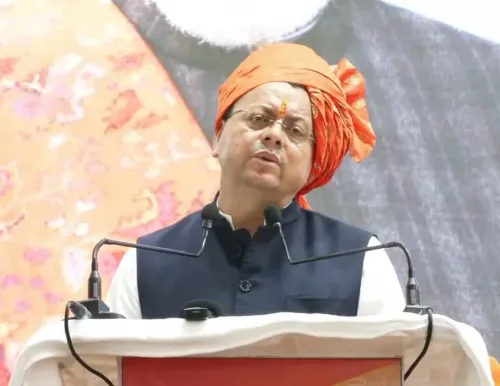
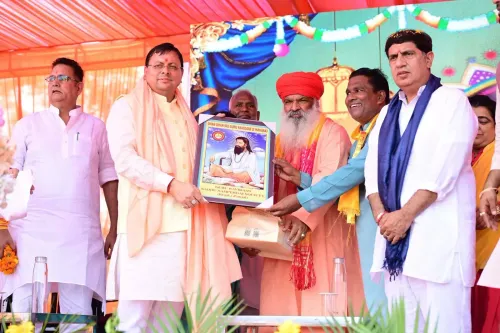
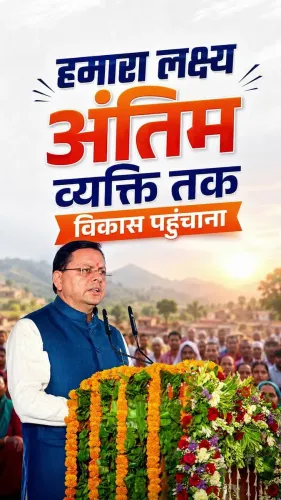
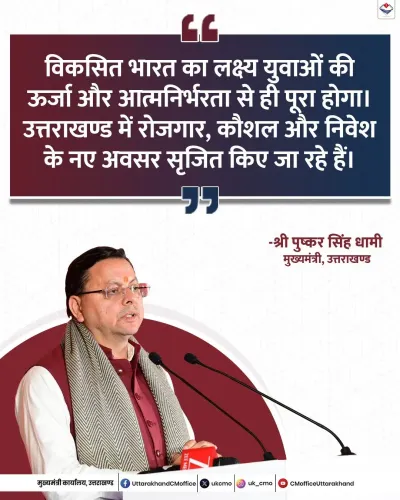
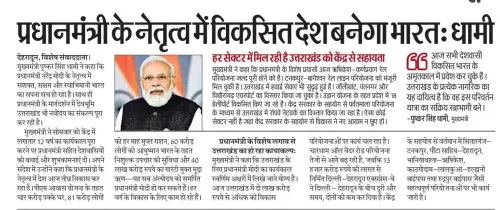
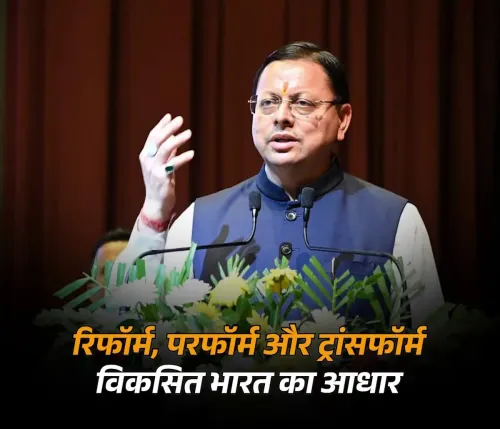
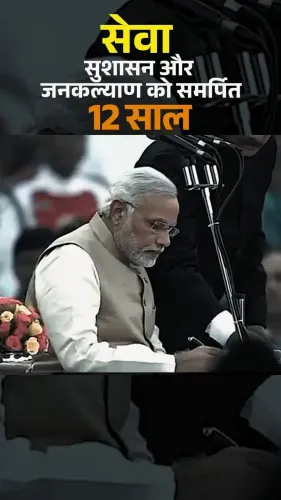
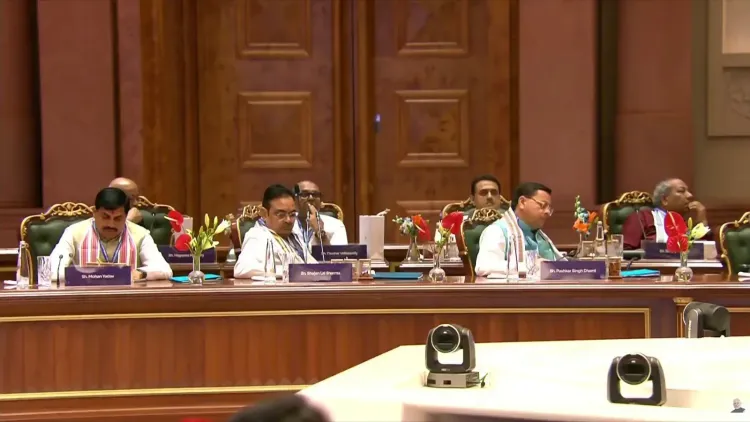
In his post on X, Chief Minister Dhami wrote — translated from Hindi — that 'under the respected Prime Minister's leadership, the resolve of a Viksit Bharat has received new momentum, and the mantra of Sabka Saath, Sabka Vikas, Sabka Vishwas [Together with all, Development for all, Trust of all] has become the foundation of people's faith.' The statement, accompanied by two images, was framed as a reply to his own handle @pushkardhami, amplifying the message to his follower base.
The slogan Sabka Saath, Sabka Vikas, Sabka Vishwas has been the BJP-led central government's defining development catchphrase since 2014, gaining a third pillar — 'Vishwas' (Trust) — ahead of the 2019 general elections. It signals an intent to include all communities in the growth story irrespective of religion, caste, or region.
Policy Backdrop
The Viksit Bharat@2047 vision, articulated by Prime Minister Modi in speeches around 2021–2022, sets the ambitious target of transforming India into a fully developed economy by the centenary of its independence. State governments, including Uttarakhand, have been encouraged to anchor their budget allocations and scheme launches to this national framework.
Uttarakhand, a northern Himalayan state under BJP rule since 2017, has progressively aligned its priorities — spanning tourism infrastructure, road connectivity, and welfare delivery — with centrally sponsored programmes. Chief Minister Dhami, who has led the state since 2021, has consistently positioned Uttarakhand as a model for translating national policy into ground-level outcomes.
Stakeholders and Impact
The messaging directly addresses state residents, reiterating that welfare schemes and development initiatives flowing from the central government are designed to be universally inclusive. For Uttarakhand's population of roughly 1.1 crore, this framing connects local governance outcomes — from rural road projects to health coverage — to the broader national vision.
Political observers note that such public endorsements by BJP state chief ministers serve a dual purpose: reinforcing party cohesion ahead of any national review meetings and signalling to constituents that state and central priorities are in lock-step. This pattern has been consistent across BJP-governed states since 2014.
What's Next
Attention will now turn to Uttarakhand's forthcoming budget allocations and scheme announcements to see whether they explicitly reference Viksit Bharat targets and timelines. Any state-level review meetings with central ministries on infrastructure or welfare delivery will be watched as a measure of how the rhetoric translates into policy action. The Chief Minister's continued public alignment with the national development narrative also sets the tone for Uttarakhand's administrative priorities through the remainder of 2026.
Point of View
Where state leaders publicly echo central slogans to signal ideological cohesion and administrative alignment. By invoking both Viksit Bharat and Sabka Saath, Sabka Vikas, Sabka Vishwas in a single statement, Dhami is reinforcing Uttarakhand's positioning as a compliant partner in the national development project — useful optics ahead of any central fund reviews or scheme audits. The timing, mid-2026, places this squarely in the run-up to potential Viksit Bharat progress assessments, making it as much a political signal as a governance statement. For Uttarakhand voters, the subtext is that state welfare delivery is inseparable from the central government's broader promise of inclusive growth.
NationPress
26 Oct 2026
Frequently Asked Questions
What is the Viksit Bharat vision that CM Dhami mentioned?
Viksit Bharat@2047 is PM Narendra Modi's national vision to transform India into a fully developed economy by 2047, the centenary of Indian independence. It was articulated in speeches around 2021-2022 and serves as a guiding framework for central and state policy.
What does Sabka Saath, Sabka Vikas, Sabka Vishwas mean?
The phrase translates to 'Together with all, Development for all, Trust of all.' It is the BJP-led central government's core inclusive-growth slogan, introduced in 2014 and expanded with the 'Vishwas' (Trust) pillar ahead of the 2019 elections.
Who is Pushkar Singh Dhami?
Pushkar Singh Dhami is the Chief Minister of Uttarakhand and a BJP leader who has held the post since 2021. He is known for aligning the state's policies closely with the central government's development priorities.
Why do BJP chief ministers publicly endorse central government slogans?
Such endorsements reinforce party cohesion, signal administrative alignment between state and central governments, and communicate to constituents that local governance is linked to the national development agenda — a consistent BJP communication pattern since 2014.
What is Uttarakhand's role in the Viksit Bharat framework?
Uttarakhand, under CM Dhami, has aligned its budget priorities in areas like tourism infrastructure, road connectivity, and welfare delivery with centrally sponsored programmes that feed into the Viksit Bharat@2047 targets.