CM Dhami credits PM Modi's leadership for Viksit Bharat vision
Synopsis
Uttarakhand Chief Minister Pushkar Singh Dhami praised Prime Minister Narendra Modi's leadership on X, calling it the strong foundation of Viksit Bharat — citing welfare, Atmanirbhar Bharat, infrastructure and the digital revolution as interconnected milestones toward India's 2047 developed-nation goal.
Key Takeaways
CM Pushkar Singh Dhami posted on 26 May 2026 crediting PM Narendra Modi 's leadership as the foundation of Viksit Bharat .
The post references four policy pillars: service and good governance, welfare of the poor, Atmanirbhar Bharat , infrastructure, and the digital revolution.
Atmanirbhar Bharat Abhiyan was launched in May 2020 as a multi-tranche economic self-reliance package.
The Digital India programme, started in 2015 , underpins e-governance and digital payments cited in the post.
Viksit Bharat is the government's long-term vision to make India a developed nation by 2047 , the centenary of independence.
The statement follows a consistent pattern of BJP state leaders publicly aligning with central government policy messaging.
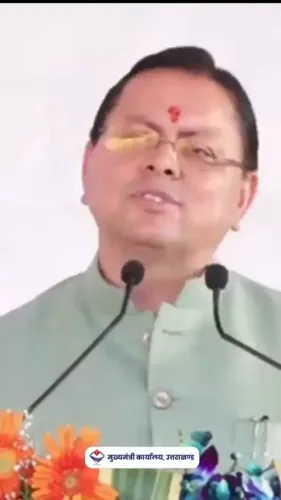
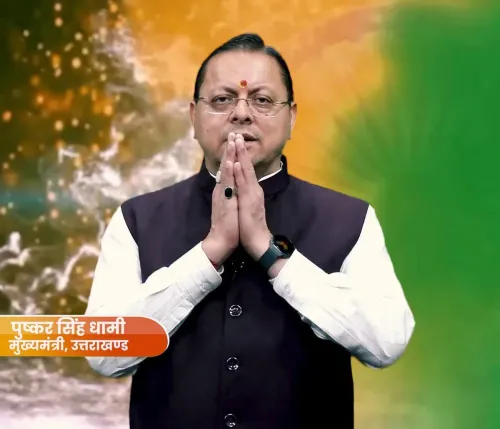
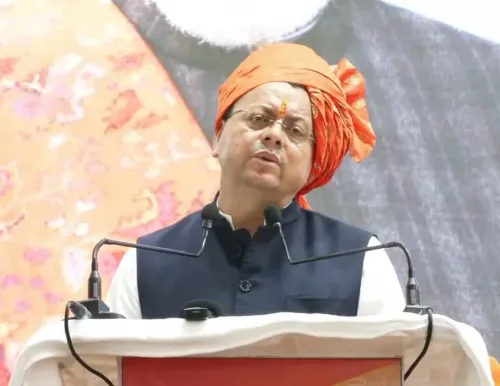
Uttarakhand Chief Minister Pushkar Singh Dhami on Tuesday, 26 May 2026 took to X to credit Prime Minister Narendra Modi's leadership as the foundation of a developed India, citing governance milestones ranging from welfare and self-reliance to infrastructure and the digital revolution.
Context
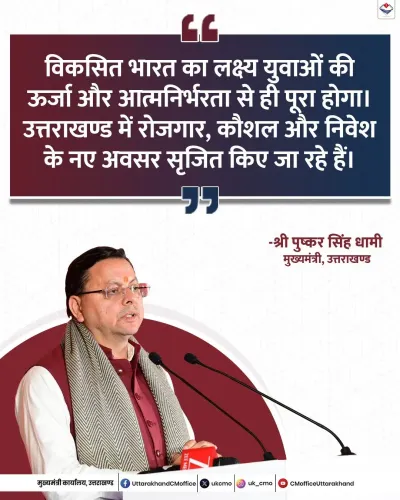
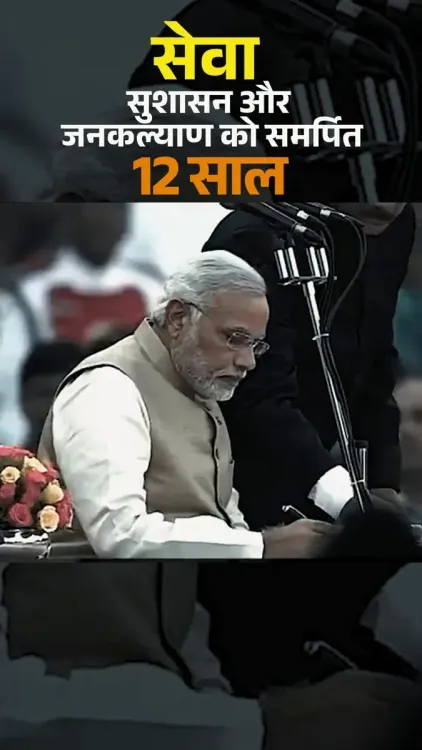
In his post, CM Dhami wrote: 'seva, sushasan aur garib kalyan se lekar atmanirbhar Bharat tak, infrastructure se lekar digital kranti tak' — translating to 'from service, good governance and welfare of the poor to self-reliant India, from infrastructure to the digital revolution' — calling PM Modi's leadership the 'strong foundation of a developed India' (Viksit Bharat ki mazboot neenv).
The statement consolidates several central government policy pillars under a single political narrative, framing them as a coherent arc toward the Viksit Bharat goal of making India a developed nation by 2047.
Policy Backdrop
The post invokes at least three distinct policy programmes. The Atmanirbhar Bharat Abhiyan, launched in May 2020, was a multi-tranche economic package covering stimulus, domestic manufacturing reforms and supply-chain resilience in the wake of the pandemic. The Digital India programme, initiated in 2015, expanded broadband connectivity, e-governance platforms and digital payments infrastructure across the country.
On the welfare front, the Pradhan Mantri Garib Kalyan Anna Yojana and allied measures were significantly expanded from 2020 onwards, extending subsidised food grain coverage to hundreds of millions of households. Together, these schemes form the policy backbone that CM Dhami references in his post.
The Viksit Bharat vision, articulated repeatedly by PM Modi, sets a long-horizon target for India to attain developed-nation status by the centenary of its independence. NITI Aayog and central ministries have since aligned sectoral roadmaps to this overarching goal.
Stakeholders and Impact
The messaging targets a broad constituency: citizens who have benefited from welfare schemes, entrepreneurs and businesses aligned with the self-reliance push, and the wider electorate that associates infrastructure upgrades and digital services with improved daily life. Poor households, explicitly named in Dhami's post, remain the most politically salient group in this narrative.
Uttarakhand itself has been a recipient of central infrastructure investment, including road and highway projects in the hill state, making the alignment between state and central messaging practically relevant beyond rhetoric.
What's Next
Statements of this nature from BJP chief ministers tend to cluster around national budget sessions, NITI Aayog governing-council meetings, or reviews of Viksit Bharat targets — signalling that state governments are tracking and publicly endorsing the central government's development scorecard. As the 2047 horizon draws policy attention, such alignment messaging from state leaders is likely to intensify, particularly ahead of major national-level review exercises.
Point of View
Where a state executive publicly reinforces the central leadership's brand equity ahead of likely policy review cycles. By bundling welfare, self-reliance, infrastructure and digital governance into a single tribute, the statement also serves as a de facto state-level endorsement of the Viksit Bharat scorecard. For the BJP, such coordinated messaging from chief ministers deepens the perception of a unified national development narrative. The pattern suggests the party is systematically building a 2047-anchored communication architecture well in advance of electoral and policy milestones.
NationPress
10 Oct 2026
Frequently Asked Questions
What did CM Dhami say about PM Modi on X?
CM Pushkar Singh Dhami posted on X on 26 May 2026 saying PM Modi's leadership — spanning service, good governance, welfare of the poor, Atmanirbhar Bharat, infrastructure and the digital revolution — has become the strong foundation of Viksit Bharat.
What is Viksit Bharat?
Viksit Bharat is PM Narendra Modi's long-term vision for India to become a developed nation by 2047, the centenary of India's independence, with NITI Aayog and central ministries aligning sectoral plans to this goal.
What is Atmanirbhar Bharat Abhiyan?
Atmanirbhar Bharat Abhiyan is a self-reliant India economic package announced in May 2020, covering financial stimulus, domestic manufacturing reforms and supply-chain resilience measures introduced during the pandemic.
What is the Digital India programme?
Digital India is a central government programme launched in 2015 aimed at expanding broadband connectivity, e-governance services and digital payments infrastructure across India.
Why do BJP chief ministers praise PM Modi's schemes?
BJP chief ministers frequently align their public messaging with central government policy priorities to reinforce a unified national development narrative, particularly ahead of NITI Aayog reviews and national budget sessions.