CM Dhami Hails 12 Years of Modi Govt Farm Reforms
Synopsis
Uttarakhand CM Pushkar Singh Dhami marked 12 years of Modi government farm reforms, crediting PM-KISAN, crop insurance and Kisan Credit Card with empowering crores of farmers, while outlining state-level initiatives including House of Himalayas to boost hill farmer incomes.
Key Takeaways
PM-KISAN Samman Nidhi provides Rs 6,000 annual direct income support to an estimated 14 crore farm households since its launch in February 2019 .
Pradhan Mantri Fasal Bima Yojana , launched in 2016 , modernised crop insurance with technology-driven claims settlement.
Kisan Credit Card saturation drives from 2018-19 expanded production credit access to small and marginal farmers with interest subvention.
Uttarakhand's House of Himalayas platform markets GI-tagged and niche mountain produce to national and global buyers.
The state is pursuing natural farming , millet promotion and agri-mechanisation alongside improved market access for frontier-area farmers.
CM Dhami reaffirmed his government's commitment to making agriculture the 'strong foundation' of Uttarakhand 's economy.
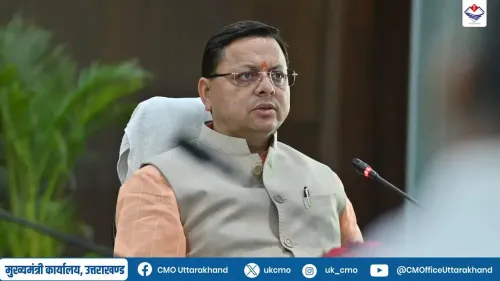
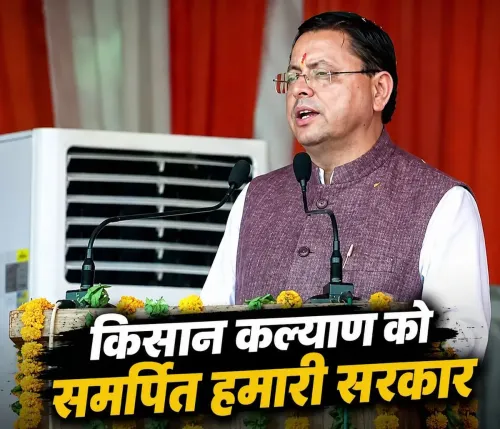
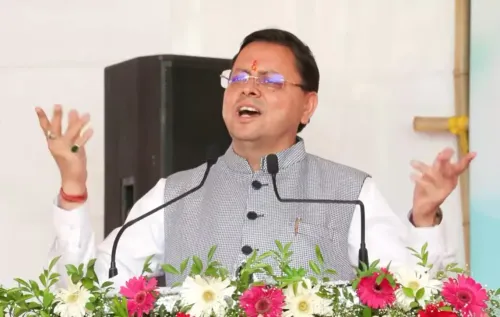
Uttarakhand Chief Minister Pushkar Singh Dhami on Thursday, 11 June 2026, credited Prime Minister Narendra Modi's twelve-year tenure with transforming Indian agriculture, citing direct income support, crop insurance, credit access, irrigation and technology adoption as pillars of farmer empowerment. Dhami also outlined his state government's parallel push to make farming the backbone of Uttarakhand's economy through mountain-specific value-chain initiatives.
Context
Writing on the occasion of the hashtag #12YearsOfKisanSamriddhi ('12 years of farmer prosperity'), Dhami stated: 'Under the respected Prime Minister's leadership, Indian agriculture has witnessed unprecedented transformation in 12 years. PM-KISAN Samman Nidhi, crop insurance, Kisan Credit Card, irrigation and the growing use of technology in agriculture have worked to empower farmers.' He added that decisions taken to raise the income of the annadata (provider of food), make farming remunerative and strengthen village economies have brought positive change to the lives of crores of farmers.
The post marks a broader BJP effort to document agricultural policy milestones a dozen years after the party came to power at the Centre in May 2014. Chief ministers across BJP-governed states have amplified the messaging, framing central schemes as a connected reform arc rather than standalone interventions.
Policy Backdrop
PM-KISAN Samman Nidhi, launched in February 2019, provides an annual direct income support of Rs 6,000 to eligible landholding farmers across the country, benefiting an estimated 14 crore farm households. The Pradhan Mantri Fasal Bima Yojana, introduced in 2016, replaced earlier crop-insurance models with broader coverage and technology-driven claims settlement.
The Kisan Credit Card saturation drive, intensified from 2018-19 onwards, aimed to bring all eligible small and marginal farmers under production credit with interest subvention. Natural farming and millet promotion were scaled up after 2020, gaining additional visibility during the International Year of Millets in 2023.
Uttarakhand's State-Level Initiatives
Dhami highlighted that his government is 'continuously working for farmer welfare' under the Prime Minister's guidance. Central to this is House of Himalayas, a state-government marketing platform that channels GI-tagged and niche mountain produce to national and global markets. The initiative is designed specifically for the smallholder, high-altitude farming profile of the state.
Beyond market access, the state is pursuing programmes in horticulture, natural farming, millet promotion, agri-mechanisation and outreach to farmers in border and frontier areas. Dhami stated his government is 'committed to making the Uttarakhand farmer prosperous and making agriculture a strong foundation of the state's economy.'
Stakeholders and Impact
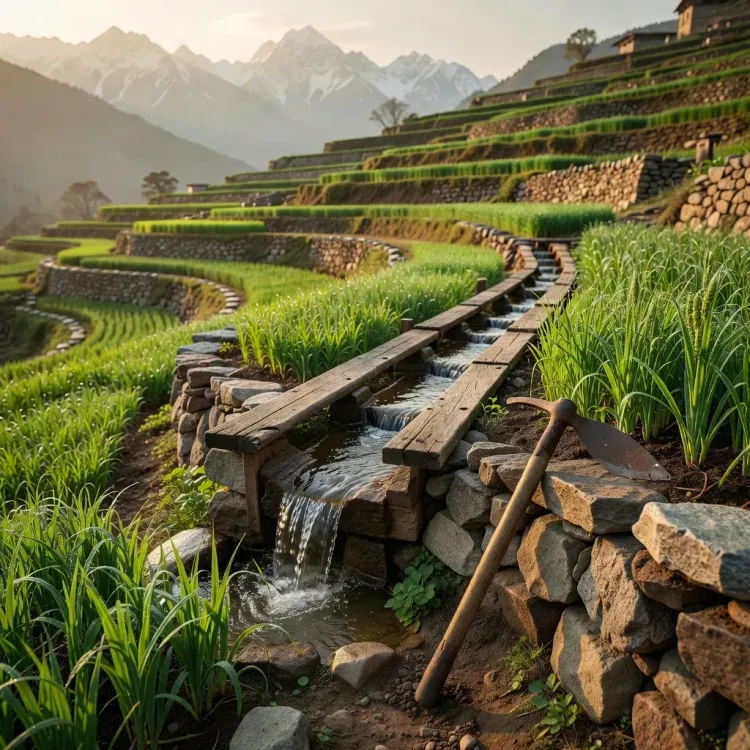
Uttarakhand's agricultural landscape is dominated by smallholders farming terraced hillside plots, making flat-land mechanisation models difficult to replicate directly. Schemes like House of Himalayas attempt to bridge this gap by creating premium-price demand for mountain-origin products such as high-altitude rajma, buckwheat, and organic herbs. If sustained, such value-chain investments could meaningfully supplement incomes for hill farmers who have historically faced migration pressure.
At the national level, the combined architecture of direct transfers, risk mitigation through insurance, and credit access has been positioned as a shift from subsidy-based support toward income-security and investment-enabling frameworks for rural households.
What's Next
Observers will track the rollout and actual sales data from House of Himalayas retail and e-commerce channels, as well as state budget allocations for natural farming clusters and agri-mechanisation in 2026-27. The broader test for the twelve-year reform narrative will be whether measurable income-growth data for smallholders, particularly in hill states, is placed in the public domain to substantiate the political messaging.
Point of View
Using agriculture — a politically sensitive sector — as a showcase of delivery. By weaving state-level schemes like House of Himalayas into the central policy story, he positions Uttarakhand as an active implementation partner rather than a passive beneficiary, which serves both his own political profile and the party's broader rural outreach. The emphasis on hill-specific interventions is significant: Uttarakhand's smallholder, terrain-constrained farming base has historically been underserved by policies designed for the Indo-Gangetic plains, and state-adapted programmes address a genuine structural gap. The forward-looking commitment to agri-mechanisation and frontier-area market access signals that the political messaging is being backed, at least rhetorically, by a distinct state-level policy agenda.
NationPress
26 Oct 2026
Frequently Asked Questions
What is PM-KISAN Samman Nidhi and who benefits from it?
PM-KISAN Samman Nidhi is a central government scheme launched in February 2019 that provides Rs 6,000 per year in direct income support to eligible landholding farmer families, benefiting an estimated 14 crore households across India.
What is House of Himalayas?
House of Himalayas is a marketing platform run by the Uttarakhand government to connect GI-tagged and niche mountain agricultural products — such as high-altitude pulses, millets and organic herbs — with national and global buyers, aiming to raise incomes for hill farmers.
What did CM Dhami say about farm reforms under PM Modi?
CM Pushkar Singh Dhami said that under PM Narendra Modi 's leadership over 12 years , Indian agriculture has seen 'unprecedented transformation', crediting PM-KISAN , crop insurance, Kisan Credit Card , irrigation and technology adoption with empowering crores of farmers.
What agricultural schemes is Uttarakhand running for hill farmers?
Uttarakhand is running initiatives in horticulture , natural farming , millet promotion , agri-mechanisation and market access for border-area farmers, alongside the House of Himalayas platform for mountain produce.
What is Pradhan Mantri Fasal Bima Yojana?
Pradhan Mantri Fasal Bima Yojana is a crop insurance scheme launched in 2016 that replaced earlier models with broader coverage and technology-enabled claims processing to reduce financial risk for farmers from crop losses.