CM Dhami Hails Skyroot, Targets Rahul Gandhi on Space
Synopsis
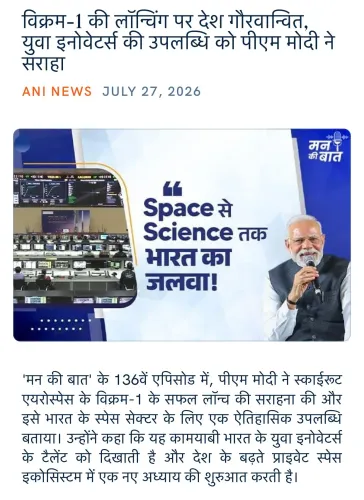
Uttarakhand CM Pushkar Singh Dhami lauded Skyroot Aerospace and India's young space engineers as symbols of Atmanirbhar Bharat, while attacking Congress leader Rahul Gandhi for allegedly questioning Indian institutions on foreign soil. The post highlights the BJP's political narrative around indigenous space-sector achievements.
Key Takeaways
CM Pushkar Singh Dhami praised Skyroot Aerospace as a model of indigenous innovation and self-reliance under PM Modi's leadership.
Dhami highlighted young engineers, including those as young as 28 years , as symbols of India's new space ambition.
He sharply criticised Rahul Gandhi and the Congress party for allegedly undermining India's image and institutions during foreign visits.
India's private space sector was opened through IN-SPACe and Atmanirbhar Bharat reforms in 2020 , enabling startups like Skyroot Aerospace to develop launch vehicles.
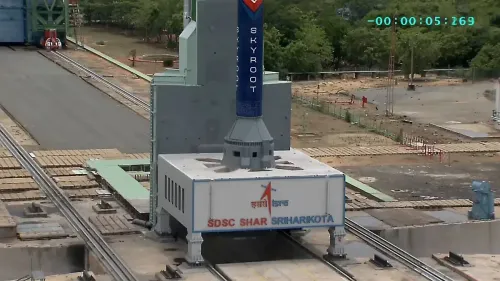
Skyroot Aerospace , based in Hyderabad , is developing the Vikram series of rockets targeting the small-satellite launch market.
The post reflects a broader BJP political strategy of juxtaposing domestic tech milestones against opposition conduct abroad.
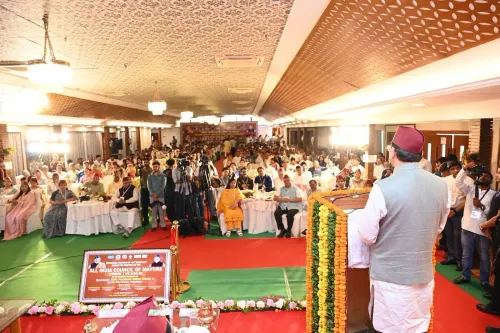
Uttarakhand Chief Minister Pushkar Singh Dhami on Monday, 20 July 2026, praised Skyroot Aerospace and India's young space engineers while sharply criticising Congress leader Rahul Gandhi for allegedly questioning Indian institutions on foreign soil. The post, shared on X, contrasted the achievements of domestic space startups with what Dhami described as the opposition's habit of undermining the country's image abroad.
Context
In his post, CM Dhami wrote that under the 'visionary leadership' of Prime Minister Narendra Modi, unprecedented opportunities for young talent have given India's space programme 'new momentum' — 'नई गति' [new momentum]. He singled out Skyroot Aerospace as a symbol of innovation, technical skill, and self-reliance, noting that young members of its team — including engineers as young as 28 years — have 'brought honour to the tricolour in the world of space.'
Dhami then drew a pointed contrast: 'Congress's leader Rahul Gandhi, who has been called 'young' for decades, and his party never miss an opportunity to put India's achievements and institutions in the dock on foreign soil.' He concluded that the difference is clear — the new generation of Indians raises the tricolour's prestige globally through their abilities, while Congress leadership is 'busy raising questions on the country's image abroad.'
Policy Backdrop
The political salvo comes against the backdrop of significant structural reforms to India's space sector. In 2020, the government established IN-SPACe (Indian National Space Promotion and Authorisation Centre) and liberalised foreign direct investment norms, allowing private companies to build and operate launch vehicles and satellites — a shift away from the earlier ISRO-only model.
The Atmanirbhar Bharat initiative, launched in 2020, provided the overarching policy framework for this liberalisation, aiming to position India as a competitive player in the global small-satellite launch market. Skyroot Aerospace, headquartered in Hyderabad, is one of the most prominent beneficiaries of this opening, developing its Vikram series of launch vehicles for small satellite payloads.
India's Gaganyaan human spaceflight programme, announced in 2019, further catalysed public-private partnerships in the sector, signalling a long-term strategic intent to expand beyond government-only space operations.
Stakeholders and Impact
The primary beneficiaries of the policy shift highlighted by CM Dhami are India's growing cohort of space-tech entrepreneurs and engineers. Startups like Skyroot Aerospace now have access to ISRO facilities, technical know-how, and a regulatory window through IN-SPACe that was unavailable before 2020.
For young engineers — the demographic Dhami specifically invoked — the reforms have opened career pathways in a sector previously dominated entirely by government employment. The political framing, however, also targets a domestic audience ahead of ongoing debates about the opposition's conduct during international engagements, a recurring flashpoint in BJP-Congress discourse.
What's Next
Skyroot Aerospace is working toward an orbital launch attempt with its Vikram-1 rocket, which would mark a significant milestone for India's private launch industry. Any successful orbital mission would further validate the policy architecture that CM Dhami and the ruling BJP have been crediting to PM Modi's leadership. Budget allocations and expanded private-sector access to ISRO infrastructure remain areas to watch as the government seeks to deepen the public-private space ecosystem.
Point of View
Then pivot to attacking the opposition's foreign conduct to energise the nationalist base. The invocation of Skyroot Aerospace's young engineers is deliberate — it frames economic and industrial policy as a generational story, contrasting 'doers' with a Congress leadership portrayed as perennially young in title but out of step with India's ambitions. The criticism of Rahul Gandhi for remarks abroad is a well-worn BJP attack line that gains fresh traction each time a domestic achievement provides a flattering backdrop. Whether this shapes public opinion beyond the party's core base will depend on how Skyroot's upcoming Vikram-1 orbital attempt performs.
NationPress
20 Oct 2026
Frequently Asked Questions
What is Skyroot Aerospace and why is it in the news?
Skyroot Aerospace is a Hyderabad-based private space startup developing the Vikram series of small-satellite launch vehicles. It is in the news after Uttarakhand CM Pushkar Singh Dhami praised it as a symbol of India's Atmanirbhar Bharat space push on 20 July 2026.
What did CM Dhami say about Rahul Gandhi?
CM Dhami said that Rahul Gandhi and the Congress party 'never miss an opportunity to put India's achievements and institutions in the dock on foreign soil,' contrasting this with young Indian engineers who raise the tricolour's prestige globally.
What is IN-SPACe and how does it relate to private space companies?
IN-SPACe (Indian National Space Promotion and Authorisation Centre) was established in 2020 to regulate and promote private participation in India's space sector, enabling startups like Skyroot Aerospace to build and launch rockets.
What is the Atmanirbhar Bharat initiative in the context of space?
Atmanirbhar Bharat, launched in 2020, is a self-reliance initiative that included liberalising India's space sector — allowing private firms to develop launch vehicles and satellites, previously an exclusive domain of ISRO.
What is Skyroot Aerospace's Vikram rocket?
The Vikram series is Skyroot Aerospace's line of small-satellite launch vehicles. The company is working toward an orbital launch attempt with Vikram-1, which would be a landmark for India's private space industry.