Giriraj Singh hails Vikram-1 launch, echoes PM Modi's pride
Synopsis
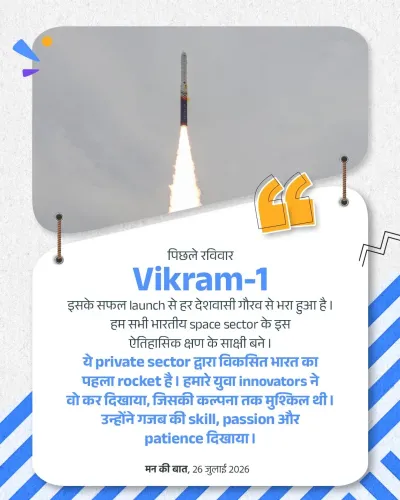
Union Textiles Minister Giriraj Singh amplified PM Modi's praise for the Vikram-1 private rocket launch on 27 July 2026, calling the achievement a source of national pride and spotlighting India's push to build a competitive private space sector under the Atmanirbhar Bharat framework.
Key Takeaways
Giriraj Singh posted on 27 July 2026 celebrating the Vikram-1 launch and echoing PM Modi 's praise for young Indian innovators.
PM Modi described the achievement as something 'unimaginable', signalling strong political backing for private space ventures.
The launch aligns with India's 2020 decision to open the space sector to private players through IN-SPACe .
The National Space Policy (2023) gave private entities the right to own satellites, launch vehicles, and ground stations.
The development supports India's Atmanirbhar Bharat goal of reducing reliance on foreign launch services.
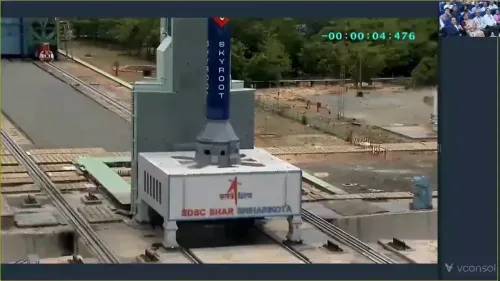
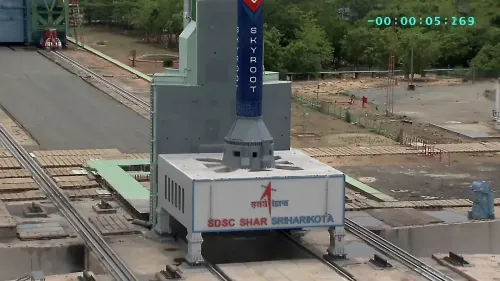
Next milestones include further test flights by IN-SPACe -authorised startups such as Skyroot Aerospace .
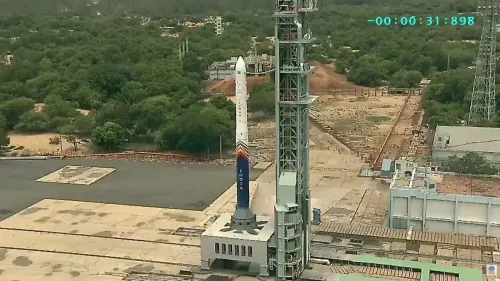
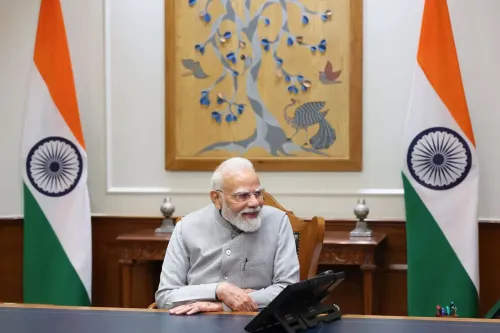
Union Textiles Minister Giriraj Singh on Monday, 27 July 2026, shared his pride over the launch of Vikram-1, India's privately developed rocket, amplifying Prime Minister Narendra Modi's praise for the young innovators behind the milestone. Singh posted on X, highlighting that the achievement had filled every citizen with pride and that PM Modi had lauded what he called an 'unimaginable' accomplishment by the country's youth.
Context
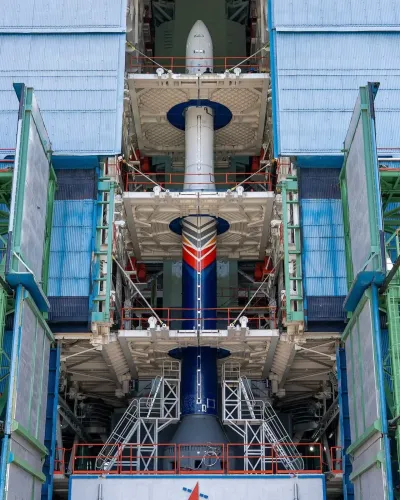
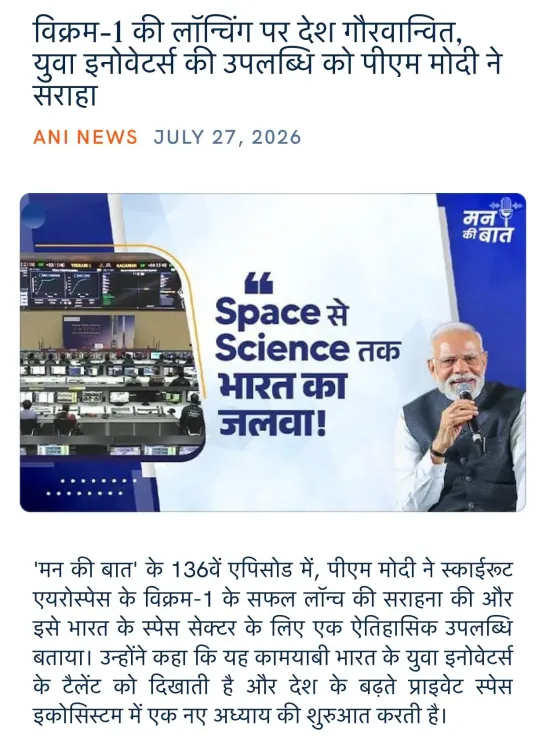
The post references the launch of Vikram-1, a privately built Indian rocket designed to demonstrate indigenous small-satellite launch capability. Singh shared the development with the note: 'विक्रम-1 की लॉन्चिंग पर देश गौरवान्वित, युवा इनोवेटर्स की उपलब्धि को पीएम मोदी ने सराहा' — ('The country is proud of the Vikram-1 launch; PM Modi has praised the achievement of young innovators'). The post was amplified via the NaMo App, the BJP-linked platform frequently used by party leaders to circulate government messaging.
PM Modi's quoted sentiment — that young innovators have 'accomplished something unimaginable' — frames the launch not merely as a technical event but as a generational moment in India's space journey. Singh's decision to amplify the message underscores the cross-ministerial enthusiasm within the National Democratic Alliance government for the private space sector.
Policy Backdrop
The Vikram-1 launch sits squarely within the policy architecture the government began constructing in 2020, when India opened its space sector to private participation through the Indian National Space Promotion and Authorisation Centre (IN-SPACe) and revised launch licensing norms. The reform was designed to allow startups to access launch infrastructure, frequencies, and regulatory clearances that were previously exclusive to ISRO.
The broader push is anchored in the Atmanirbhar Bharat framework, which seeks to reduce dependence on foreign launch services and position India as a competitive provider in the global small-satellite market. Chandrayaan-3's successful lunar south-pole landing in 2023 established international credibility for Indian space technology and created a foundation of public confidence on which private ventures like Vikram-1 now build.
The National Space Policy, notified in 2023, further codified private-sector rights to own and operate satellites, launch vehicles, and ground stations — a structural shift that industry observers credit with accelerating startup activity in the sector.
Stakeholders and Impact
The primary beneficiaries of a successful Vikram-1 demonstration are private space startups and the young engineers and entrepreneurs who have built them, often with seed funding from government-backed venture arms and private investors. A proven indigenous small-launch capability reduces dependence on foreign rideshare missions and shortens the timeline for domestic satellite operators to deploy constellations.
For the broader economy, a competitive private launch sector could attract foreign satellite manufacturers seeking affordable, reliable lift — a market currently dominated by SpaceX and Rocket Lab. Statements of political support from senior ministers like Singh signal continued regulatory goodwill, which is critical for startups navigating IN-SPACe's authorisation pipeline.
What's Next
Analysts will watch for follow-on test flights by IN-SPACe-authorised entities, including Skyroot Aerospace and other startups, as the sector moves from demonstration launches toward commercial operations. Any revision to the National Space Policy or expansion of IN-SPACe's mandate will be closely tracked by investors and launch-service customers alike.
The political endorsement cycle — from PM Modi's public praise to its rapid amplification by cabinet colleagues — suggests the government intends to keep private space innovation at the centre of its technology-nationalism narrative heading into the second half of 2026.
Point of View
Reinforcing the government's ownership of India's private-space success story. The choice of the NaMo App as the distribution channel signals this is deliberate party messaging, not merely personal enthusiasm. Framing young innovators as national heroes serves a dual purpose — it burnishes the government's Atmanirbhar Bharat credentials and cultivates a technology-nationalism narrative that resonates with urban, aspirational voters. The pattern mirrors how the government leveraged Chandrayaan-3 in 2023, suggesting a replicable playbook for every major space milestone.
NationPress
25 Oct 2026
Frequently Asked Questions
What is Vikram-1 and who built it?
Vikram-1 is a privately developed Indian rocket designed to launch small satellites into orbit. It is part of India's growing private space sector, enabled by IN-SPACe regulations introduced in 2020.
Why did Giriraj Singh post about the Vikram-1 launch?
As a senior BJP leader and Union Minister, Giriraj Singh amplified PM Modi's praise for the Vikram-1 launch to highlight the government's support for private space innovation under the Atmanirbhar Bharat framework.
What did PM Modi say about the Vikram-1 launch?
PM Modi praised the young innovators behind Vikram-1, stating they had 'accomplished something unimaginable' and that the launch fills every citizen with pride.
What is IN-SPACe and what role does it play in India's space sector?
IN-SPACe, or the Indian National Space Promotion and Authorisation Centre, was set up in 2020 to regulate and promote private participation in India's space sector, giving startups access to launch infrastructure and regulatory clearances.
How does the Vikram-1 launch fit into India's Atmanirbhar Bharat goals?
Vikram-1 represents India's effort to build indigenous launch capability through private startups, reducing dependence on foreign rockets and competing in the global small-satellite launch market — a core objective of the Atmanirbhar Bharat initiative.