CM Dhami Highlights Social Media as Tool for Public Dialogue
Synopsis
Uttarakhand Chief Minister Pushkar Singh Dhami on 25 May 2026 declared social media a vital tool for empowering citizens' voices, saying his administration has built it into a trusted medium of dialogue — extending a BJP-led digital governance pattern rooted in the 2015 Digital India framework.
Key Takeaways
CM Pushkar Singh Dhami stated on 25 May 2026 that social media plays an important role in empowering the voice of common citizens.
He described social media as a 'medium of trust and dialogue' that his administration has deliberately cultivated.
Uttarakhand expanded social media-based grievance redressal mechanisms after 2021 under the current government.
The approach aligns with the Digital India programme launched in 2015 , which promoted e-governance across Indian states.
BJP-governed states have broadly adopted direct digital communication to enable faster, more visible responses to public concerns.
Rural youth and common citizens in Uttarakhand are the primary beneficiaries, gaining easier access to state authorities through digital channels.
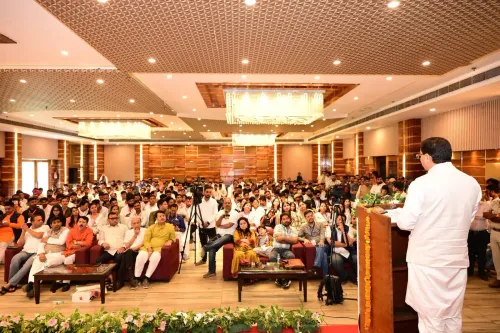
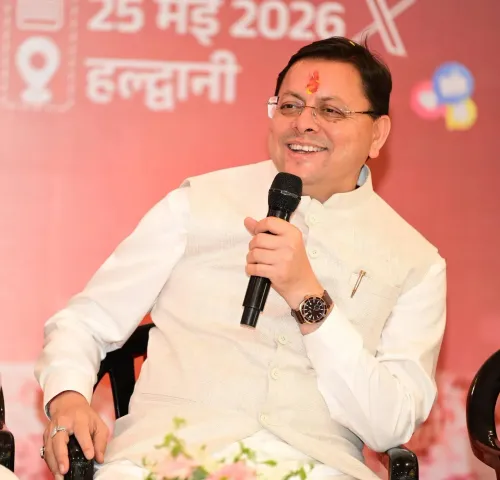
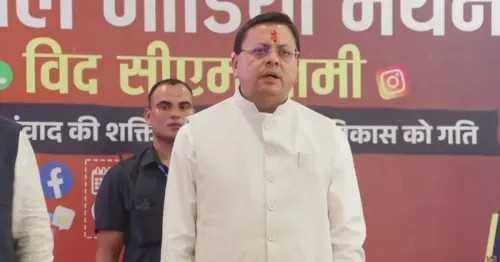
Uttarakhand Chief Minister Pushkar Singh Dhami on Monday, 25 May 2026, underscored the growing role of social media in amplifying citizens' voices, stating that his administration has deliberately built it into a trusted channel for communication and public engagement.
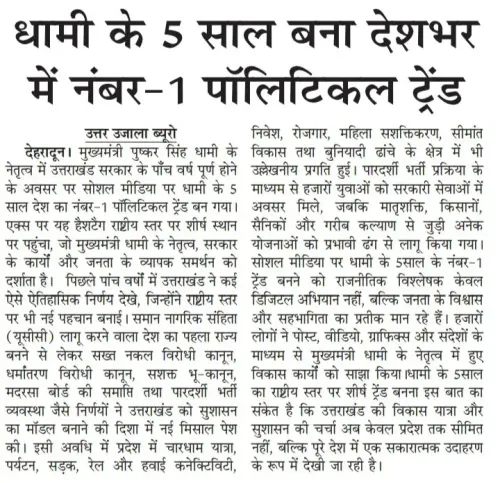
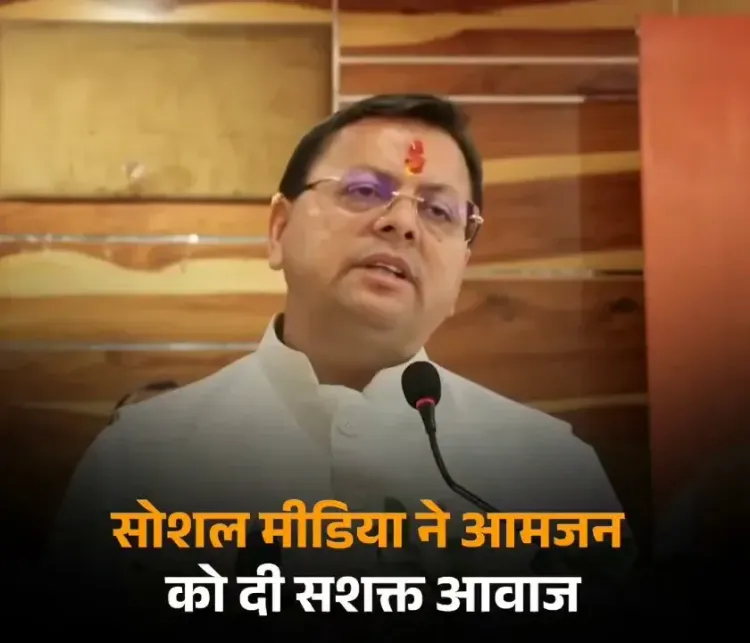
Posting in Hindi on X, CM Dhami wrote: 'सोशल मीडिया आज आमजन की आवाज को सशक्त करने में महत्वपूर्ण भूमिका निभा रहा है' ['Social media today is playing an important role in empowering the voice of the common people']. He added that this is precisely why his government has made social media 'an important medium of trust and dialogue.'
Context
Dhami, who has led Uttarakhand since July 2021 and was re-elected in 2022, has consistently positioned direct digital outreach as a pillar of his administration's governance model. The post, accompanied by a video, reflects an ongoing effort to frame the state government's social media presence not merely as political communication but as a civic infrastructure for citizen engagement.
The statement comes as Indian state governments — particularly those led by the Bharatiya Janata Party (BJP) — have increasingly leaned on platforms such as X, Instagram, and WhatsApp to receive public feedback and address grievances in near-real time.
Policy Backdrop
The broader framework for this approach traces back to the Digital India programme, launched by the central government in 2015, which pushed states to adopt e-governance tools and digital citizen-engagement mechanisms. Uttarakhand expanded its social media-based grievance redressal infrastructure after 2021, aligning with the state's citizen-centric governance agenda under the current administration.
BJP-governed states have broadly followed a model of direct digital communication that seeks to reduce dependence on intermediary channels, enabling administrations to respond to public concerns with greater speed and visibility. Uttarakhand's mountainous geography and dispersed rural population make digital outreach particularly significant, as it can bridge distances that physical administrative machinery struggles to cover.
Stakeholders and Impact
The primary beneficiaries of this approach are common citizens and rural youth in Uttarakhand, who gain a more accessible channel to reach state authorities. Social media platforms lower the barrier for grievance submission compared with formal written complaints or in-person visits to government offices.
For the state administration, the model offers a real-time feedback loop that can surface local issues — from road conditions to welfare scheme delivery — before they escalate. It also allows the government to disseminate policy information directly to residents without delay.
What's Next
Observers will watch whether Uttarakhand formalises this commitment through dedicated digital engagement portals or publishes measurable metrics — such as grievance resolution rates via social media — in upcoming state assembly sessions. CM Dhami's articulation of social media as a 'medium of trust' signals an intent to institutionalise these channels rather than treat them as ad hoc outreach tools. If the state moves toward structured, accountable digital engagement, it could serve as a replicable model for other hill states grappling with similar administrative access challenges.
Point of View
' he elevates routine digital outreach to a deliberate civic commitment, which carries accountability implications. For a state like Uttarakhand, where terrain limits administrative reach, this framing is strategically sound and electorally resonant with younger, digitally connected voters. The real test will be whether measurable, institutionalised mechanisms follow the rhetoric.
NationPress
9 Oct 2026
Frequently Asked Questions
What did Uttarakhand CM Pushkar Singh Dhami say about social media?
CM Dhami said on 25 May 2026 that social media is playing an important role in empowering the voice of common people, and that his government has made it a key medium of trust and dialogue.
How does the Uttarakhand government use social media for governance?
The Uttarakhand government under CM Dhami has used social media platforms for direct citizen communication, public feedback, and grievance redressal, expanding these mechanisms since 2021.
What is the Digital India connection to Uttarakhand's social media governance?
The Digital India programme, launched in 2015, provided the national framework for e-governance and digital citizen engagement that state governments including Uttarakhand have built upon.
How does BJP use social media in states it governs?
BJP-governed states have systematically used social media for direct public dialogue since 2014, bypassing traditional intermediary channels to enable faster grievance handling and policy communication.
Why is social media governance especially important for Uttarakhand?
Uttarakhand's mountainous geography and dispersed rural population make digital outreach critical, as it bridges distances that physical administrative infrastructure struggles to cover efficiently.