CM Dhami Bets on Women to Deliver Uttarakhand's Decade
Synopsis
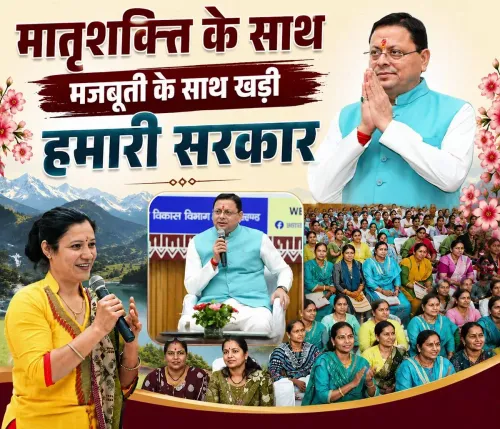
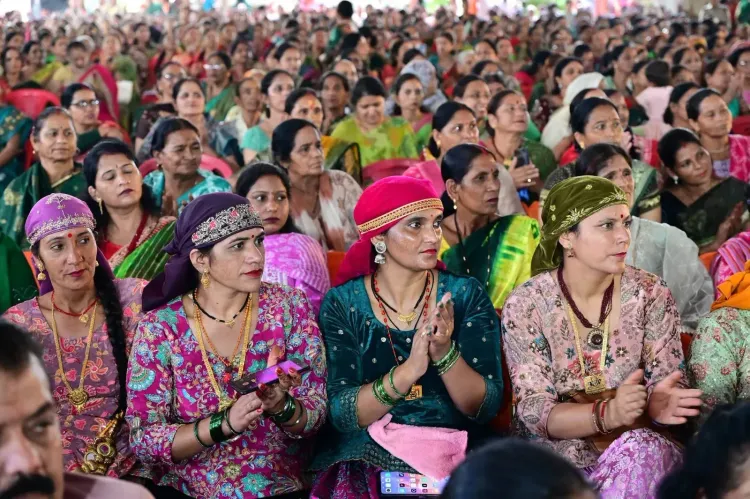
Uttarakhand CM Pushkar Singh Dhami invoked PM Modi's Kedarnath pledge that the 2020s will be Uttarakhand's decade, declaring women's energy, talent, and leadership the driving force behind that vision and committing his government to expanding opportunities in education, employment, and self-reliance.
Key Takeaways
CM Pushkar Singh Dhami posted on 10 August 2026 reaffirming that women are central to Uttarakhand's development decade.
He recalled PM Narendra Modi's declaration from Kedarnath that the third decade of the 21st century will be Uttarakhand's decade.
Dhami identified education, employment, self-employment, and leadership as the four pillars his government is targeting for women.
The goal is for women to become aatmanirbhar (self-reliant) and lead the building of a 'developed and prosperous Uttarakhand.' Uttarakhand has operated women-focused schemes since its formation in 2000 , including self-help groups and skill training programmes.
Kedarnath has emerged as a recurring political pulpit for BJP leaders linking spiritual authority to state development vision.
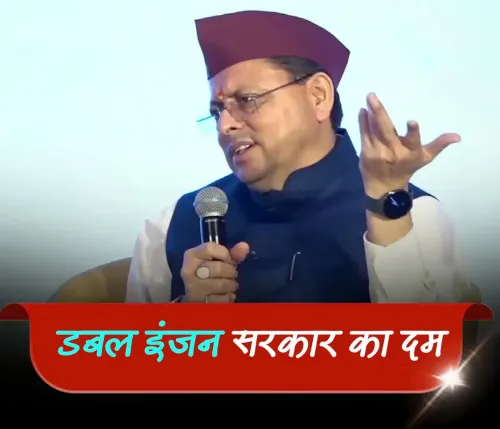
From the sacred precincts of Kedarnath to the corridors of state governance, a single promise is being held up as the north star for Uttarakhand's next decade — and Uttarakhand Chief Minister Pushkar Singh Dhami says women will be the ones to make it real. On Monday, 10 August 2026, Dhami took to X to frame women's empowerment not as a welfare gesture but as the engine of the state's most ambitious growth vision.
Dhami's post, written in Hindi, recalls a declaration made by Prime Minister Narendra Modi from the sacred soil of Baba Kedar — the beloved name for the Kedarnath shrine — that the third decade of the 21st century will belong to Uttarakhand. '21वीं सदी का तीसरा दशक उत्तराखंड का दशक होगा' ('The third decade of the 21st century will be Uttarakhand's decade'), Dhami quotes, before anchoring the entire promise to what he calls matrushakti — the energy, talent, and leadership capacity of women.
What Dhami's Government Says It Is Doing for Women
The Chief Minister states his government is continuously working to ensure that the daughters and women of the state get maximum opportunities in education, employment, self-employment, and leadership. The goal, he writes, is for them to become aatmanirbhar — self-reliant — and to play a leading role in building a developed and prosperous Uttarakhand.
Uttarakhand has run women-focused schemes since its formation as a state in 2000, spanning self-help group networks, skill training programmes, and education access drives across its predominantly hilly and rural terrain. Dhami's framing ties these existing threads to the larger 'decade of Uttarakhand' narrative, positioning gender inclusion as both a moral commitment and a strategic necessity.
Kedarnath as a Political Pulpit
Kedarnath — one of India's most venerated pilgrimage sites and the centrepiece of Uttarakhand's religious tourism economy — has become a recurring backdrop for national-level vision statements. Prime Minister Modi has visited the shrine multiple times, and leaders of the ruling BJP have consistently linked the site's spiritual weight to the state's developmental aspirations. Invoking that setting is itself a political and cultural signal: the pledge made at Kedar carries a gravity that a press conference in Dehradun simply does not.
For Dhami, repeating that invocation on a national platform serves a dual purpose — it anchors his government's agenda to the Prime Minister's authority, and it frames women's empowerment as part of a sacred, non-negotiable compact rather than a routine policy line.
The real test of that compact will come in state budget cycles and scheme launches. Watch for new allocations targeting women's leadership pipelines, rural self-employment, and higher education access — the arenas where the rhetoric of a decade must eventually meet rupees and results.
Point of View
Modi's Kedarnath address — into state-level gender policy messaging, giving routine welfare commitments a grander, almost devotional framing. By invoking matrushakti alongside a pilgrimage site, the CM signals that women's empowerment is being positioned as both electoral currency and developmental strategy ahead of future budget cycles. The 'decade of Uttarakhand' frame also creates a long accountability horizon, raising the stakes for measurable outcomes in education and employment. Whether the rhetoric translates into fresh scheme funding or remains aspirational will determine how this narrative ages.
NationPress
10 Aug 2026
Frequently Asked Questions
What did CM Dhami say about women in Uttarakhand?
CM Pushkar Singh Dhami said his government is committed to giving women maximum opportunities in education, employment, self-employment, and leadership so they can become self-reliant and lead Uttarakhand's development.
What is the 'decade of Uttarakhand' that Dhami mentioned?
It refers to a vision statement attributed to PM Narendra Modi, made from the Kedarnath pilgrimage site, declaring that the third decade of the 21st century (the 2020s) will be Uttarakhand's decade of growth and development.
What is matrushakti and why did Dhami use the term?
Matrushakti is a Hindi term meaning the power or energy of women, often with a reverent connotation. Dhami used it to frame women's contribution to Uttarakhand's progress as both essential and honourable.
What schemes does Uttarakhand have for women's empowerment?
Uttarakhand has run women-focused programmes since its formation in 2000, including self-help group networks, skill training drives, and education access initiatives, particularly targeting rural and hilly areas.
Why is Kedarnath significant in Uttarakhand's political discourse?
Kedarnath is one of India's most revered pilgrimage sites and a symbol of Uttarakhand's religious tourism economy. BJP leaders, including PM Modi, have used it as a backdrop for major vision statements, lending those pledges spiritual and political weight.