CM Dhami Seeks Blessings at Feet of Elders

Synopsis
Uttarakhand CM Pushkar Singh Dhami was photographed touching the feet of his elders and teachers on October 31, 2026, with his office sharing images captioned 'values higher than office' — a public assertion of humility rooted in Indian cultural tradition.
Key Takeaways
Uttarakhand CM Pushkar Singh Dhami was photographed performing charan sparsh — touching the feet of his elders and teachers — on October 31, 2026 .
The Chief Minister's Office shared two images with the caption 'पद से ऊंचे संस्कार' , meaning 'values higher than position.' Dhami has led Uttarakhand since July 2021 , representing the Khatima constituency on a BJP ticket.
The gesture draws on the Indian tradition of sanskar — moral and cultural values instilled from childhood — as a form of public political communication.
Such acts of visible reverence are a consistent feature of Indian political culture, resonating strongly with voters in states like Uttarakhand with deep traditions of respect for teachers and saints.
Values that rise above rank — that is the message Chief Minister Pushkar Singh Dhami of Uttarakhand sent on Saturday, October 31, 2026, when he was photographed bowing at the feet of his elders and teachers, an act his office shared with the simple, cutting caption: 'पद से ऊंचे संस्कार' — 'values higher than office.'
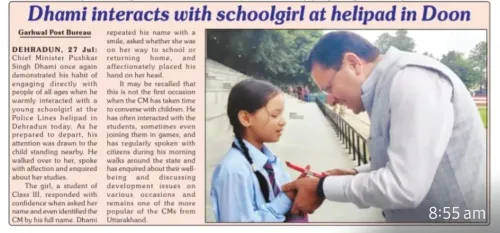
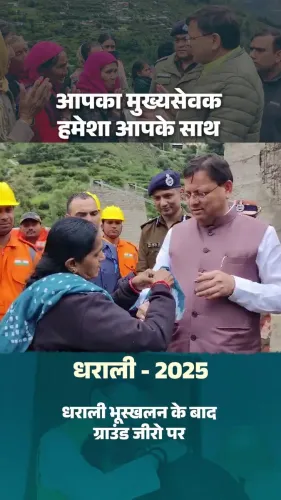
The Chief Minister's Office posted two images of CM Dhami in a gesture of traditional reverence, touching the feet of gurus — the Hindi word for teachers and elders — in keeping with a deeply rooted Indian custom of seeking blessings from those who have guided one's life. The post's message was direct: no matter how high the chair, humility must be higher.
Sanskar over status
The phrase 'पद से ऊंचे संस्कार' — literally 'values higher than position' — does most of the heavy lifting here. In Indian public life, sanskar (cultural and moral values instilled from childhood) is frequently invoked as the invisible credential that outlasts political power. By bowing before his teachers, Dhami was publicly affirming that credential in a way no press release could manufacture.
Touching the feet of elders, known as charan sparsh, is one of the oldest marks of deference in Indian tradition. For a serving Chief Minister to perform it visibly underscores a deliberate point: that authority does not exempt one from gratitude.
Dhami's public image and the role of cultural optics
Pushkar Singh Dhami, who has led Uttarakhand since July 2021 and represents the Khatima constituency for the Bharatiya Janata Party, has consistently cultivated an image grounded in personal simplicity and cultural rootedness. Images of political figures performing such gestures are a well-established feature of Indian political communication — they travel fast on social media precisely because they resonate with voters who prize humility in public servants. The optics are intentional, but they draw on values that predate any political calculation.
For the residents of Uttarakhand — a state with a strong tradition of reverence for teachers and saints — a Chief Minister seen bowing before his gurus reinforces the idea that governance and culture need not be strangers.
In a political climate where power is often displayed rather than restrained, a leader choosing to bow is itself a statement — and sometimes the quietest gestures carry the farthest.
Point of View
Who governs a state with a particularly deep reverence for gurus and saints, the gesture lands with authentic cultural weight beyond mere symbolism. The caption 'values higher than office' subtly frames humility as a leadership credential in itself — a counter-narrative to perceptions of political entitlement. It is a low-cost, high-resonance move that reinforces his personal brand of simple, grounded governance.
NationPress
31 Oct 2026
Frequently Asked Questions
Why did CM Pushkar Singh Dhami touch the feet of his elders?
CM Dhami performed charan sparsh — the traditional Indian gesture of touching elders' or teachers' feet to seek blessings — as an act of respect and cultural reverence, which his office shared publicly on October 31, 2026.
What does 'पद से ऊंचे संस्कार' mean?
The Hindi phrase means 'values higher than position' or 'values that rise above office,' emphasising that cultural humility and moral character matter more than rank or power.
Who is Pushkar Singh Dhami?
Pushkar Singh Dhami is the Chief Minister of Uttarakhand , serving since July 2021 . He is a BJP leader representing the Khatima constituency in the state assembly.
What is charan sparsh in Indian culture?
Charan sparsh is the practice of touching the feet of elders, teachers, or revered figures as a mark of deep respect and a way of seeking their blessings — one of the oldest and most widespread customs in Indian tradition.
Is it common for Indian politicians to post such cultural gestures?
Yes. Indian political figures across parties frequently share images of performing traditional gestures like touching elders' feet. These posts are a recognised form of cultural communication that emphasises humility and rootedness to voters.