CM Dhami Champions Uttarakhand Weavers on National Handloom Day
Synopsis
Chief Minister Pushkar Singh Dhami marked the 12th National Handloom Day in Dehradun by purchasing nettle-fibre garments, honouring top artisans, and detailing state schemes that have disbursed over Rs 4 crore in loans and Rs 1 crore in subsidies to weavers, generating jobs for some 834 people.
Key Takeaways
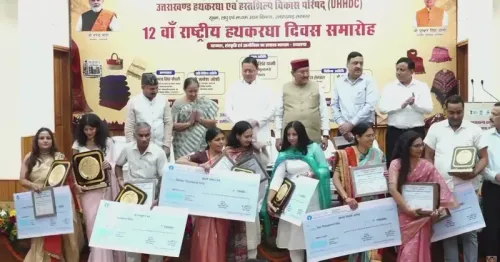
CM Pushkar Singh Dhami participated in the 12th National Handloom Day event at Mukhya Sevak Sadan, Dehradun on 7 August 2026 .
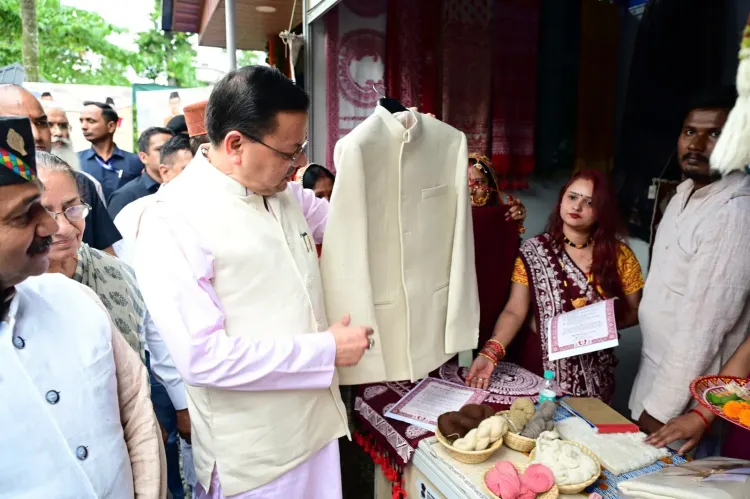
He purchased garments made from bichhoo ghaas (stinging nettle fibre) to directly promote local artisans.
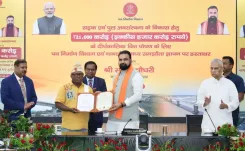
Outstanding weavers and artisans were honoured, including with the 'Uttarakhand Rajya Shilp Ratna' award.
The Mukhya Mantri Swarozgar Yojana has provided over Rs 4 crore in loans and over Rs 1 crore in subsidies to weavers, supporting employment for approximately 834 people .
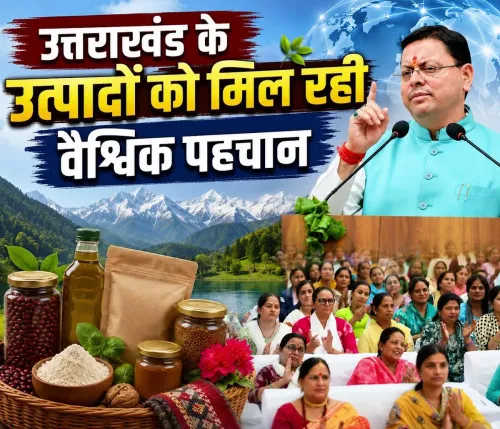
Iconic products — Harsil woollen shawls, Munsiyari thulma, Almora tweed, ringal craft — are gaining national and global reach aided by GI tags .
The state is expanding artisan market access through e-commerce platforms, trade fairs, and exhibitions .
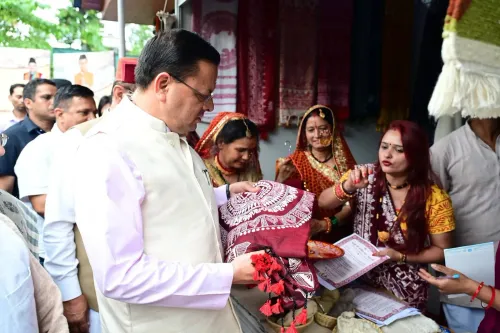
A shawl woven from stinging nettle. A length of thulma cloth from the high Himalayas. These are not museum pieces — they are live livelihoods, and on 7 August 2026, Uttarakhand Chief Minister Pushkar Singh Dhami made that point concrete by purchasing nettle-fibre garments directly from artisans at the 12th National Handloom Day celebration organised by the Uttarakhand Handloom and Handicrafts Development Council at Mukhya Sevak Sadan, Dehradun.
What the CM bought — and why it matters
Dhami did not just inaugurate and leave. He opened his wallet. Buying garments made from bichhoo ghaas (stinging nettle or nettle fibre) — a wild Himalayan plant increasingly prized in sustainable fashion — the Chief Minister sent a deliberate signal to artisans in the hall: the state's first consumer is the state itself. He then honoured outstanding weavers and handicraft artisans with formal awards, including the 'Uttarakhand Rajya Shilp Ratna', the state's highest craft honour.
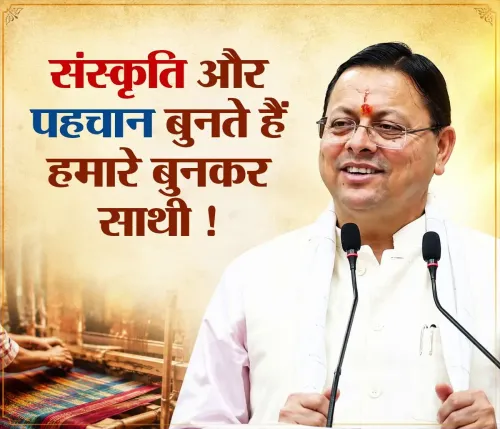
Speaking at the event, Dhami framed the occasion in cultural terms: 'Uttarakhand's artisans do not merely make garments or products — the soul of the state's culture, folk life, and traditions is woven into them.' ('उत्तराखण्ड के कारीगर केवल वस्त्र या उत्पाद नहीं बनाते, बल्कि उनमें प्रदेश की संस्कृति, लोकजीवन और परंपराओं की आत्मा भी समाहित होती है।')
Harsil shawls, Munsiyari thulma, Almora tweed — the roll call of Uttarakhand craft
The CM named the products that give the state its textile identity: Harsil's woollen shawls, the thulma of Munsiyari and Dharchula, Almora tweed, the pankhi of Chhinka, rangwali pichhoda, ringal (bamboo) craft, and nettle-fibre products. Several of these have received Geographical Indication (GI) tags, strengthening Uttarakhand's brand in national and international markets. The GI certification route — increasingly used by Indian states to protect and monetise heritage crafts — gives these products legal protection and a premium identity that plain 'handmade' labelling cannot.
Rs 4 crore in loans, Rs 1 crore in subsidies — the scheme numbers behind the sentiment
The event was not only ceremonial. Dhami cited the Mukhya Mantri Swarozgar Yojana, under which loans of over Rs 4 crore and subsidies exceeding Rs 1 crore have been disbursed to weavers and artisans, generating employment for approximately 834 people. The state is also running the National Handloom Development Programme and the Samagra Hastashilp Cluster Vikas Yojana, channelling modern machinery, design inputs, training, common facility centres, and marketing support to artisan clusters.
For Scheduled Caste and Scheduled Tribe weavers specifically, dedicated training programmes aim at economic self-reliance. Senior artisans receive financial security through the Shilpkar Pension Yojana. And market access is being widened through e-commerce platforms, trade fairs, and exhibitions — pushing Uttarakhand handicrafts from village workshops toward national and global retail.
Vocal for Local — and a direct ask to residents
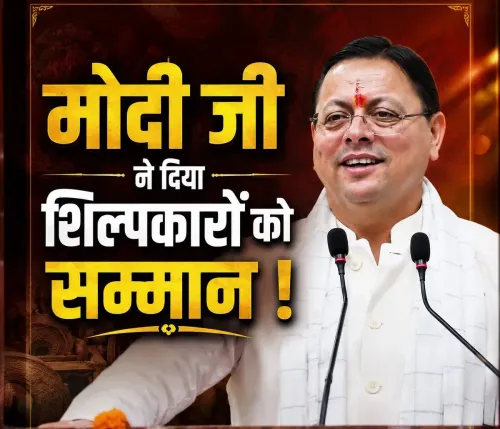
Prime Minister Narendra Modi's 'Vocal for Local' and 'Local to Global' campaigns, launched nationally from 2020, provided the broader framework Dhami invoked. But the Chief Minister added a personal appeal to Uttarakhand residents: whenever a purchase is to be made, consider the local alternative first. It is a simple ask — and one that, if answered at scale, could shift meaningful income toward the state's estimated hundreds of thousands of weaver and artisan households.
Cabinet Minister Bharat Singh Chaudhary, MLA Savita Kapoor, and Secretary Vinay Shankar Pandey were among the officials present alongside a large gathering of weavers, artisans, entrepreneurs, and women craftspersons.
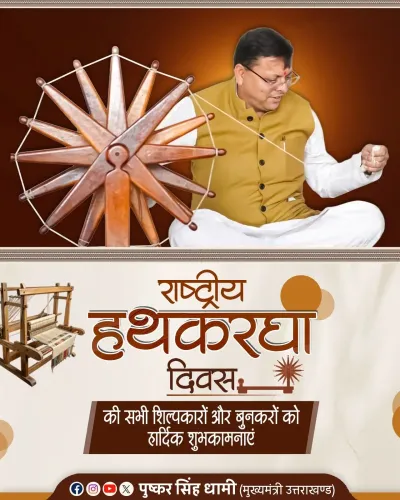
National Handloom Day has been observed every 7 August since 2015, the date chosen to commemorate the Swadeshi Movement of 1905 — a reminder that the politics of buying local in India runs more than a century deep. The stinging nettle Dhami purchased on Friday carries that thread forward.
Point of View
A tactic that complements subsidy-driven supply-side schemes. The alignment with Modi's 'Vocal for Local' branding lets the state government plug into a nationally recognised campaign while claiming local credit. The harder test is whether the cluster development and e-commerce push translates into sustained income for artisans beyond the ceremonial calendar — a challenge that GI tagging alone cannot solve without robust last-mile logistics and design modernisation. Uttarakhand's bet on heritage craft as both cultural identity and economic engine mirrors strategies in other hill states, but the state's thin industrial base makes the handloom sector's performance more consequential for rural livelihoods here than elsewhere.
NationPress
7 Aug 2026
Frequently Asked Questions
What is National Handloom Day and why is it celebrated on 7 August?
National Handloom Day is observed every year on 7 August since 2015 to honour India's handloom weavers. The date commemorates the launch of the Swadeshi Movement on 7 August 1905, which promoted indigenous textiles as a form of economic and national assertion.
What is bichhoo ghaas and why did CM Dhami buy products made from it?
Bichhoo ghaas , or stinging nettle, is a wild Himalayan plant whose fibres can be spun into durable, eco-friendly fabric. CM Dhami purchased nettle-fibre garments at the National Handloom Day event to publicly promote this traditional Uttarakhand craft and encourage demand for local artisan products.
What is the Mukhya Mantri Swarozgar Yojana for weavers in Uttarakhand?
The Mukhya Mantri Swarozgar Yojana is an Uttarakhand self-employment scheme that provides loans and subsidies to weavers and artisans. According to CM Dhami, it has disbursed over Rs 4 crore in loans and over Rs 1 crore in subsidies , generating employment for approximately 834 people .
Which Uttarakhand handicraft products have received GI tags?
Several traditional Uttarakhand products have received Geographical Indication (GI) tags , strengthening their brand identity. CM Dhami cited Harsil woollen shawls, Munsiyari and Dharchula thulma, Almora tweed, ringal craft, rangwali pichhoda, and nettle-fibre products as examples of the state's recognised heritage crafts, though the specific list of GI-tagged items continues to grow.
What is the 'Uttarakhand Rajya Shilp Ratna' award?
The 'Uttarakhand Rajya Shilp Ratna' is the state government's highest honour for outstanding craftspersons. It is awarded to recognise excellence in traditional weaving and handicraft, and CM Dhami presented it to distinguished artisans at the 12th National Handloom Day event on 7 August 2026 .