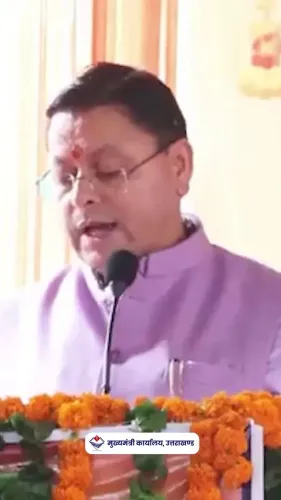
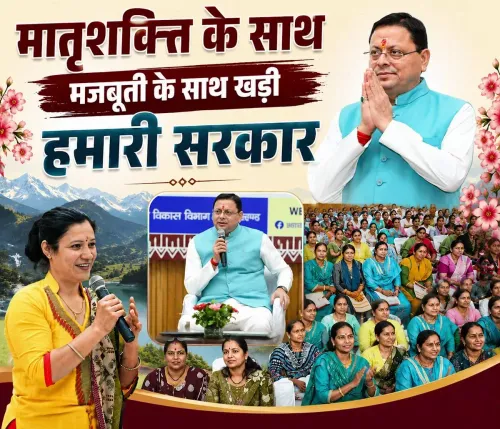
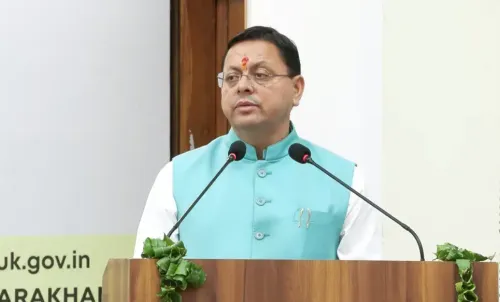
CM Dhami champions women's skill development in Uttarakhand
Synopsis
Uttarakhand CM Pushkar Singh Dhami on 15 November 2026 reaffirmed his government's push to recognise and develop women's skills across Devbhoomi, framing the effort as a pathway to self-reliance through state-run schemes.
Key Takeaways
CM Pushkar Singh Dhami on 15 November 2026 reaffirmed the Uttarakhand government's commitment to women's skill development and self-reliance.
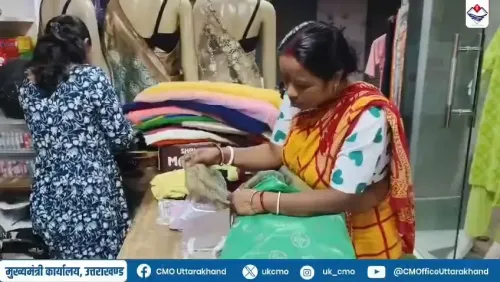
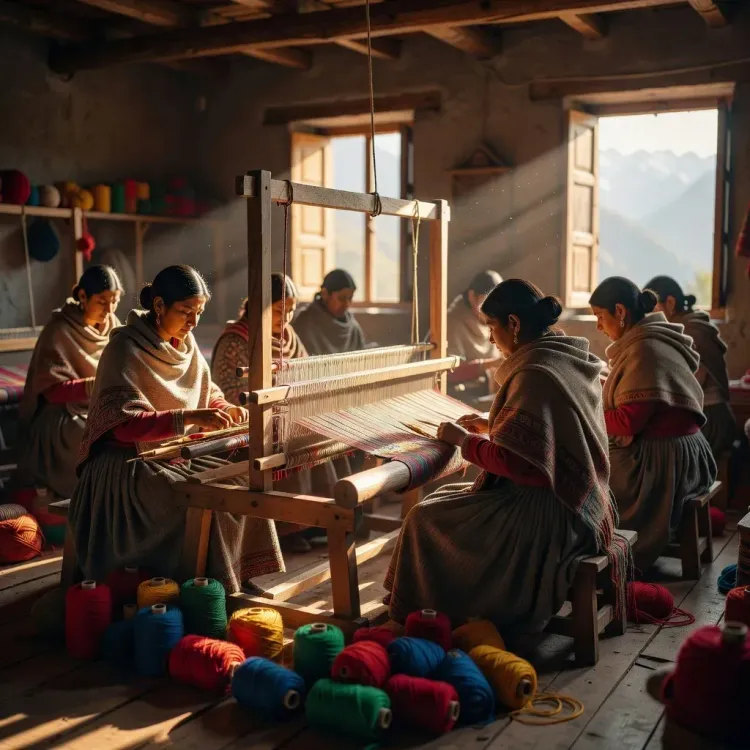
Dhami emphasised that women of Devbhoomi Uttarakhand already possess talent, and the focus is on giving that talent formal recognition — not teaching skills from scratch.
The government says it is running 'various schemes' to encourage women, though no specific programmes or budget figures were cited in the post.
Uttarakhand 's high male out-migration makes women the primary rural workforce, giving women-focused policy an outsized economic impact in hill districts.
The push is framed within the broader Atmanirbhar Bharat self-reliance narrative championed by BJP-led governments at the central and state levels.
Upcoming state budget allocations and mid-term reviews of self-help group programmes will be the key indicators of whether this commitment is backed by concrete action.
The women of Uttarakhand — a state whose mountains have long driven its young men away in search of work — are being repositioned at the centre of its economic story. Uttarakhand Chief Minister Pushkar Singh Dhami on Sunday, 15 November 2026 declared that the state government is continuously encouraging women through various schemes aimed at giving their skills a new identity and making them self-reliant.
Posting in Hindi, CM Dhami wrote: 'देवभूमि उत्तराखंड की महिलाओं के पास हुनर और प्रतिभा की कोई कमी नहीं है।' — 'The women of Devbhoomi Uttarakhand lack neither skill nor talent. Our government is continuously encouraging them through various schemes with the objective of giving their abilities a new identity and making them self-reliant.'
Devbhoomi's women at the heart of the self-reliance push
Uttarakhand, officially known as Devbhoomi (Land of the Gods), carries a structural economic reality that shapes every policy conversation: high male out-migration leaves women as the primary agricultural and household workforce across its hill districts. That means any serious skill-development push in the state is, by default, a women's empowerment push — and state governments have known this for over a decade.
Dhami's administration, in power since 2021, has framed women's economic participation within the broader Atmanirbhar Bharat (self-reliant India) narrative championed by the BJP-led central government. Programmes spanning handicrafts, horticulture, tourism-linked livelihoods, and self-help groups have been expanded at the state level, though the CM's post on Sunday did not name specific schemes or attach fresh budget figures.
Skill recognition, not just skilling
The phrasing Dhami used is worth pausing on. He spoke of giving women's existing skills a 'new identity' — an acknowledgement that the talent is already there, embedded in generations of craft, agriculture, and community management, but has gone unrecognised and unmonetised. The policy challenge is not teaching women something new from scratch; it is formalising, certifying, and connecting to markets what they already know. That is a subtly different problem, and a subtly different promise.
Uttarakhand's terrain makes delivery difficult — dispersed mountain villages, poor road connectivity in winter months, and limited digital infrastructure all complicate the last-mile reach of government schemes. How effectively welfare and skilling budgets actually reach rural women in the hill districts will be the real measure of this commitment.
The state's next budget cycle and any mid-term review of ongoing self-help group or skill programmes will be the moment to test whether this affirmation translates into measurable economic outcomes for Uttarakhand's women.
Point of View
Applying it at the state level to a demographic — Uttarakhand's hill-district women — who are both politically significant and genuinely underserved by formal economic systems. The emphasis on recognising 'existing' talent rather than importing new skills is a rhetorical shift that implicitly acknowledges past policy gaps. Without named schemes or budget commitments, however, the post reads more as a reaffirmation of intent than a policy announcement — the credibility test will come in the next budget session and in ground-level delivery data from self-help group programmes.
NationPress
15 Nov 2026
Frequently Asked Questions
What did CM Dhami say about women's empowerment in Uttarakhand?
CM Pushkar Singh Dhami stated on 15 November 2026 that women of Devbhoomi Uttarakhand are full of skill and talent, and that his government is continuously encouraging them through various schemes to give their abilities a new identity and make them self-reliant.
Which schemes is the Uttarakhand government running for women's skill development?
The Dhami administration has expanded multiple women-focused skill and self-help group programmes since 2021, though the 15 November post did not name specific schemes. The government has previously run initiatives spanning handicrafts, horticulture, and tourism-linked livelihoods.
Why is women's empowerment especially important in Uttarakhand?
High male out-migration from Uttarakhand's hill districts means women form the backbone of agricultural and community life. This makes women's skill development central to the state's overall economic resilience.
How does Uttarakhand's women's welfare policy connect to Atmanirbhar Bharat?
The BJP-led state government has framed its women's empowerment efforts within the Atmanirbhar Bharat (self-reliant India) narrative, positioning skill recognition and economic independence as local expressions of the national self-reliance agenda.
Who is Pushkar Singh Dhami?
Pushkar Singh Dhami is the Chief Minister of Uttarakhand and a BJP leader who has held the post since 2021, prioritising state-level development, welfare, and women's empowerment programmes.