CM Dhami credits democracy fighters as Amrit Kaal's foundation
Synopsis
Chief Minister Pushkar Singh Dhami of Uttarakhand has credited the country's democracy fighters with laying the strong foundation of India's Amrit Kaal journey, linking their sacrifices to the nation's development vision toward 2047.
Key Takeaways
CM Pushkar Singh Dhami stated that India's democracy fighters laid the strong foundation of the Amrit Kaal journey.
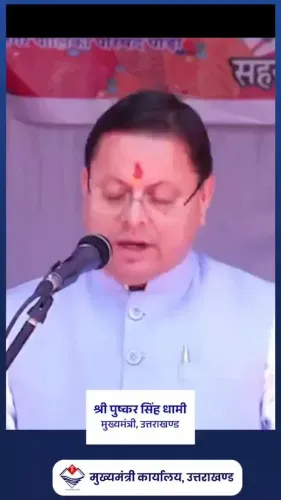
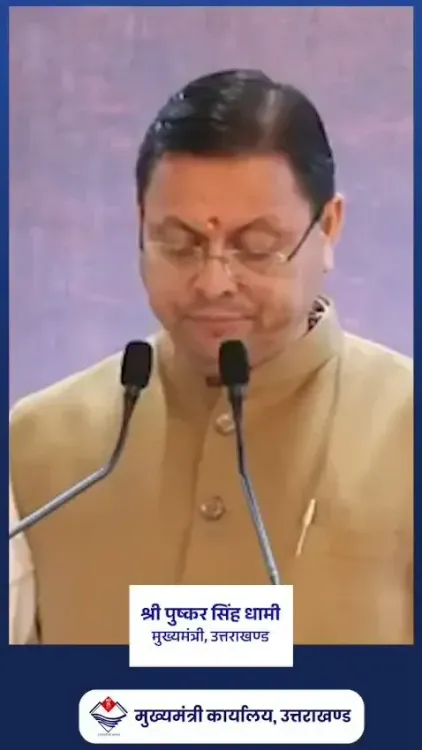
The statement was shared by the official Chief Minister's Office of Uttarakhand on June 26, 2026 , with a video.
Amrit Kaal is the national development framework running from 2022 to India's centenary year of 2047 .
The remark aligns with a broader pattern in BJP -ruled states of linking the independence movement to contemporary governance goals.
The term loktantra senani (democracy fighter) encompasses those who resisted threats to democratic order, including the Emergency of 1975–77 .
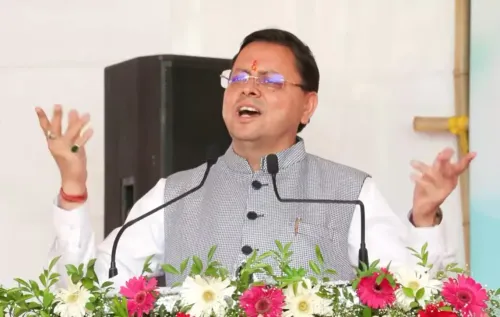
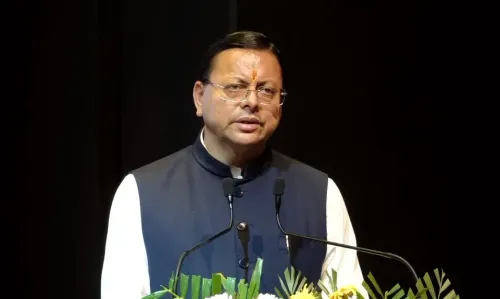
Dehradun, June 26: The Chief Minister's Office of Uttarakhand on Friday shared a statement by Chief Minister Pushkar Singh Dhami honouring the country's democracy fighters as the architects of India's ongoing Amrit Kaal journey. Dhami credited these figures with laying the strong foundation upon which the nation's development ambitions toward 2047 now rest.
Context
In his statement, CM Dhami said, 'Amrit Kaal ke is yatra ki mazboot neenv hamare sabhi loktantra senaniyon ne rakhi hai' — translated as: 'The strong foundation of this Amrit Kaal journey has been laid by all our democracy fighters.' The remark frames contemporary governance and national progress as a continuation of the sacrifices made by those who fought to protect and build India's democratic institutions.
The statement was shared by the official Chief Minister's Office of Uttarakhand account on X, accompanied by a video, on June 26, 2026.
Policy Backdrop
Amrit Kaal is the national development framework articulated by Prime Minister Narendra Modi, spanning from India's 75th Independence anniversary in 2022 through to the centenary year of 2047, under the broader vision of a Viksit Bharat — a developed India. The framework links welfare, infrastructure, and administrative reform to the long arc of the independence movement.
Under CM Dhami, who has led Uttarakhand since 2021, the state government has consistently aligned its public messaging and policy priorities with this central framework. Statements referencing the 1947–2047 arc are a recurring feature of governance communication across BJP-ruled states, connecting local development targets to the national centenary goal.
Stakeholders and Impact
The invocation of 'democracy fighters' — loktantra senani — is a distinct category in Indian political discourse, referring to individuals who resisted the Emergency period of 1975–77 and other threats to democratic order, in addition to the broader community of independence-era freedom fighters. Their recognition carries symbolic weight in framing the legitimacy of current governance.
For Uttarakhand's citizens, such statements situate the state's development trajectory within a larger national narrative, reinforcing the idea that contemporary welfare and infrastructure initiatives are a fulfilment of historical democratic struggles. Civil society groups and veterans' associations that represent democracy fighters are among the direct stakeholders of such official recognition.
What's Next
Observers will watch for Uttarakhand's upcoming budget presentations and policy documents that may detail specific Amrit Kaal-linked targets for the state. Alignment with central government review meetings on 2047 goals could see CM Dhami present state-level progress benchmarks tied to this broader national vision. The pattern of invoking democratic heritage alongside development goals is likely to continue as India moves deeper into the Amrit Kaal period.
Point of View
Rather than only independence-era freedom fighters, the framing carries a subtle political resonance that extends to the Emergency period, a reference point BJP leaders have long used to distinguish their democratic credentials. The consistency of this messaging across BJP-governed states reflects a coordinated effort to build a unifying national narrative ahead of the 2047 centenary milestone. For Uttarakhand, a state with significant strategic and developmental priorities, such statements also serve to position the CM as a voice within the broader national conversation on Viksit Bharat.
NationPress
26 Jun 2026
Frequently Asked Questions
What did CM Pushkar Singh Dhami say about Amrit Kaal?
CM Pushkar Singh Dhami said that the strong foundation of India's Amrit Kaal journey has been laid by all the country's democracy fighters, honouring their contribution to the nation's development path toward 2047.
What is Amrit Kaal in India?
Amrit Kaal is India's national development framework spanning from the 75th Independence anniversary in 2022 to the centenary year of 2047, aimed at building a developed India — Viksit Bharat — by that milestone.
Who are loktantra senani or democracy fighters in India?
Loktantra senani, or democracy fighters, refers to individuals who resisted threats to India's democratic order, most notably those who opposed the Emergency period of 1975–77, as well as broader defenders of democratic institutions.
What is Pushkar Singh Dhami's role in Uttarakhand?
Pushkar Singh Dhami is the Chief Minister of Uttarakhand, a position he has held since 2021, representing the BJP and focusing on state development aligned with national priorities including the Amrit Kaal vision.
How does Uttarakhand align with the Viksit Bharat 2047 goals?
Under CM Dhami, Uttarakhand regularly aligns its public messaging and policy priorities with the central government's Viksit Bharat 2047 framework, with state budget and policy documents expected to detail specific Amrit Kaal-linked targets.