CM Dhami credits 'double engine' govt for Uttarakhand project push
Synopsis
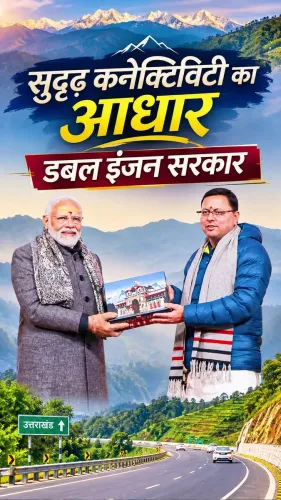
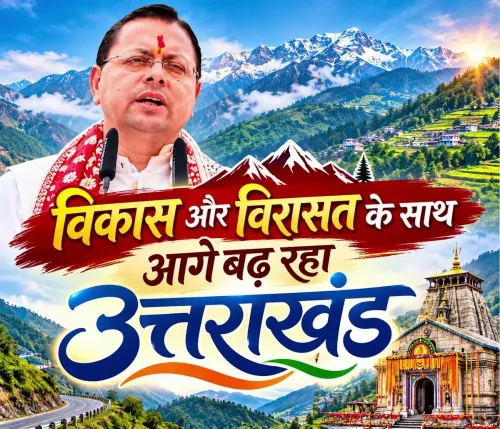
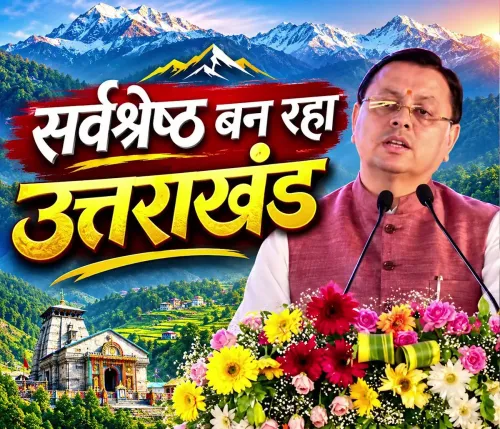
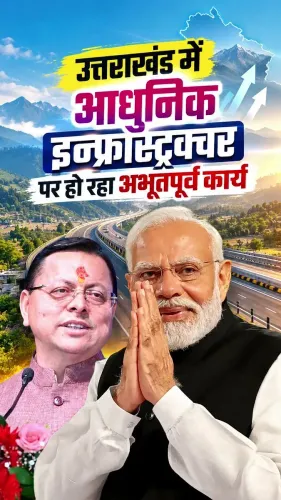
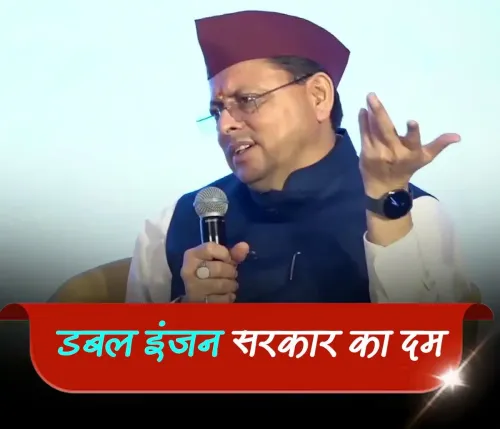
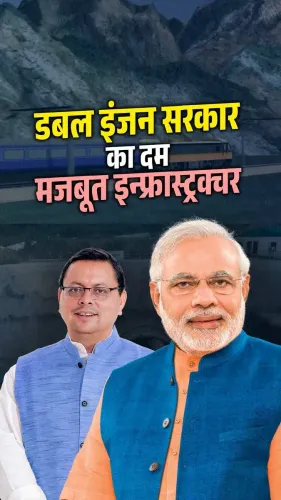
Uttarakhand CM Pushkar Singh Dhami on 19 November 2026 declared that years of paper-bound development projects are becoming reality under the BJP's 'double engine' governance model aligning the state with PM Modi's central government.
Key Takeaways
Uttarakhand CM Pushkar Singh Dhami posted on 19 November 2026 crediting the BJP's 'double engine' government for executing long-stalled state projects.
The 'double engine' model refers to the BJP simultaneously controlling the Union government and Uttarakhand's state government since 2017 .
Uttarakhand has historically faced infrastructure delays due to challenging Himalayan terrain and earlier Centre-state political misalignment.
The Char Dham Pariyojana , announced in 2016 , is a flagship example of an all-weather connectivity project enabled under aligned BJP governance.
Dhami's post names no specific projects or statistics; physical progress will be tested in the upcoming state assembly session and central infrastructure review.
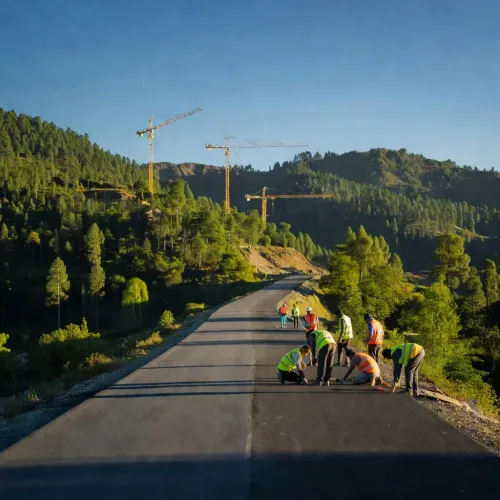
Years of stalled blueprints are finally meeting concrete and steel, says Uttarakhand Chief Minister Pushkar Singh Dhami, who on Thursday, 19 November 2026 pointed to the state's accelerating infrastructure journey as proof of what aligned governance can deliver.
Posting in Hindi on X, CM Dhami said: 'Under the able leadership of respected Prime Minister Shri Narendra Modi ji, our double engine government has brought Uttarakhand's long-pending development projects down to the ground. Plans that were once confined only to paper are today becoming reality. This is a powerful example of changing Uttarakhand's development journey.'
What the 'double engine' argument actually means
The phrase double engine sarkar — 'double engine government' — is the Bharatiya Janata Party's signature governance pitch: when the same party controls both New Delhi and a state capital, coordination delays between the Union and state bureaucracies shrink, and long-stalled projects get unstuck. Uttarakhand, carved out of Uttar Pradesh in 2000, spent much of its early statehood watching projects linger in file-noting because the two governments were often run by rival parties.
That changed in 2017, when the BJP swept the state assembly, aligning Dehradun with a BJP-led Centre for the first time since statehood. Dhami, who took charge as Chief Minister in 2021, has consistently framed his tenure as the phase in which that alignment converts into visible outcomes on the ground.
Char Dham connectivity and the terrain challenge
Uttarakhand's geography — steep Himalayan gradients, fragile river valleys, seasonal closures — has historically made it one of India's most logistically demanding states to develop. The Char Dham Pariyojana, announced in 2016 to upgrade all-weather road connectivity to the four sacred pilgrimage sites of Yamunotri, Gangotri, Kedarnath and Badrinath, became the flagship illustration of this bottleneck: a project desired for decades, finally mobilised when both engines — Union and state — pointed the same direction.
Dhami's post on Thursday does not name specific projects or cite completion figures, but the underlying message lands in a familiar register: Uttarakhand's development lag was structural, not inevitable, and political alignment is the mechanism closing the gap.
The pattern across BJP-governed states
Uttarakhand is not an isolated case in this narrative. The BJP has deployed the same double-engine framing in Uttar Pradesh, Madhya Pradesh, Gujarat and several North-East states, arguing that scheme implementation accelerates when Centre-state friction is removed. Critics have questioned whether project delays in some BJP states complicate that claim — but Dhami's post is squarely within the party's well-worn messaging architecture, addressed, as it explicitly is, to Prime Minister Narendra Modi himself.
The next hard test of that claim will come in Uttarakhand's upcoming state assembly session and the Centre's infrastructure review, where budget allocations and physical progress reports on highway and airport projects will show whether the journey from paper to ground is running on schedule — or still catching up.
Point of View
And implicitly frames the opposition era as the source of the backlog. The timing, well ahead of any state election cycle, keeps that brand warm and reinforces Modi's primacy in state-level success stories. Whether the pitch sustains scrutiny depends on whether project completion data, when it surfaces in legislative sessions, matches the momentum the rhetoric is building.
NationPress
19 Nov 2026
Frequently Asked Questions
What is the 'double engine government' in Uttarakhand?
The 'double engine government' refers to the BJP holding power simultaneously at the central government level under PM Narendra Modi and at the Uttarakhand state level under CM Pushkar Singh Dhami, with the argument that this alignment eliminates coordination delays and speeds up project execution.
What development projects is CM Dhami referring to in his post?
CM Dhami did not name specific projects in the post, but the broader context includes long-pending road, power and tourism infrastructure, most notably the Char Dham Pariyojana for all-weather connectivity to Uttarakhand's four pilgrimage sites.
When did the BJP first gain control of Uttarakhand?
The BJP formed the government in Uttarakhand in 2017, creating alignment with the central BJP government for the first time since the state was created in 2000.
What is the Char Dham Pariyojana?
The Char Dham Pariyojana is a central government scheme announced in 2016 to build all-weather road connectivity to Uttarakhand's four sacred pilgrimage sites — Yamunotri, Gangotri, Kedarnath, and Badrinath — projects that had been delayed for decades due to terrain and governance challenges.
Who is Pushkar Singh Dhami?
Pushkar Singh Dhami is the Chief Minister of Uttarakhand, representing the BJP. He has held the position since 2021 and is closely aligned with PM Narendra Modi's central government narrative on infrastructure and governance.