CM Dhami Enacts Minority Education Bill in Uttarakhand
Synopsis
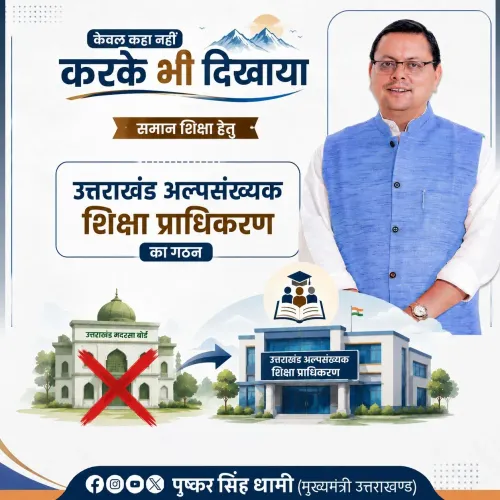
Uttarakhand Chief Minister Pushkar Singh Dhami has announced the enactment of a Minority Education Bill, aimed at bringing transparency, accountability, and quality to minority-run educational institutions in the state, under the BJP's 'double engine' governance model.
Key Takeaways
Uttarakhand has enacted a Minority Education Bill to regulate minority-run educational institutions.
The bill targets transparency, accountability, and quality in minority education, alongside protection of students' rights.
CM Pushkar Singh Dhami credited the legislation to the guidance of PM Narendra Modi and leadership of Union Minister Kiren Rijiju .
The move is framed under the BJP's 'double engine' governance framework and the Sabka Saath, Sabka Vikas development philosophy.
Cabinet Minister Khajan Dass and other dignitaries were present at the announcement event.
Implementation will depend on rollout notifications and compliance rules from the state education department.
Uttarakhand Chief Minister Pushkar Singh Dhami announced on Saturday, 11 July 2026 that the state government has enacted a Minority Education Bill, citing goals of transparency, accountability, and quality in educational institutions serving minority communities. The bill, he said, was implemented under the guidance of Prime Minister Narendra Modi and the leadership of Union Minister Kiren Rijiju, as part of the state's 'double engine' governance model.
Context
Posting in Hindi on X, CM Dhami described the legislation as 'ek aitihasik vidheyak' (a historic bill), framing it as a step toward better administration in minority educational institutions, protection of students' rights, and assurance of quality education. He added that Cabinet Minister Khajan Dass and other dignitaries were present at the occasion.
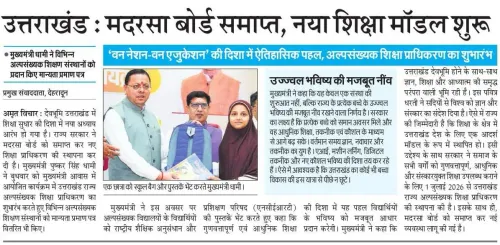
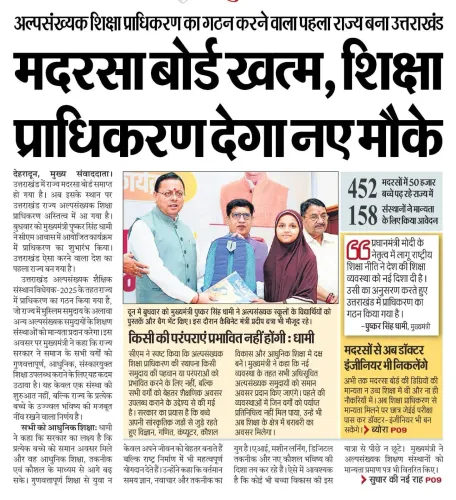
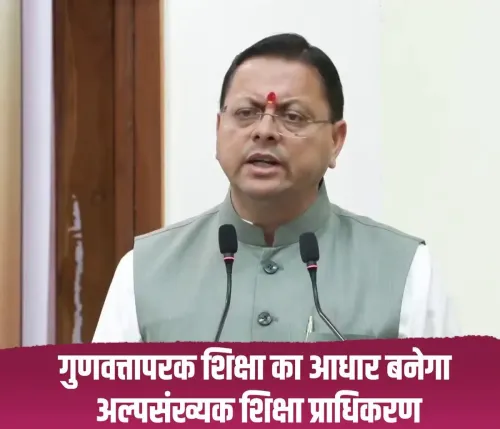
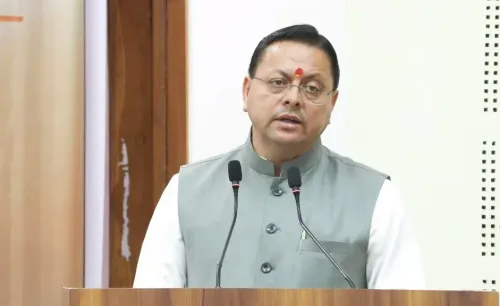
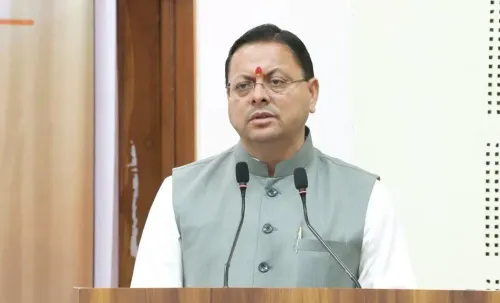
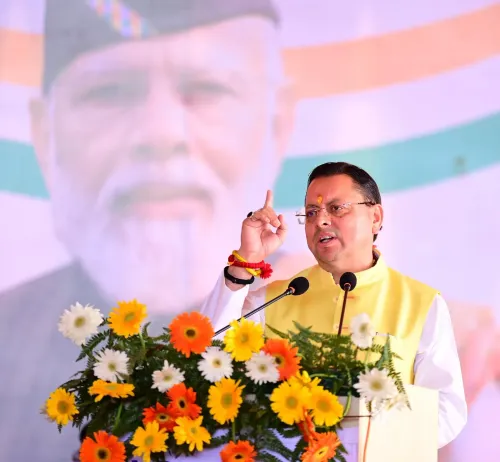
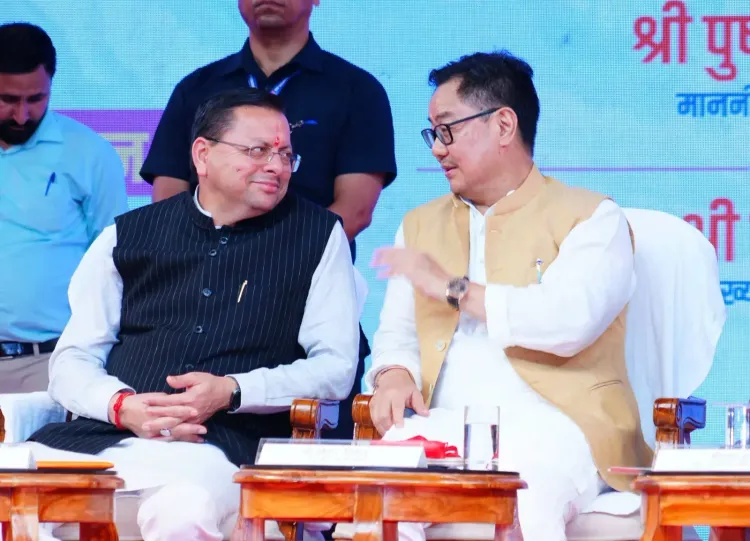
The post is a reply attributed to @pushkardhami, indicating it was part of a broader exchange on the platform. The announcement was accompanied by four images from the event, suggesting a formal government function or press engagement.
Policy Backdrop
The bill aligns with the National Education Policy 2020, which the central government introduced to prioritise quality, accountability, and transparency across India's school and higher education systems. Uttarakhand, governed by the BJP since 2017, has pursued education and welfare reforms consistent with central directives under the 'double engine' framework — a term the party uses to describe alignment between a BJP-led state and the BJP-led central government.
The legislation is positioned not as a community-specific parallel system but as an effort to bring minority-run educational institutions under uniform standards of governance and student protection, consistent with the BJP's stated approach on minority welfare.
Stakeholders and Impact
The primary beneficiaries identified by CM Dhami are minority students and the broader minority community in Uttarakhand, whose educational institutions would now be subject to the new regulatory framework. Private minority educational institutions operating in the state will be expected to comply with the bill's provisions on administration, quality, and student rights.
CM Dhami invoked the BJP's governing motto — 'Sabka Saath, Sabka Vikas' (Together with all, development for all) — framing the legislation as part of a commitment to equal opportunity and good governance rather than preferential treatment for any single community.
What's Next
The immediate next steps will include the issuance of rollout notifications and implementation rules by the Uttarakhand education department, followed by first-year compliance monitoring of institutions falling under the bill's purview. The legislation may also feature in the state's forthcoming assembly session or budget discussions as a flagship governance measure.
The bill's practical impact will depend on how its clauses are operationalised — specifically, what oversight mechanisms are created and how student-rights protections are enforced across institutions of varying sizes and resources across the Himalayan state.
Point of View
The Dhami administration is navigating the politically sensitive terrain of minority policy in a way that aligns with the party's mainstreaming narrative. The invocation of Sabka Saath, Sabka Vikas signals that the government wants this read as an inclusion story, not a regulation story. How the bill is operationalised will determine whether it is remembered as meaningful reform or symbolic legislation.
NationPress
11 Jul 2026
Frequently Asked Questions
What is the Uttarakhand Minority Education Bill?
The Uttarakhand Minority Education Bill is a state legislation enacted by the Dhami government to ensure transparency, accountability, and quality in educational institutions run by or serving minority communities, while also protecting students' rights.
Who announced the Minority Education Bill in Uttarakhand?
Uttarakhand Chief Minister Pushkar Singh Dhami announced the enactment of the bill on 11 July 2026, crediting the initiative to the guidance of Prime Minister Narendra Modi and Union Minister Kiren Rijiju.
What does 'double engine government' mean in this context?
The 'double engine government' is a BJP phrase describing policy alignment between a BJP-ruled state government and the BJP-led central government, implying coordinated governance and faster implementation of reforms.
How will the Minority Education Bill affect minority schools in Uttarakhand?
Minority-run educational institutions in Uttarakhand will be expected to meet new standards of administration, quality, and student-rights protection as prescribed under the bill, with compliance monitored by the state education department.
What is 'Sabka Saath, Sabka Vikas' and why did CM Dhami invoke it?
Sabka Saath, Sabka Vikas means 'Together with all, development for all' — it is the BJP's flagship inclusive development slogan. CM Dhami used it to frame the Minority Education Bill as a universal governance reform rather than a community-specific measure.