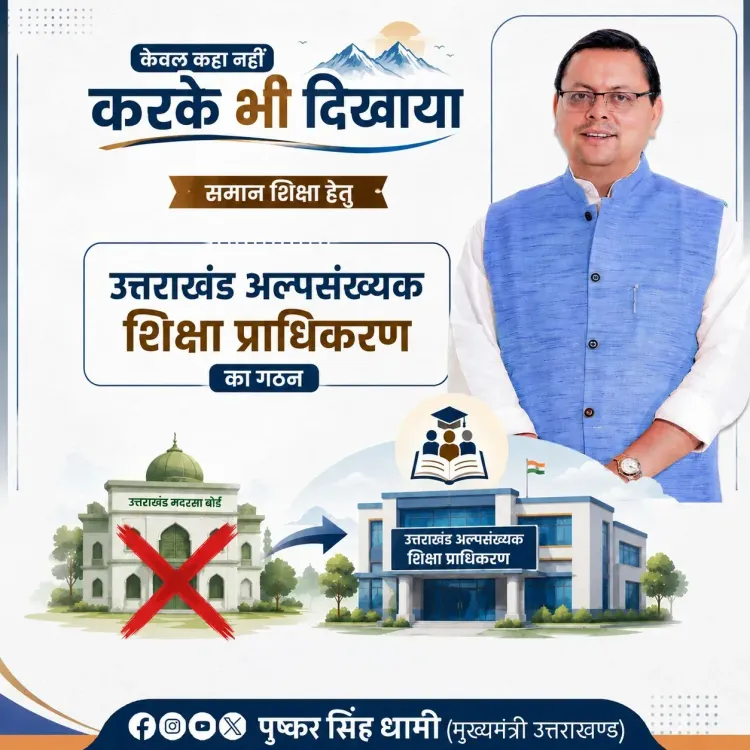
CM Dhami forms Uttarakhand Minority Education Authority
Synopsis
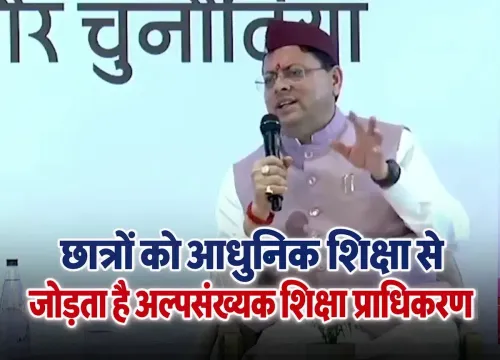
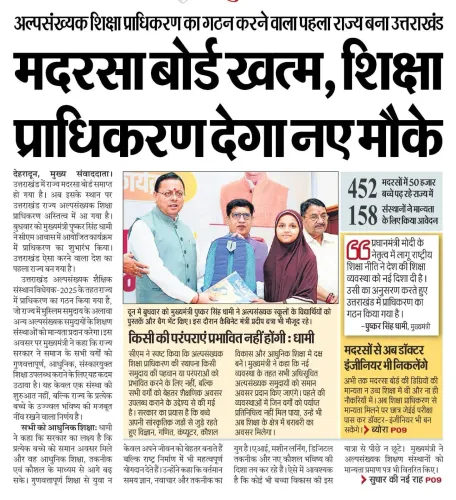
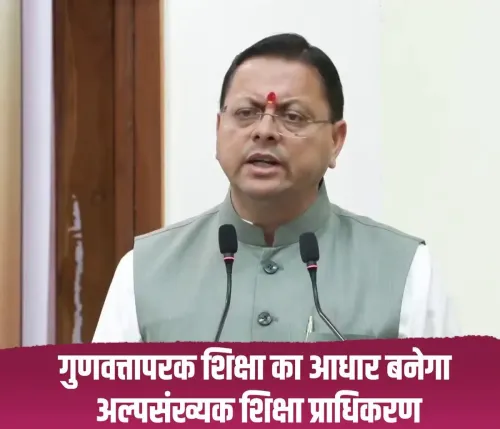
Uttarakhand CM Pushkar Singh Dhami has constituted the Uttarakhand Minority Education Authority to move minority school students beyond orthodox curricula and connect them with modern science, technology, and skill development, in line with the NEP 2020 and Viksit Bharat goals.
Key Takeaways
Uttarakhand Minority Education Authority has been constituted by the state government under CM Pushkar Singh Dhami .
The authority aims to integrate modern education, science, technology, innovation, and skill development into minority institutions.
CM Dhami stated the goal is to prevent children from being confined to orthodox and radical teaching methods .
The move aligns with the National Education Policy 2020 and the national Viksit Bharat 2047 vision.
Possible funding linkage with Samagra Shiksha Abhiyan is being watched by policy observers.
Governing body composition and budget are expected to be presented in the upcoming Uttarakhand assembly session .
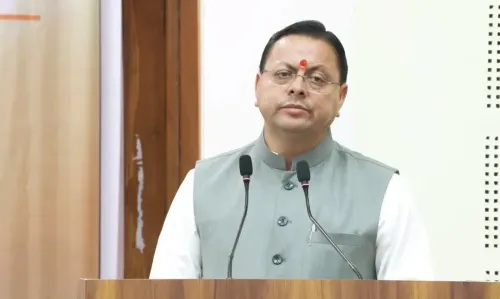
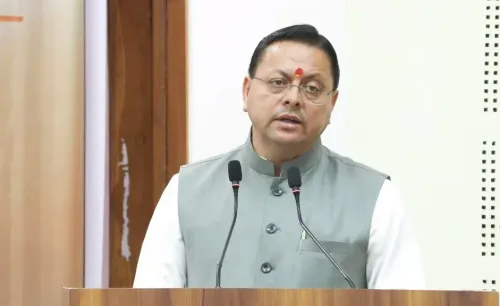
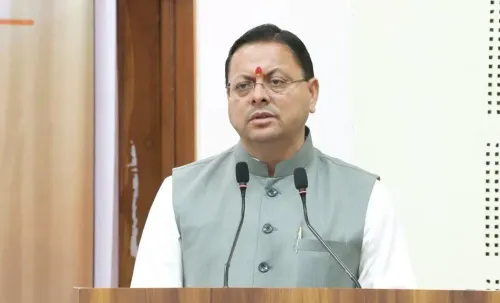
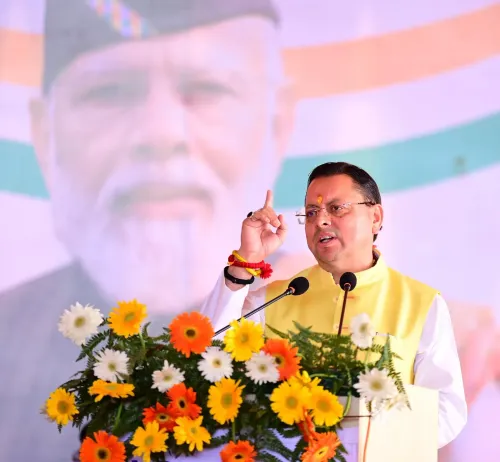
Uttarakhand Chief Minister Pushkar Singh Dhami announced on Monday, 8 June 2026 that his government has constituted the Uttarakhand Minority Education Authority, a dedicated state body aimed at modernising education in minority institutions across the hill state.
Context
Posting in Hindi on X, CM Dhami framed the move as a step toward building an equitable education system. He wrote: 'हमारा उद्देश्य यह सुनिश्चित करना है कि बच्चे केवल रूढ़िवादी और कट्टरपंथी शिक्षण पद्धतियों तक सीमित न रहें' — 'Our objective is to ensure that children are not confined merely to orthodox and radical teaching methods.' The statement explicitly calls for connecting students with modern education, science, technology, innovation, and skill development.
The Chief Minister added that education must produce citizens who are self-reliant, aware, and capable of realising the vision of a Viksit Bharat (Developed India). The announcement positions the new authority as an institutional bridge between traditional minority-run schools and the mainstream academic framework.
Policy Backdrop
The formation of the authority aligns with the National Education Policy 2020, which mandated integration of vocational training, modern subjects, and value education across all institutions, including those run by minority communities. Uttarakhand had already signalled its intent in this direction through the Chief Minister's School Quality Assurance Programme, launched in 2022, which sought to standardise learning outcomes in state-aided schools.
The new authority is expected to operationalise these goals specifically for minority educational institutions — a segment that has historically operated under separate regulatory frameworks. Possible linkage with Samagra Shiksha Abhiyan funds could provide the financial scaffolding required for curriculum upgrades and infrastructure improvement.
Stakeholders and Impact
The primary beneficiaries are minority students enrolled in community-run schools and madrasas across Uttarakhand. For these students, the authority is intended to widen access to science, technology, and skill-development modules that were previously absent or limited in their institutions.
Minority educational bodies and madrasa managements will be the key institutional stakeholders, and their engagement with the new authority will determine how smoothly modern curricula are introduced without displacing cultural or religious instruction. Civil society groups working on educational equity in the state are also likely to track the body's composition and operational mandate closely.
What's Next
The governing body composition, budget allocation, and operational rules of the Uttarakhand Minority Education Authority are expected to be tabled during the upcoming state assembly session. The authority's first concrete test will be whether it can roll out a structured curriculum framework that satisfies both the state's modernisation goals and the community's expectations around cultural continuity.
Broader scrutiny will focus on whether the body receives adequate funding — potentially through Samagra Shiksha Abhiyan channels — and whether it establishes an independent, transparent governing board. The initiative will serve as a template watched by other BJP-governed states pursuing similar reforms in minority education.
Point of View
CM Dhami anchors a state-level institutional decision within the national ideological framework, making it harder to oppose on purely political grounds. The authority's real test will be governance: whether its composition is inclusive and its mandate genuinely educational, or whether it becomes a tool for imposing a uniform curriculum on institutions that have historically enjoyed autonomy. The outcome in Uttarakhand is likely to influence how other BJP-ruled states approach similar reforms.
NationPress
22 Oct 2026
Frequently Asked Questions
What is the Uttarakhand Minority Education Authority?
The Uttarakhand Minority Education Authority is a state body constituted by the Dhami government to oversee and modernise education in minority-run institutions, integrating science, technology, and skill development into their curricula.
Why did CM Dhami form the Minority Education Authority?
CM Dhami stated the authority was formed to ensure minority students are not limited to orthodox or radical teaching methods, and instead gain access to modern education that helps them contribute to national development.
Will the Uttarakhand Minority Education Authority affect madrasas?
Madrasa institutions are among the key stakeholders identified for the authority's work, with the body expected to introduce modern subject modules alongside existing religious instruction.
How does this relate to the National Education Policy 2020?
The NEP 2020 mandated integration of vocational training and modern subjects across all institutions, including minority-run schools. The new authority is a state-level mechanism to implement those goals in Uttarakhand.
What happens next for the Uttarakhand Minority Education Authority?
The authority's budget, governing body composition, and operational rules are expected to be presented during the upcoming Uttarakhand state assembly session, with potential funding through the Samagra Shiksha Abhiyan.