CM Dhami: Uttarakhand grows only when every village and city grows
Synopsis
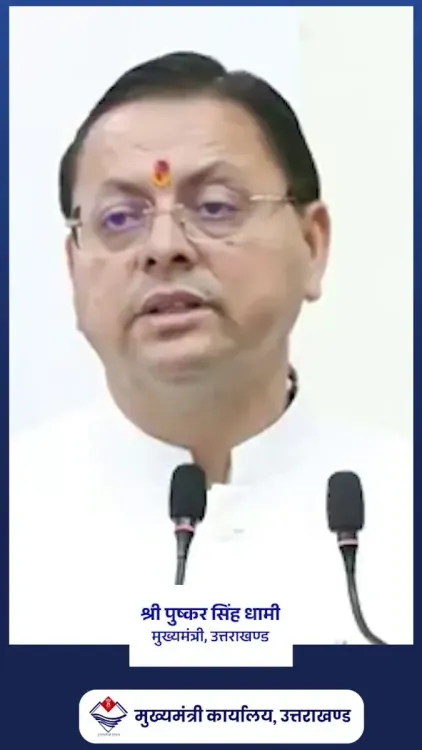
Chief Minister Pushkar Singh Dhami declared on 2 June 2026 that Uttarakhand will develop only when every village and city develops equally. The statement, shared by the official CMO account, reaffirms his administration's focus on bridging the rural-urban divide in the Himalayan state.
Key Takeaways
CM Pushkar Singh Dhami stated on 2 June 2026 that Uttarakhand's overall development is contingent on equal progress in every village and city.
The statement was shared by the official Chief Minister's Office of Uttarakhand on X, signalling it as an administration-level governing principle.
Uttarakhand , formed in 2000 , has historically struggled with uneven development between its remote Himalayan villages and urban centres like Dehradun and Haridwar .
Dhami has served as Chief Minister since 2021 and has consistently linked administrative reforms to retaining the rural population and curbing out-migration.
Upcoming budget sessions and assembly proceedings are the key forums to watch for scheme announcements that give concrete form to this stated resolve.
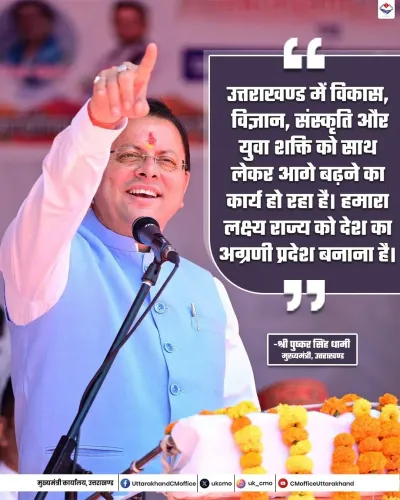
The Chief Minister's Office of Uttarakhand shared a statement by Chief Minister Pushkar Singh Dhami on Tuesday, 2 June 2026, reaffirming his administration's commitment to balanced development across the state — from its remotest hill villages to its urban centres.
Context
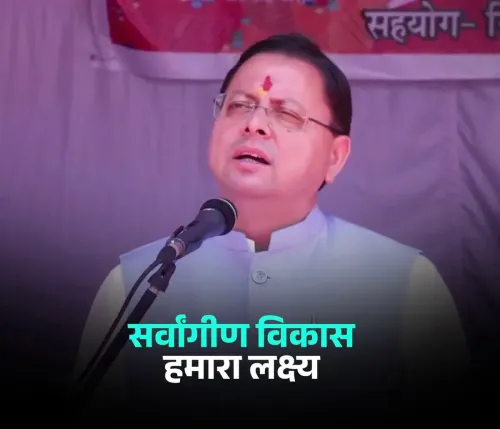
Dhami's statement, posted in Hindi, reads: 'Uttarakhand tabhi viksit hoga, jab har gaon se lekar shehar viksit hoga. Aaj hum isi sankalp ke saath aage badh rahe hain.' In English: 'Uttarakhand will develop only when every village and every city develops. Today we are moving forward with this very resolve.' The Chief Minister's Office framed the remark as a governing principle rather than a response to any single event.
The statement underscores a long-standing challenge for Uttarakhand: the state's rugged Himalayan terrain creates sharp disparities between its scattered rural settlements and its handful of urban centres such as Dehradun, Haridwar, and Haldwani. Bridging that gap has been a stated priority since the state was carved out of Uttar Pradesh in 2000.
Policy Backdrop
When Uttarakhand was formed, equitable development across its hill districts was written into the founding rationale for statehood. Decades on, connectivity — roads, broadband, and basic services — remains uneven between the higher Himalayan zones and the plains-adjacent towns of the Kumaon and Garhwal divisions.
Dhami, who has served as Chief Minister since 2021, has repeatedly linked administrative reforms and infrastructure spending to the goal of retaining the state's rural population, which has seen significant out-migration to cities within and outside Uttarakhand. His government has aligned state planning with national frameworks for regional equity, including programmes targeting village-level infrastructure and last-mile service delivery.
Stakeholders and Impact
The primary beneficiaries of any policy that flows from this stated resolve are Uttarakhand's rural communities — particularly those in high-altitude villages that lack reliable road access, schools, health centres, and digital connectivity. Urban residents stand to gain from complementary investments that prevent over-concentration of services in a few towns.
The statement also carries political weight. Rural voters constitute a decisive share of the electorate in a state where many assembly constituencies span sparsely populated hill blocks. A visible commitment to village development serves both a governance and an electoral signalling function ahead of future budget cycles and assembly proceedings.
What's Next
Analysts and local administrators will watch Uttarakhand's upcoming budget sessions and assembly proceedings for concrete scheme announcements on village and city infrastructure that give operational content to the Chief Minister's resolve. The state's planning documents and departmental allocations will be the clearest indicator of whether the principle translates into measurable spending priorities.
If the administration follows through with targeted allocations for rural connectivity, health, and education alongside urban infrastructure upgrades, it would mark a tangible step toward the inclusive growth model Dhami has articulated. The coming months will test how this governing resolve is converted into programme design and ground-level delivery.
Point of View
But its significance lies in the timing and platform rather than novelty. Issuing it through the official CMO account elevates it from a campaign line to an administrative commitment, creating a reference point against which future budget allocations can be measured. The rural-urban equity framing also positions the Chief Minister ahead of potential assembly and budget scrutiny, where opposition benches routinely challenge the government on hill-district neglect. Whether this resolve produces measurable policy output will define its place in Uttarakhand's development story.
NationPress
16 Oct 2026
Frequently Asked Questions
What did CM Pushkar Singh Dhami say about Uttarakhand's development?
CM Dhami said that Uttarakhand will develop only when every village and every city develops, and that his government is moving forward with this resolve. The statement was shared by the official Chief Minister's Office on 2 June 2026.
Why is rural-urban development a challenge in Uttarakhand?
Uttarakhand's rugged Himalayan terrain creates sharp disparities between remote hill villages and urban centres like Dehradun and Haridwar. Poor connectivity, limited services, and out-migration from rural areas have been persistent challenges since the state was formed in 2000.
What is Pushkar Singh Dhami's development agenda for Uttarakhand?
Dhami, Chief Minister since 2021, has focused on bridging the rural-urban divide through administrative reforms, infrastructure spending, and alignment with national inclusive-growth frameworks, with a stated goal of retaining the state's rural population.
When was Uttarakhand formed and why was equitable development a founding goal?
Uttarakhand was carved out of Uttar Pradesh in 2000, and equitable development across its hill districts was a core rationale for statehood, given the neglect of the hilly region under the larger state's administration.
What should I watch for after CM Dhami's development statement?
Watch Uttarakhand's upcoming budget sessions and assembly proceedings for specific scheme announcements on village and city infrastructure that translate the Chief Minister's stated resolve into concrete policy and spending commitments.