CM Dhami Extends Old Age Pension to Both Spouses in Uttarakhand
Synopsis
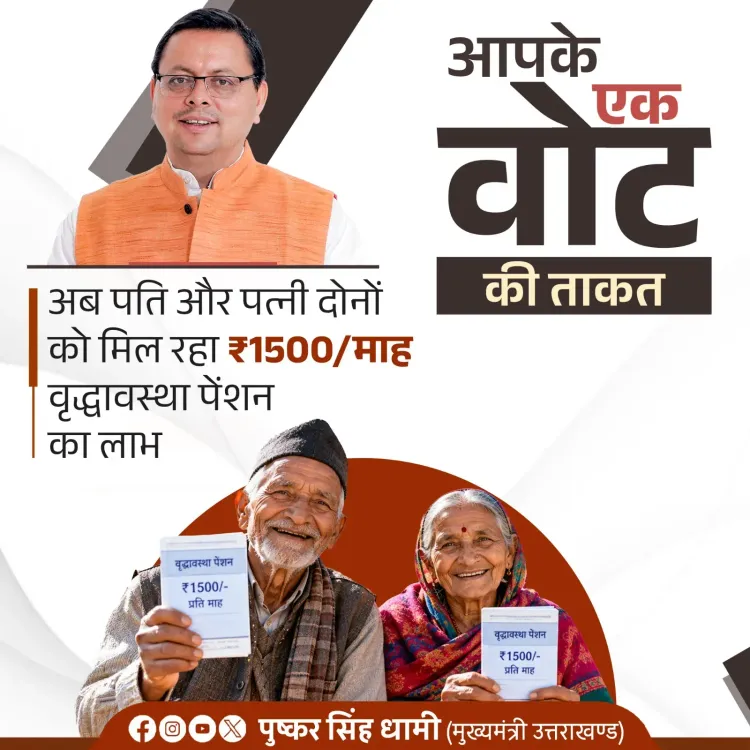
Uttarakhand CM Pushkar Singh Dhami has revised the state's Vridhavastha Pension Yojana so that both spouses in eligible elderly couples now receive separate pensions, strengthening social security for senior citizens across the hill state.
Key Takeaways
CM Pushkar Singh Dhami announced a revision to Uttarakhand's Vridhavastha Pension Yojana on 29 September 2026 .
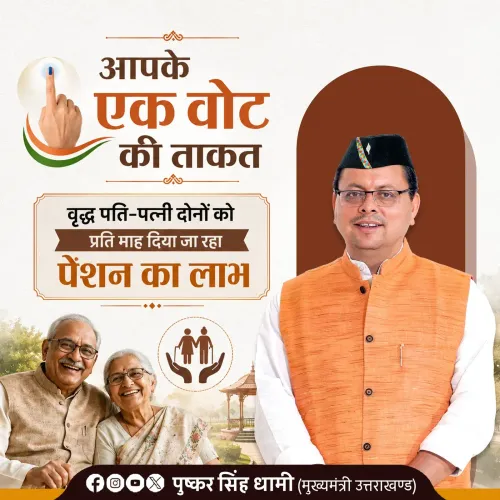
Eligible elderly couples will now receive two separate pensions — one for each spouse — instead of a single household grant.
The change aims to provide 'comprehensive social security' and regular financial support to senior citizens across the state.
The scheme builds on the National Social Assistance Programme (NSAP) framework introduced by the central government in 1995 .
Uttarakhand's demographic profile — marked by high out-migration and an aging rural population — makes per-individual pension coverage especially significant.
State budget allocations and official beneficiary count figures will determine the scheme's actual fiscal and ground-level impact.
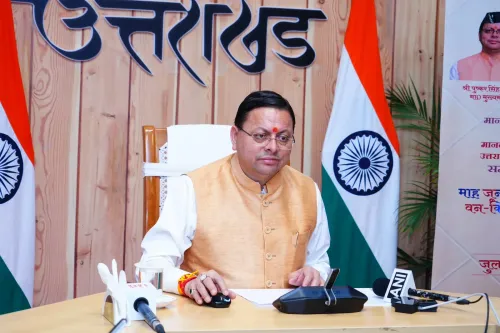
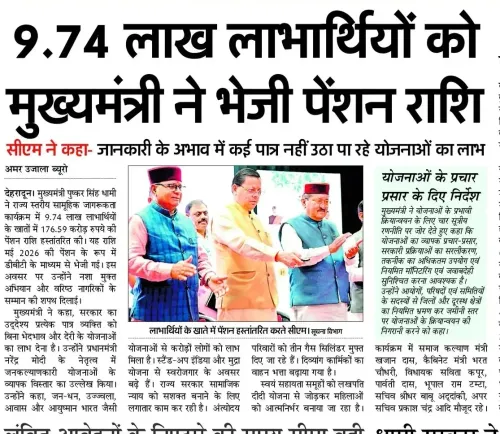
Every elderly couple in Uttarakhand just got a stronger financial floor. Uttarakhand Chief Minister Pushkar Singh Dhami announced on Tuesday, 29 September 2026 that the state's Vridhavastha Pension Yojana has been revised to grant separate pension benefits to both husband and wife in eligible couples — doubling the direct income support reaching senior households across the hill state.
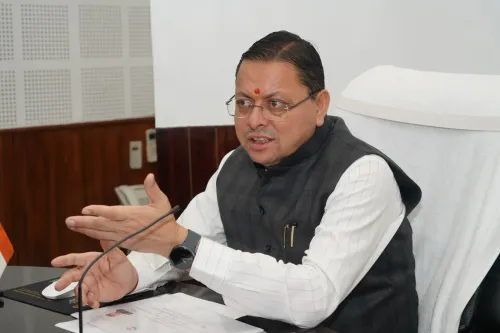
In his post, CM Dhami wrote: 'Vriddhajano ka samman aur kalyan hamari sarkar ki prathamikta hai' ('Respect and welfare of the elderly is the priority of our government'). He stated that the provision has been designed specifically so that eligible couples receive 'comprehensive social security,' with each spouse now drawing an independent pension rather than a single household grant.
What Changed in the Pension Scheme
Previously, a married couple qualified as a single beneficiary unit under many state-level pension frameworks — meaning the household received one pension. The revised arrangement treats each eligible spouse as an independent beneficiary, effectively expanding per-household coverage. CM Dhami described this as providing 'niyamit arthik sambal' — regular economic support — to senior citizens of the state.
The Vridhavastha Pension Yojana is Uttarakhand's old-age pension scheme that channels monthly financial assistance to eligible senior citizens. It draws on the architecture of the National Social Assistance Programme (NSAP), the central government framework launched in 1995 that first introduced structured federal support for destitute elderly across Indian states.
Why Uttarakhand's Elderly Demographics Make This Count
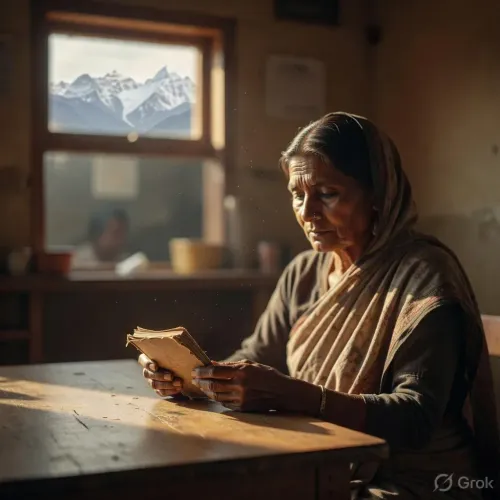
Uttarakhand, the Himalayan state carved out in 2000, carries one of India's most visible aging-population challenges. Decades of male out-migration for work has left many mountain villages with a disproportionately elderly and female population — households where a single pension income is often the only formal cash inflow. Extending separate pensions to both spouses directly addresses that household-level coverage gap.
Indian states have periodically revised NSAP-linked eligibility rules precisely to plug such gaps, and Uttarakhand's move fits a broader national pattern of strengthening social security as demographic pressures mount. The BJP government in the state, in power since 2017, has positioned welfare scheme expansion as a central plank of its governance narrative — and this revision sharpens that message ahead of state budget cycles.
Budget Outlay and Beneficiary Scale Now in Focus
The immediate question after any eligibility expansion is scale: how many couples qualify, and what additional fiscal outlay does the state absorb? Official beneficiary counts and revised pension budget allocations will be the clearest measure of whether the policy change translates into meaningful ground-level impact. Those figures are expected to surface in forthcoming welfare department updates and the next state budget presentation.
For now, the message from Dehradun is unambiguous — the elderly are no longer counted as a unit of two sharing one benefit, but as two individuals each owed a state's care.
Point of View
Not merely a headline welfare announcement — it addresses a documented gap in India's NSAP-linked frameworks where household-unit definitions historically undercounted elderly women in rural areas. For CM Dhami, it also serves a political calculus: Uttarakhand's mountain villages, with their high concentrations of elderly women dependent on state transfers, are a core constituency. The move fits the BJP's broader national pattern of granular welfare expansion ahead of electoral cycles, using incremental eligibility reforms to signal both fiscal intent and social commitment. The real test will be in the beneficiary numbers and budget lines — announcements without verified roll-out data remain promises on paper.
NationPress
29 Sept 2026
Frequently Asked Questions
What is the Vridhavastha Pension Yojana in Uttarakhand?
The Vridhavastha Pension Yojana is Uttarakhand's old-age pension scheme that provides monthly financial assistance to eligible senior citizens, drawing on the National Social Assistance Programme framework introduced by the central government in 1995.
What has CM Dhami changed about the old age pension in Uttarakhand?
CM Pushkar Singh Dhami has revised the scheme so that both husband and wife in an eligible elderly couple now each receive a separate pension, rather than the household being treated as a single beneficiary unit.
Who benefits from the new pension rule for couples in Uttarakhand?
Eligible elderly couples across Uttarakhand benefit — particularly in rural and hill areas where both spouses are senior citizens and qualify under the scheme's criteria.
How does Uttarakhand's pension revision relate to the central government's NSAP?
The Vridhavastha Pension Yojana is linked to the National Social Assistance Programme (NSAP) launched in 1995. States periodically revise eligibility rules within this framework, and Uttarakhand's couple-wise provision is one such revision to improve household-level coverage.
What is the pension amount under Uttarakhand's old age pension scheme?
The exact pension amount currently disbursed under the revised provision has not been officially confirmed in verified public records and cannot be stated with certainty at this time.