CCP censorship fails to quell China's defiance as protests hit record high
Synopsis
Despite the CCP's most aggressive censorship push in years — including deleting two-thirds of protest-related Douyin posts — China recorded 5,343 dissent events in 2025, a 44% year-on-year surge. Freedom House's data suggests that censorship is not only failing to suppress defiance, it may be actively fuelling it.
Key Takeaways
Freedom House's China Dissent Monitor (CDM) recorded 5,343 dissent events in 2025 — the highest annual figure since the project began, up 44% from the previous year.
An analysis of nearly 3,000 Douyin posts about protests found that two-thirds had been deleted , with the majority covering protests likely involving government malfeasance.
China's Ministry of State Security (MSS) launched a campaign blaming 'foreign forces' for funding the spread of the 'lying flat' philosophy, a move that was widely mocked on social media.
Peaceful protests in Chongqing over an animal abuse case in June grew into a four-day demonstration, illustrating how state suppression can trigger further mobilisation.
President Xi Jinping has publicly condemned the 'lying flat' attitude, signalling top-level concern about passive societal resistance.
The Chinese Communist Party (CCP) is intensifying censorship efforts to suppress dissent, yet a growing spirit of defiance among Chinese citizens continues to resist party control, according to a report by Washington-based democracy watchdog Freedom House and its China Dissent Monitor (CDM) project. The findings, published on 29 September 2026, reveal that despite tightening media controls, public protests in China reached their highest recorded level in 2025.
Record Protests in 2025
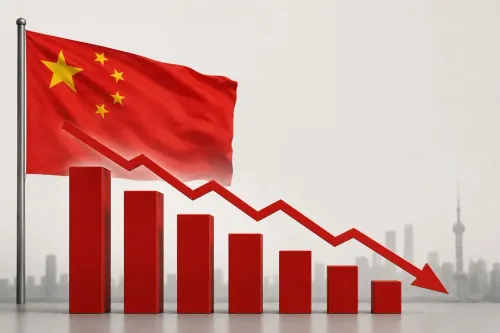
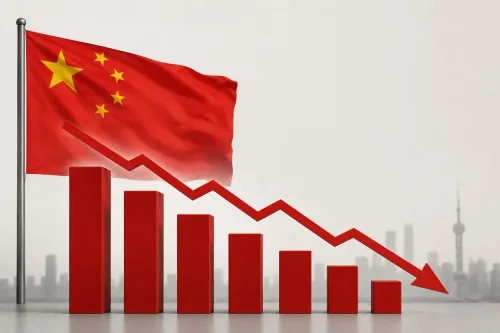
According to the CDM, a total of 5,343 dissent events were recorded across China in 2025 — the highest annual figure since the project began tracking, representing a 44% rise over the previous year. Many of these protests were driven by economic grievances, including unfinished housing projects and unpaid wages, reflecting broader frustration with China's sluggish economic growth.
Notably, in June, peaceful demonstrations in Chongqing over an animal abuse case escalated into a large-scale protest lasting four days — an example, according to the report, of how government attempts to silence dissent can themselves trigger further mobilisation.
The 'Lying Flat' Phenomenon and CCP's Response
The concept of 'lying flat' — a term describing the rejection of societal pressures to pursue material success and contribute to national economic ambitions — has grown into a broader symbol of passive resistance. Chinese President Xi Jinping has publicly spoken against this attitude, and earlier this year China's Ministry of State Security (MSS) launched a campaign blaming 'foreign forces' for funding the spread of the 'lying flat' philosophy.
The campaign drew sarcasm from at least one popular Chinese vlogger, who reportedly joked about wanting to 'report' these foreign forces for failing to pay him despite his own efforts to 'lie flat.' The episode highlighted the gap between official propaganda and popular sentiment.
Censorship on Douyin and Social Media
The CCP's censorship apparatus has extended aggressively to social media. An analysis by CDM of nearly 3,000 posts on Douyin — the Chinese version of TikTok — about protests found that two-thirds had been deleted. The majority of removed posts reportedly covered protests likely involving government malfeasance, suggesting a targeted effort to suppress content that could embarrass authorities.
This comes amid a broader tightening of China's digital information environment, where platforms are required to comply with state directives on content moderation. Critics argue that such deletions do not eliminate discontent — they merely push it underground or into residential spaces, where disputes between homeowners and property management firms have also fuelled a surge in localised protests.
What Freedom House's Analysts Said
Kevin Slaten, writing in the Freedom House report, stated: 'Through media controls, the CCP attempts to restrict citizens' ability to grasp the extent of lying flat and public protests in China, but it fails to fundamentally alter the spirit of defiance that so many of the country's citizens possess.'
Slaten further called on international actors — particularly those with large public platforms — to amplify the voices of Chinese citizens acting in defiance of state attempts to silence them.
Broader Implications
The pattern documented by CDM suggests that economic stagnation and social frustration are outpacing the CCP's capacity to contain dissent through censorship alone. As China's growth outlook remains under pressure, analysts warn that the conditions fuelling 'lying flat' and public protests are structural rather than cyclical — and unlikely to dissipate through propaganda campaigns. The next phase of CCP censorship strategy, and how citizens respond to it, will be closely watched by human rights organisations and geopolitical observers alike.
Point of View
And censorship is proving inadequate as a substitute for reform. Deleting Douyin posts does not rebuild stalled housing projects or pay overdue wages. The 44% spike in dissent events in 2025 should be read not as a one-year anomaly but as a trajectory — and the CCP's response, a campaign blaming foreign actors for 'lying flat,' is conspicuously detached from the material conditions driving the phenomenon. The deeper risk for Beijing is not a singular uprising but the slow erosion of performative loyalty, which is harder to govern and impossible to censor.
NationPress
29 Sept 2026
Frequently Asked Questions
What did Freedom House's China Dissent Monitor find about protests in China in 2025?
The China Dissent Monitor (CDM) recorded 5,343 dissent events in China in 2025, the highest annual total since the project began — a 44% increase over the previous year. Many protests were driven by economic grievances such as unfinished housing and unpaid salaries.
What is 'lying flat' and why is the CCP concerned about it?
'Lying flat' refers to a growing movement in China where people reject societal pressures to work harder and pursue material or social achievement. The CCP views it as a threat to national productivity and social cohesion; President Xi Jinping has publicly spoken against the attitude, and the Ministry of State Security blamed foreign forces for promoting it.
How is the CCP using Douyin to suppress information about protests?
CDM's analysis of nearly 3,000 Douyin posts about protests found that two-thirds had been deleted, with removals concentrated on content covering protests likely involving government malfeasance. The findings indicate a targeted censorship campaign on China's most popular short-video platform.
Why are protests in China increasing despite heavy censorship?
According to Freedom House, China's slow economic growth has deepened frustration over issues such as unfinished housing developments and unpaid wages, driving more citizens to protest publicly. The report also notes that government attempts to silence dissent can themselves trigger further mobilisation, as seen in the Chongqing protests in June.
What does Freedom House recommend in response to CCP censorship?
Freedom House analyst Kevin Slaten called on international actors — especially those with large public platforms — to amplify the voices of Chinese citizens defying state censorship. The report argues that while the CCP can restrict information flows, it cannot fundamentally change the spirit of defiance among China's population.