CCTV sells skincare on Douyin as China's state media eyes e-commerce revenue
Synopsis
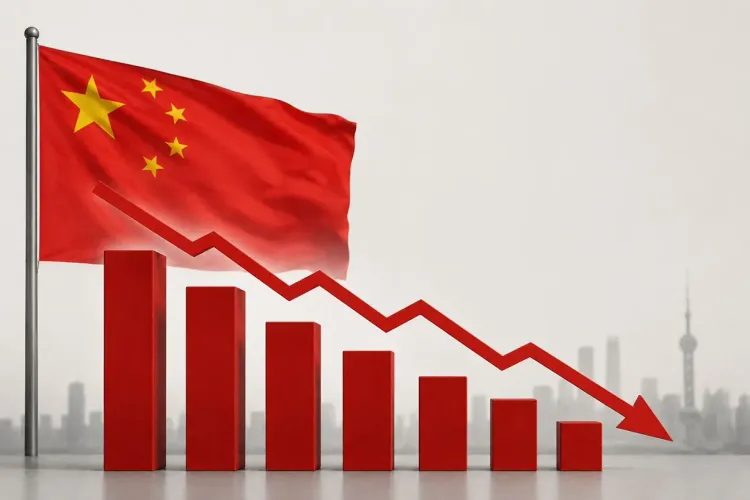
China Central Television, once the Communist Party's most powerful propaganda arm, is now selling skincare and weight loss kits on Douyin to stay financially afloat. A Eurasia Review report frames the pivot not as innovation but as institutional distress — a symptom of collapsing ad revenues, mass factory closures, and a state-dominated e-commerce market that is squeezing out private players.
Key Takeaways
CCTV , the Chinese Communist Party's flagship broadcaster, has turned to livestream e-commerce on Douyin to generate revenue amid collapsing advertising income.
Products sold include skincare, AR devices, tea, books, and weight loss kits through verified accounts with millions of followers.
Xinhua News Agency , China Post , and China Railway have also entered the livestream commerce space, according to the Eurasia Review report.
China's livestream e-commerce market is projected to reach 8.18 trillion yuan by 2026 , but gains are skewed toward state-backed entities.
AI-driven 'digital human' livestreaming was deployed by over 1.14 million enterprises , disadvantaging small private merchants.
Downsizing across 400 counties and mass factory closures signal the broader economic stress driving the shift, the report noted.
China Central Television (CCTV), the flagship broadcaster of the Chinese Communist Party (CCP), has pivoted from state journalism to livestream e-commerce on Douyin — China's version of TikTok — in what analysts describe as a desperate bid for revenue amid deepening economic stress. A report by Eurasia Review characterised the shift as a 'survival tactic that exposes the depth of China's economic malaise.'
From Propaganda to Product Sales
For decades, CCTV functioned as the Party's primary narrative-shaping instrument, reinforcing state authority through tightly controlled broadcasts. Today, according to the Eurasia Review report, its verified Douyin accounts — commanding millions of followers — are hawking skincare products, augmented-reality devices, tea, books, and weight loss kits. Some livestream sessions reportedly generate staggering revenue, catching viewers off guard. 'State media has become a shopping mall,' the report stated.
CCTV is not alone. Xinhua News Agency, China Post, and China Railway have all entered the livestream commerce space, according to the report, flooding the sector with state-owned institutions that carry inherent traffic and credibility advantages over private competitors.
The Scale of China's Livestream Economy
Livestream e-commerce in China is projected to reach 8.18 trillion yuan by 2026, according to the report. However, the gains are disproportionately concentrated among state-backed giants. AI-driven 'digital human' livestreaming was deployed by over 1.14 million enterprises, further tilting the competitive landscape against small and independent merchants who lack the traffic infrastructure and institutional resources to compete.
The Eurasia Review report argued that rather than fostering open competition, the government has allowed state monopolies to 'cannibalise private enterprise,' distorting market dynamics in a sector that was originally driven by grassroots entrepreneurship.
Economic Distress Behind the Pivot
The shift reflects broader economic strain, the report noted. Advertising revenues for state media have 'collapsed,' forcing outlets like CCTV to monetise their institutional influence through direct sales. Downsizing has reportedly been implemented across 400 counties, with staff reductions and benefit cuts. Factories are described as 'closing en masse,' compounding pressure on media organisations that once relied on a buoyant commercial advertising market.
China's 'golden age' of journalism is effectively over, the report argued, with economic pressures eroding whatever editorial credibility state outlets once claimed. The dual role of journalist and salesperson, critics argue, creates an inherent conflict that undermines public trust in news output.
Risks to National Credibility
The Eurasia Review report flagged a significant reputational risk: by tying national institutional credibility to e-commerce success, Chinese leadership could face serious consequences if product scandals or quality failures emerge. 'By placing national credibility on the success of e-commerce, the Chinese leadership risks significant consequences should scandals or product failures arise,' the report warned.
The episode marks a striking inflection point — state media that once shaped what China told the world is now selling what China makes, raising questions about the long-term sustainability of both its journalism and its commercial ambitions.
Point of View
It tells you something has gone structurally wrong with China's media economy. More troubling is the market distortion: state institutions flooding e-commerce with institutional credibility and zero cost-of-trust acquisition crowds out the private merchants who built the sector. The reputational risk the Eurasia Review flags is real — one high-profile product scandal involving a state broadcaster could do more damage to CCP soft power than a decade of Western criticism. Beijing appears to be trading long-term institutional credibility for short-term revenue, and that is rarely a trade that ends well.
NationPress
14 Oct 2026
Frequently Asked Questions
Why is CCTV selling skincare and other products online?
CCTV has turned to livestream e-commerce on Douyin because advertising revenues for state media have collapsed amid China's broader economic slowdown. According to a Eurasia Review report, the move is a 'survival tactic' driven by factory closures, downsizing across 400 counties, and a deteriorating commercial media market.
What products is CCTV selling on Douyin?
CCTV's verified Douyin accounts are reportedly selling skincare products, augmented-reality devices, tea, books, and weight loss kits. Some livestream sessions generate substantial revenue, with viewers initially assuming the accounts were fake before realising state media had entered direct retail.
Which other Chinese state institutions have joined livestream e-commerce?
Beyond CCTV, Xinhua News Agency, China Post, and China Railway have all entered the livestream commerce space, according to the Eurasia Review report. The influx of state-owned institutions is described as flooding the sector and disadvantaging private merchants.
How large is China's livestream e-commerce market?
China's livestream e-commerce market is projected to reach 8.18 trillion yuan by 2026. However, the Eurasia Review report notes that benefits are disproportionately concentrated among state-backed giants, with AI-driven 'digital human' livestreaming deployed by over 1.14 million enterprises further squeezing small businesses.
What risks does this trend pose for China's leadership?
The Eurasia Review report warned that tying national institutional credibility to e-commerce outcomes is risky. Should product scandals or quality failures emerge involving state media brands, the reputational fallout could extend beyond commerce to the broader credibility of state institutions and CCP-aligned outlets.