Dr. Jitendra Singh honours Anganwadi, ASHA workers in Udhampur
Synopsis
Union Minister Dr. Jitendra Singh visited an Anganwadi centre in Tikri, Udhampur on 29 September 2026, honouring Anganwadi and ASHA workers with gifts and certificates under the 'Aangan Milan Sewa' programme, spotlighting their role in maternal and child health delivery.
Key Takeaways
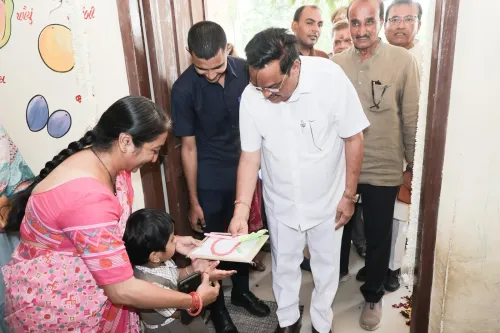
Jitendra Singh attended the 'Aangan Milan Sewa' programme at Bal Vidyalaya Anganwadi Centre, Tikri, Udhampur on 29 September 2026 .
The event was held under the 'Seva Sankalp Abhiyan' campaign, bringing the minister face-to-face with Anganwadi workers, ASHA workers, helpers, mothers, and children.
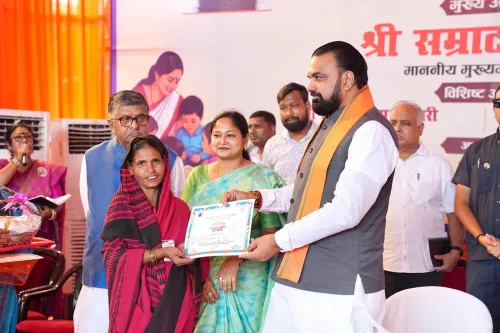
Workers and helpers were honoured with gifts and certificates recognising their role in maternal and child health, nutrition, and public welfare.
Anganwadi centres are the delivery points of India's ICDS scheme (launched 1975) , one of the world's largest early childhood care programmes.
ASHA workers operate under the National Health Mission as community-level maternal and child health support.
Singh's parliamentary constituency in Jammu and Kashmir, where he has regularly engaged in local welfare outreach.
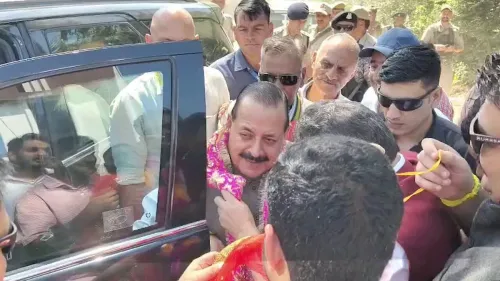
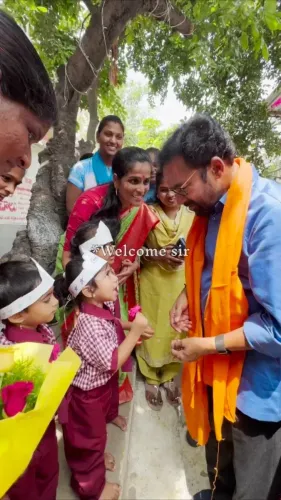
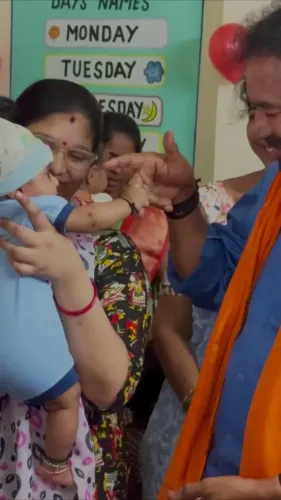
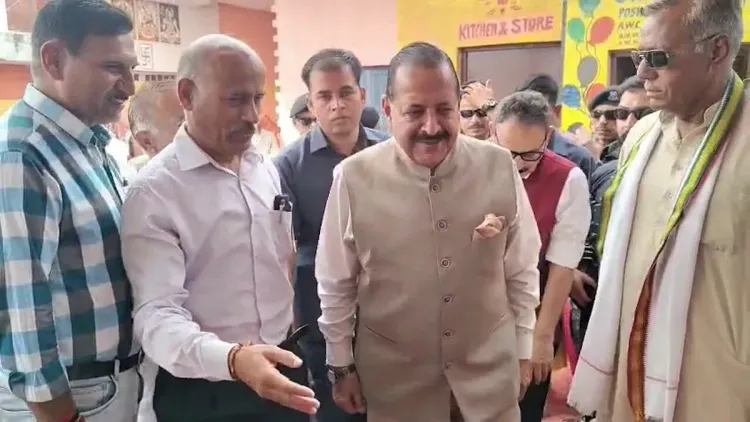
In the village of Tikri, Udhampur, Union Science and Technology Minister Dr. Jitendra Singh sat down on Tuesday, 29 September 2026 with Anganwadi workers, ASHA workers, helpers, mothers, and young children — the quiet frontline of India's maternal and child health system — and made sure they knew their work was seen.
The gathering was part of the 'Aangan Milan Sewa' (Courtyard Meeting Service) programme, held under the broader 'Seva Sankalp Abhiyan' (Service Pledge Campaign) at the Bal Vidyalaya Anganwadi Centre in Tikri. Dr. Singh distributed gifts and certificates of recognition to workers and helpers who, as he noted, play a 'critical role in maternal and child health, nutrition, and public welfare.' His message was direct: these dedicated sisters, committed to public service, are indispensable to building a healthy, empowered, and well-nourished society.
The women who hold the nutrition net together
Anganwadi centres are the ground-level delivery points of India's Integrated Child Development Services (ICDS), a scheme launched in 1975 that remains one of the world's largest early childhood care programmes. Every day, Anganwadi workers and their helpers provide supplementary nutrition, health check-ups, immunisation support, and pre-school education to children under six and to pregnant and lactating mothers.
Alongside them, ASHA (Accredited Social Health Activist) workers — deployed under the National Health Mission — serve as the community's first point of contact for maternal and child health. Together, these two cadres form an interlocking safety net that reaches into villages and hamlets where formal health infrastructure is sparse. Recognising them publicly, as Dr. Singh did in Tikri, is a practice that ministers across parties have used to spotlight scheme delivery at the constituency level.
Udhampur as a recurring stage for welfare outreach
Udhampur, the parliamentary constituency Dr. Singh represents in Jammu and Kashmir, has been a frequent venue for such on-ground engagement. The minister's presence at a grassroots Anganwadi event — rather than a formal ministerial function — signals the continued political emphasis on visible, personal contact with beneficiary communities in the region.
The workers honoured in Tikri today are part of a national workforce that keeps nutrition and health metrics moving in some of India's most challenging geographies. Their certificates may be small tokens, but the acknowledgement lands in a sector where recognition has historically been scarce.
Point of View
Whose Udhampur seat sits in Jammu and Kashmir — a region where welfare scheme penetration carries both developmental and political weight — such outreach reinforces a grassroots connect narrative. The public honouring of ASHA and Anganwadi workers also speaks to a broader policy conversation about recognising and fairly compensating frontline health workers, a debate that remains active in parliamentary and state-level forums. Whether these ceremonial gestures translate into structural improvements in worker honoraria or scheme funding is the question serious observers will keep tracking.
NationPress
29 Sept 2026
Frequently Asked Questions
What is the 'Aangan Milan Sewa' programme?
'Aangan Milan Sewa' is a community outreach initiative under the 'Seva Sankalp Abhiyan' campaign, designed to facilitate direct interaction between elected representatives or officials and Anganwadi workers, ASHA workers, mothers, and children at grassroots Anganwadi centres.
What do Anganwadi workers do?
Anganwadi workers operate under India's Integrated Child Development Services (ICDS), launched in 1975, delivering supplementary nutrition, health check-ups, immunisation support, and pre-school education to children under six and to pregnant or lactating mothers.
Who are ASHA workers and what is their role?
ASHA (Accredited Social Health Activist) workers are community-level health volunteers deployed under the National Health Mission to support maternal and child health services, acting as the first point of contact between rural communities and the formal health system.
Why did Dr. Jitendra Singh visit Tikri in Udhampur?
Dr. Jitendra Singh, who represents the Udhampur parliamentary constituency, attended the 'Aangan Milan Sewa' event at the Bal Vidyalaya Anganwadi Centre in Tikri to interact with frontline health workers and mothers, and to present gifts and certificates recognising their contributions to maternal and child welfare.
What is the ICDS scheme in India?
The Integrated Child Development Services (ICDS) is one of the world's largest early childhood care programmes, launched by the Government of India in 1975. It operates through Anganwadi centres to provide nutrition, health, and early education services to young children and mothers across the country.