Smriti Irani Salutes Anganwadi & ASHA Workers in Verse
Synopsis
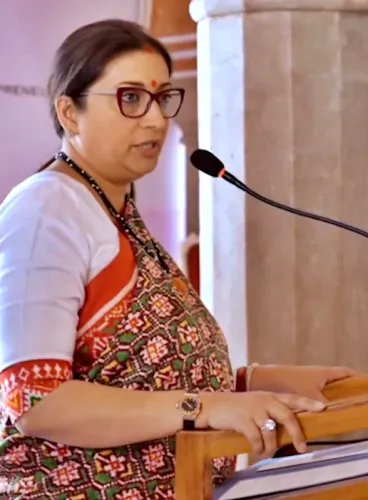
BJP leader Smriti Irani pinned a Hindi verse on X on 24 September 2026 celebrating Anganwadi and ASHA workers as the frontline guardians of child health, nutrition and education, under the hashtag #AnganMilanSeva.
Key Takeaways
BJP leader Smriti Irani pinned a Hindi couplet on 24 September 2026 honouring Anganwadi and ASHA workers.
The verse names all three pillars of early childhood development: health, nutrition and education .
Anganwadi centres were established under ICDS in 1975 ; ASHA workers were introduced under the National Rural Health Mission in 2005 .
The POSHAN Abhiyaan , launched in 2018 , sought to converge both cadres into a unified nutrition and health mission.
The hashtag #AnganMilanSeva suggests an associated event or outreach campaign, details of which remain unconfirmed.
Irani previously served as Union Minister for Women and Child Development , overseeing key phases of POSHAN Abhiyaan.
At the intersection of grassroots health delivery and early childhood education, BJP leader Smriti Irani turned to poetry on Thursday, 24 September 2026, pinning a Hindi couplet on her X account that frames Anganwadi workers and ASHA workers as architects of the nation's future.
The post, tagged #AnganMilanSeva, reads — 'नौनिहालों का स्वास्थ्य, पोषण और शिक्षा सँवारें, आंगनवाड़ी और आशा बहनें, राष्ट्र का भविष्य निखारें' — which translates as: 'Let Anganwadi and ASHA sisters nurture the health, nutrition and education of young children — and polish the nation's future.' The verse is spare but pointed: it names the three pillars of early childhood development — health, nutrition, and education — in a single breath, and attributes their guardianship to two of India's largest frontline workforces.
Five Decades of Anganwadis, Two Decades of ASHA
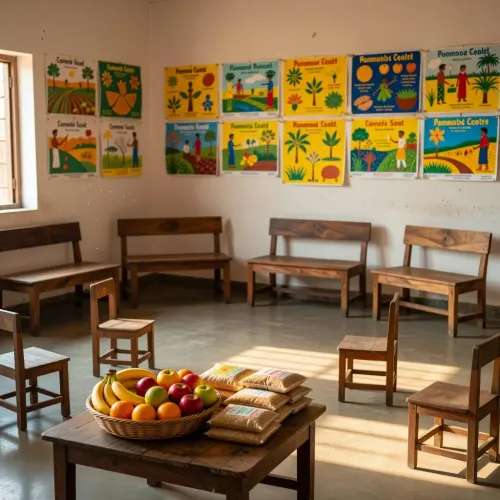
The tribute lands against a long institutional backdrop. Anganwadi centres were established in 1975 under the Integrated Child Development Services (ICDS) scheme to deliver supplementary nutrition, basic health check-ups and pre-school education to children under six — one of the world's earliest and largest integrated child-development programmes. ASHA workers — Accredited Social Health Activists — arrived three decades later, introduced in 2005 under the National Rural Health Mission to anchor community-level maternal and child healthcare in villages across the country.
Together, the two cadres represent millions of women operating at the last mile of the state's welfare architecture — the first point of contact for a newborn's immunisation, a mother's antenatal check-up, or a toddler's first nutritional supplement.
POSHAN Abhiyaan and the Push to Converge
The POSHAN Abhiyaan, launched in 2018, attempted to sharpen that convergence — pulling ICDS nutrition data, ASHA outreach and health ministry metrics into a single mission framework aimed at reducing stunting, wasting and anaemia among children and lactating mothers. Irani, who served as Union Minister for Women and Child Development, oversaw significant phases of that programme's rollout, giving her tribute a layer of institutional ownership beyond ceremonial verse.
The #AnganMilanSeva hashtag suggests an organised event or campaign — likely a gathering of Anganwadi and ASHA workers — though specific details of the programme have not been confirmed independently.
What the couplet does unambiguously is place frontline women workers at the centre of national development rhetoric — not as beneficiaries of welfare policy, but as its active agents. That framing, increasingly visible across the political spectrum, reflects a broader recognition that India's social outcomes hinge less on scheme design than on the women who deliver it, door to door, village by village.
Point of View
ASHAs, and allied cadres — as active nation-builders rather than passive scheme recipients, a narrative pivot that cuts across party lines but carries particular resonance for a minister who helmed the Women and Child Development portfolio. By anchoring the tribute in verse and pinning it, Irani signals that the messaging is considered, not incidental. The #AnganMilanSeva hashtag hints at ground-level mobilisation, suggesting the BJP may be investing in visibility among a constituency of millions of semi-employed women workers whose wage grievances have periodically surfaced as a political liability. How that symbolic recognition translates into budgetary or policy movement — particularly on ICDS staffing and ASHA incentive structures — will be the sharper test.
NationPress
25 Sept 2026
Frequently Asked Questions
What did Smriti Irani post about Anganwadi and ASHA workers?
She pinned a Hindi couplet on 24 September 2026 praising Anganwadi and ASHA workers as guardians of child health, nutrition and education, tagging it #AnganMilanSeva.
What is the ICDS scheme and how do Anganwadi centres work?
The Integrated Child Development Services (ICDS), launched in 1975, operates through Anganwadi centres that provide supplementary nutrition, basic health services and pre-school education to children under six years of age.
Who are ASHA workers and what do they do?
Accredited Social Health Activists (ASHA workers) are village-level health workers introduced in 2005 under the National Rural Health Mission to deliver maternal and child health services at the community level.
What is POSHAN Abhiyaan?
POSHAN Abhiyaan, launched in 2018, is India's flagship nutrition mission that converges Anganwadi and ASHA outreach to reduce stunting, wasting and anaemia among children and lactating mothers.
What is #AnganMilanSeva?
The hashtag appears to refer to an event or outreach campaign involving Anganwadi and ASHA workers, though specific programme details have not been independently confirmed.