Giriraj Singh champions Lakhpati Didi, Drone Didi as pillars of women's empowerment
Synopsis
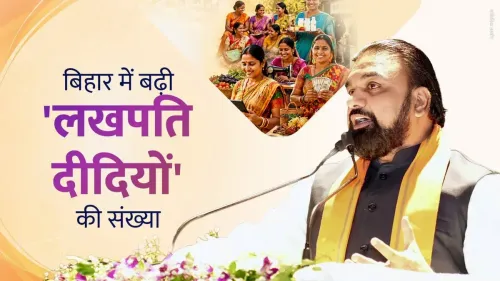
Union Textiles Minister Giriraj Singh praised the Lakhpati Didi and Drone Didi schemes on 29 September 2026, calling them pillars of women's self-reliance and framing Nari Shakti as the foundation of India's Viksit Bharat 2047 journey.
Key Takeaways
Giriraj Singh posted on 29 September 2026 hailing Lakhpati Didi and Drone Didi as transformative for rural women's confidence and dignity.
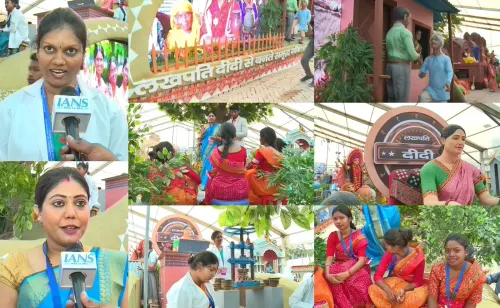
Lakhpati Didi targets women in self-help groups under DAY-NRLM to earn at least Rs 1 lakh annually .
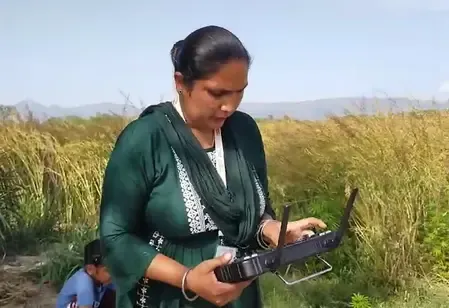
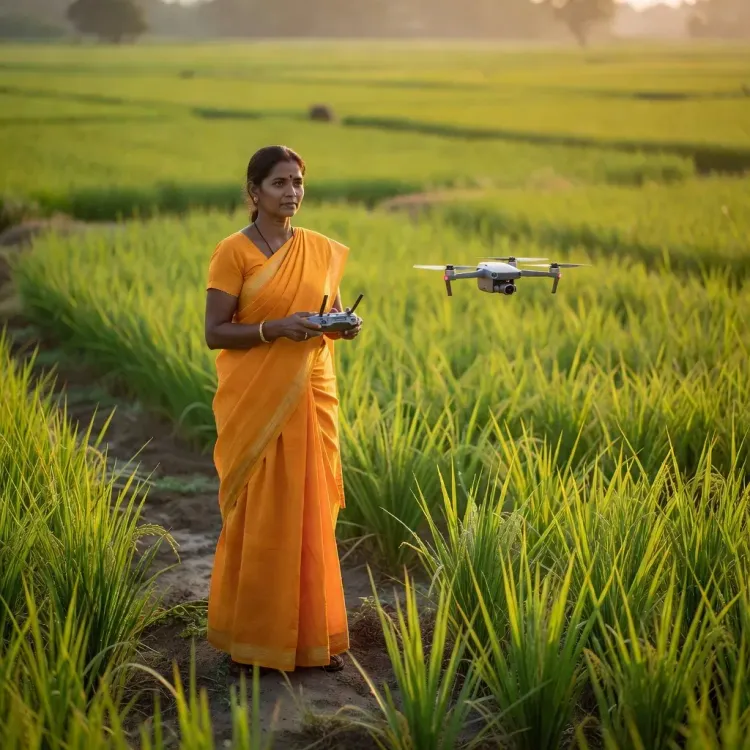
Drone Didi trains rural women to operate agricultural drones for crop spraying and precision-farming tasks.
Both schemes reflect the central government's strategy of positioning women as economic agents, not just welfare recipients.
Singh described Nari Shakti as the 'strong foundation stone' of the Viksit Bharat 2047 vision.
The Ministry of Rural Development tracks enrolment and income outcomes under these programmes.
Initiatives that turn rural women into drone pilots and lakh-earning entrepreneurs are doing more than boosting incomes — they are rebuilding confidence and dignity, Union Textiles Minister Giriraj Singh said in a post on X on Tuesday, 29 September 2026.
Posting in Hindi, the senior BJP leader wrote: 'Lakhpati Didi aur Drone Didi jaisi pehlen naye avsar ke saath unke aatmavishwas aur samman ko bhi mazboot kar rahi hain' — 'Initiatives like Lakhpati Didi and Drone Didi are strengthening women's self-confidence and dignity along with new opportunities.' He added that women's power is not merely a participant in the journey toward a developed India — she is its 'strong foundation stone.'
What Lakhpati Didi and Drone Didi actually do
The two schemes sit at the intersection of rural livelihoods and emerging technology. Lakhpati Didi operates under the Deendayal Antyodaya Yojana–National Rural Livelihoods Mission (DAY-NRLM), a programme first launched in 2011 to build sustainable self-employment through self-help groups. Its specific goal: help women in those groups cross an annual income threshold of at least Rs 1 lakh. Drone Didi takes the same constituency — rural women — and trains them to operate agricultural drones for crop spraying and related field tasks, placing them at the centre of precision-farming adoption. Together, the two programmes represent a deliberate government strategy: meet rural women where they are, skill them for tomorrow's economy, and let economic agency do what welfare transfers alone cannot.Nari Shakti as a Viksit Bharat cornerstone
Singh's framing of 'Nari Shakti' — women's power — as the 'foundation' of Viksit Bharat 2047 reflects a consistent rhetorical and policy shift in New Delhi. The central government has increasingly positioned women not as passive beneficiaries of social spending but as active economic agents whose participation is structurally necessary for India to hit its development targets. Across ministries, from agriculture to textiles — Singh's own portfolio — schemes promoting entrepreneurship, digital tools, and financial inclusion for women have multiplied steadily. The Textiles Ministry has its own stake in this: a significant share of India's handloom and garment workforce is female, and rural women's income growth directly feeds into the domestic demand that sustains that sector. The real measure of these ambitions, however, will come from the ground: enrolment numbers, verified income gains, and whether drone-trained women find a sustained market for their skills. Those numbers, tracked by the Ministry of Rural Development, will eventually tell the fuller story.Point of View
Anchoring the government's development story in the daily lives of rural women. The 'foundation stone' framing is significant — it upgrades women's empowerment from a social obligation to a macroeconomic prerequisite, consistent with the Viksit Bharat 2047 pitch. For the Textiles Ministry, championing these schemes also has a sectoral logic: rural women's economic gains translate into domestic consumption that sustains India's garment and handloom industries. The proof, however, will be in verified income and skilling data that official monitoring must eventually deliver.
NationPress
29 Sept 2026
Frequently Asked Questions
What is the Lakhpati Didi scheme?
Lakhpati Didi is an initiative under the Deendayal Antyodaya Yojana–National Rural Livelihoods Mission that aims to help women in self-help groups earn at least Rs 1 lakh annually through sustainable self-employment.
What is the Drone Didi programme?
Drone Didi is a government training programme that equips rural women with skills to operate agricultural drones for crop spraying and related farming tasks, creating new livelihood opportunities.
What did Giriraj Singh say about women's empowerment?
On 29 September 2026, Union Textiles Minister Giriraj Singh said that initiatives like Lakhpati Didi and Drone Didi are strengthening women's confidence and dignity alongside new economic opportunities, calling Nari Shakti the 'strong foundation stone' of Viksit Bharat.
How does Viksit Bharat 2047 relate to women's empowerment?
Viksit Bharat 2047 is India's vision for becoming a developed nation by its centenary of independence. The central government frames women's economic participation as structurally essential to achieving that goal, not merely a social welfare objective.
Which ministry runs the Lakhpati Didi scheme?
The Lakhpati Didi initiative is run under the Ministry of Rural Development's Deendayal Antyodaya Yojana–National Rural Livelihoods Mission, which has promoted rural self-employment through self-help groups since 2011.