China's Digital Governance: Shaping Narratives and Silencing Dissent
Synopsis
A recent report reveals how China's digital governance system not only censors dissent but also crafts pro-state narratives through extensive online manipulation, raising concerns about freedom of expression both domestically and globally.
Key Takeaways
China's digital governance tightly controls online expression.
The '50 Cent Party' shapes pro-state narratives.
The 'Great Firewall' isolates users from global platforms.
Censorship affects sensitive topics like Xinjiang and Tiananmen.
Coded speech allows citizens to express dissent creatively.
Dhaka, April 4 (NationPress) Over the last two decades, China has developed a comprehensive digital governance framework that rigorously manages online discourse while simultaneously promoting pro-government sentiments.
Central to this digital ecosystem is the '50 Cent Party' or Wumao Dang, a loosely structured yet highly efficient network of millions of commentators whose role is to not only refute criticism but also to actively craft favorable narratives for the state and undermine dissenting opinions, as highlighted in a recent report.
“Contrary to common assumptions, Chinese digital censorship extends beyond mere content deletion. It equally involves tactics of distraction and redirection. Research indicates that a substantial amount of pro-government online activity sidesteps direct engagements with critics; instead, it inundates platforms with affirmative or irrelevant material to diminish critical dialogues. This approach creates a facade of agreement while pushing dissenting viewpoints to the margins,” the 'Times of Bangladesh' report elaborated.
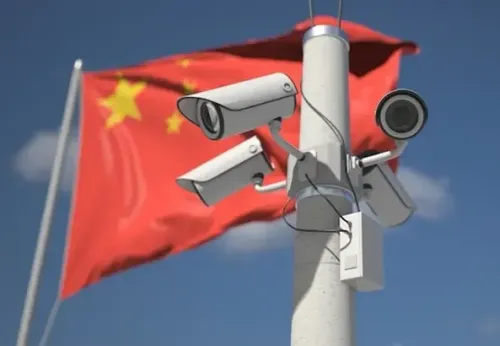
“The very structure of China's internet bolsters this control system. The 'Great Firewall' effectively segregates domestic users from global sites like Facebook, Twitter (now X), and YouTube, substituting them with strictly regulated domestic alternatives such as WeChat, Weibo, and Douyin. These platforms function under stringent regulatory systems where content moderation is both automated and overseen by humans, often shaped by non-transparent state guidelines,” it added.
The report further notes that numerous sensitive subjects within China—including Xinjiang, Tibet, Hong Kong, and Tiananmen—are severely censored, with individuals who breach these boundaries facing account suspensions, surveillance, or harsher repercussions.
“In such an atmosphere, freedom of expression is confined to well-defined—and frequently shifting—parameters. Citizens do not remain entirely silent; instead, they partake in a form of ‘coded speech,’ utilizing metaphors, satire, and inventive language to navigate the restrictions. However, these forms of expression are fragile and often ephemeral, as authorities continually evolve their monitoring strategies,” it noted.
The report emphasized the emergence of “troll-like behavior” in discussions surrounding sensitive topics, such as the treatment of Uyghur Muslims. Here, the Chinese authorities regulate online narratives and orchestrate efforts to frame criticism as “foreign interference” and “misinformation.”
The interplay of state policy, digital control, and widespread participation, it concludes, constructs a formidable ecosystem that stifles and undermines dissent, with repercussions that extend beyond China's borders.
“As governments and political entities globally observe and, in some instances, replicate aspects of this model, the distinction between genuine public opinion and artificially manufactured consensus becomes increasingly obscure. The growth of algorithm-driven engagement further intensifies this phenomenon, as outrage and polarization frequently garner heightened visibility,” the report noted.
Point of View
It is crucial to emphasize the importance of understanding the implications of China's digital governance. This framework not only affects the Chinese populace but also has global ramifications as nations observe and, in some cases, imitate these strategies. The balance between free expression and state control remains a pressing issue that warrants global attention.
NationPress
5 Oct 2026
Frequently Asked Questions
What is the '50 Cent Party'?
The '50 Cent Party', or Wumao Dang, is a network of online commentators in China tasked with promoting pro-government narratives and countering dissent.
How does the Great Firewall function?
The Great Firewall isolates Chinese internet users from global platforms, replacing them with controlled domestic alternatives to manage online discourse.
What topics are heavily censored in China?
Sensitive topics such as Xinjiang, Tibet, Hong Kong, and Tiananmen are strictly censored in China.
What is 'coded speech'?
'Coded speech' refers to the use of metaphors, satire, and creative language by citizens to navigate censorship in China.
What are the implications of China's digital governance?
China's digital governance suppresses dissent and influences public opinion, raising global concerns about freedom of expression.