CM Dhami Flags 266 New Sports Venues Across Uttarakhand
Synopsis
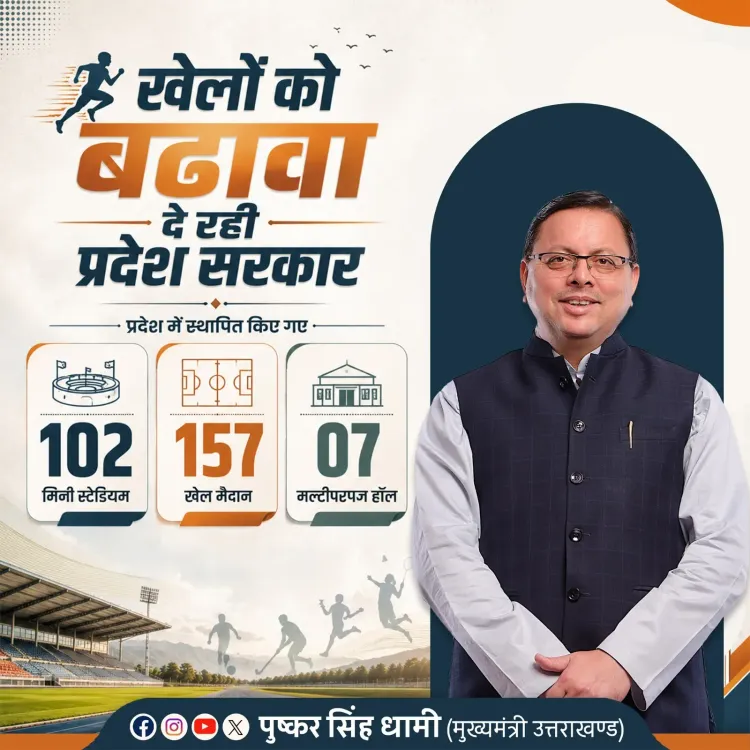
Uttarakhand CM Pushkar Singh Dhami announced the establishment of 102 mini stadiums, 157 sports grounds, and 7 multi-purpose halls across the state, positioning the infrastructure push as a bid to elevate Uttarakhand as a competitive sports hub.
Key Takeaways
102 mini stadiums have been established across Uttarakhand under the state government's sports infrastructure drive.
157 sports grounds and 7 multi-purpose halls add to the state's total of 266 new venues .
CM Pushkar Singh Dhami framed the initiative as a continuous government effort to provide athletes with better resources and opportunities.
The small-format venue model is suited to Uttarakhand's hilly, dispersed terrain where large centralised stadiums are impractical.
The push aligns with the national Khelo India scheme's goal of grassroots sports development and talent identification.
Budget allocations for maintenance and coaching in the next fiscal year will be the key indicator of whether the infrastructure delivers sustained impact.
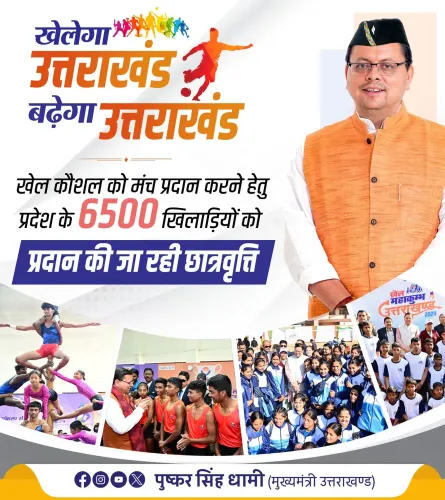
Uttarakhand Chief Minister Pushkar Singh Dhami has declared that his government has established 102 mini stadiums, 157 sports grounds, and 7 multi-purpose halls across the state — a push he says is designed to give young athletes the infrastructure they need to compete and excel at higher levels.
Posting in Hindi on Wednesday, 12 August 2026, Dhami wrote: 'Khelo ko badhawa dene aur khiladiyon ko behtar suvidhaen uplabdh karane ke liye hamari sarkar nirantar prayasrat hai' — 'Our government is continuously working to promote sports and provide better facilities to athletes.' The post underlines a state-level effort that mirrors a broader national pattern of decentralised sports infrastructure building.
266 venues and the logic of small-format infrastructure
Uttarakhand's geography makes large, centralised stadiums impractical for most of its population. The Himalayan state's dispersed hill districts have historically left young talent without accessible training grounds. The government's reported focus on mini stadiums and multi-purpose halls is a direct response to that terrain — smaller venues that can be planted closer to where athletes actually live.
This approach runs parallel to the national Khelo India scheme, launched in 2017, which pushed states to upgrade grassroots facilities and sharpen talent identification pipelines. State governments, including Uttarakhand's BJP administration, have used that framework to justify district-level investments that might otherwise struggle for budget priority.
What the numbers mean for Uttarakhand's athletes
Dhami's stated goal is explicit: to lift 'Uttarakhand ko khel ke kshetra mein nayi unchaiyyon tak' — 'take Uttarakhand to new heights in the field of sports.' For the state's young athletes, the practical promise is access to structured training environments without having to migrate to larger cities. The multi-purpose halls, in particular, offer year-round utility in a region where outdoor training is constrained by harsh winters.
The real test of these numbers will come in the next state budget cycle — whether allocations for maintenance, coaching staff, and equipment follow the bricks-and-mortar investment will determine whether these venues become genuine talent factories or idle assets.
Point of View
Photographable, and politically resonant with youth voters. The choice to lead with raw venue counts rather than outcomes (medals, national selections, participation rates) reflects the early stage of this investment cycle; the harder question of utilisation and quality remains unanswered. For the BJP in Uttarakhand, aligning state spending with the Khelo India framework also lets the government claim credit at both the state and central levels simultaneously. Whether the numbers hold up to independent audit will define the legacy of this particular push.
NationPress
12 Aug 2026
Frequently Asked Questions
How many sports venues has the Uttarakhand government built?
According to CM Pushkar Singh Dhami, the state government has established 102 mini stadiums, 157 sports grounds, and 7 multi-purpose halls — a total of 266 venues.
What is the Khelo India scheme and how does it relate to Uttarakhand?
Khelo India is a national scheme launched in 2017 to promote grassroots sports and upgrade facilities across India. Uttarakhand's state-level infrastructure drive runs parallel to this scheme, which encourages district-level investment in sports venues.
Why are mini stadiums important for Uttarakhand athletes?
Uttarakhand's mountainous terrain makes large centralised stadiums impractical for most districts. Mini stadiums and multi-purpose halls can be built closer to where athletes live, giving them local access to structured training facilities.
Who is Pushkar Singh Dhami?
Pushkar Singh Dhami is the Chief Minister of Uttarakhand and a BJP leader who has served in the role since 2021, with a stated focus on youth development and state infrastructure.
What will determine whether Uttarakhand's new sports venues are effective?
Future state budget allocations for maintenance, coaching staff, and equipment — as well as independent utilisation reports — will show whether the new venues translate into genuine athlete development or remain underused.