CM Sukhu defends 60-paise fuel cess for orphans' education
Synopsis
Chief Minister Sukhvinder Singh Sukhu has defended Himachal Pradesh's 60-paise per-litre fuel cess — enacted through state legislation — as a dedicated fund to keep orphaned and widowed mothers' children in school, noting that HP fuel prices remain lower than in Punjab, Haryana, and Uttarakhand.
Key Takeaways
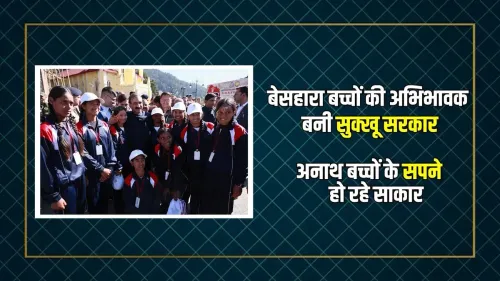
Himachal Pradesh levies a 60-paise per-litre cess on petrol and diesel specifically to fund education for orphans and widows' children.
The cess was enacted through a law passed by the Himachal Pradesh Legislative Assembly , giving it statutory backing.
CM Sukhvinder Singh Sukhu argues that HP fuel prices remain lower than those in Punjab , Haryana , and Uttarakhand even after the cess.
The Sukhu government, in office since December 2022 , has made targeted welfare for marginalised children a policy priority.
Indian states independently set VAT and cess on petroleum, creating inter-state price variation that Sukhu is using as political cover for the levy.
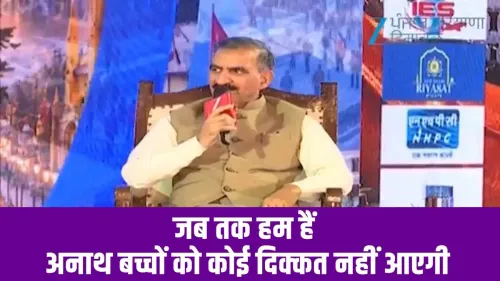
A 60-paise cess on every litre of petrol and diesel — that is the price Himachal Pradesh Chief Minister Sukhvinder Singh Sukhu says his state's consumers pay to keep orphaned and widowed mothers' children in school. On Wednesday, 12 August 2026, Sukhu took to X to defend the levy, framing it not as a burden but as a social compact enshrined in law.
In the post, Sukhu wrote: 'हमारा प्रयास है कि किसी बच्चे की पढ़ाई आर्थिक मजबूरी के कारण न रुके' — 'Our effort is that no child's education stops because of financial compulsion.' He anchored the defence in a direct price comparison: petrol and diesel are costlier in neighbouring Punjab, Haryana, and Uttarakhand than in Himachal Pradesh, even after the cess is applied.
A 60-paise cess, a law, and the children it targets
The cess is not an executive order — it was passed as legislation by the Himachal Pradesh Legislative Assembly, giving it statutory weight and signalling the government's intent to institutionalise the welfare measure. The beneficiaries are a narrow, specific group: children of widows and orphaned children whose education is at risk of being cut short by poverty.
Indian states have constitutional authority to levy VAT and cess on petroleum products independently of central taxes, which is why pump prices vary so sharply across state borders. Himachal Pradesh has used that autonomy to carve out a small, dedicated stream of revenue for a targeted social objective — rather than routing funds through a broad welfare budget line where they can be diluted.
The inter-state price argument as political cover
Sukhu's comparison with Punjab, Haryana, and Uttarakhand is a deliberate political move. By showing that Himachal consumers still pay less at the pump than their neighbours despite the cess, he pre-empts the obvious objection — that the government is taxing ordinary fuel buyers to fund a welfare scheme. The message: the net deal for the consumer is still better here, and the surplus goes to a child's classroom, not a government account.
The Sukhu government, which took office in December 2022 following the Himachal Pradesh assembly elections, has positioned targeted welfare for marginalised children as a signature theme. This cess fits that pattern: a small, visible, named levy with a named beneficiary — the kind of policy that is easy to explain at a town hall and hard to oppose on the street.
Whether the cess is generating enough revenue to make a measurable dent in dropout rates among orphans and widows' children is the question that will define whether this is genuine policy or political symbolism. Enrollment and retention data from the scheme's beneficiary pool will be the real verdict.
Point of View
He neutralises the 'extra tax' attack before it lands. The decision to legislate the cess — rather than impose it by executive order — signals an intent to make the measure durable beyond one budget cycle. Within the broader Congress strategy in Himachal Pradesh, named welfare levies with visible beneficiaries serve a dual purpose: they deliver real, if modest, social outcomes while generating a clear campaign narrative for a government that must contest a mid-term credibility test. The scheme's actual impact will hinge on whether the revenue is ring-fenced and whether dropout rates among the target group move.
NationPress
12 Aug 2026
Frequently Asked Questions
What is the 60-paise cess on petrol in Himachal Pradesh?
It is a 60-paise per-litre surcharge on petrol and diesel in Himachal Pradesh , enacted through state legislation, with proceeds dedicated to funding education for orphaned children and children of widows.
Is Himachal Pradesh petrol cheaper than Punjab and Haryana?
According to CM Sukhvinder Singh Sukhu , petrol and diesel prices in Himachal Pradesh are lower than in Punjab , Haryana , and Uttarakhand , even after the 60-paise education cess is factored in.
Who benefits from the Himachal Pradesh education cess on fuel?
The cess is specifically meant to cover the education costs of orphaned children and children of widows in Himachal Pradesh who might otherwise drop out due to financial hardship.
Was the Himachal Pradesh fuel cess passed by the assembly?
Yes. The Himachal Pradesh Legislative Assembly passed a law to authorise the 60-paise cess, making it a statutory measure rather than a temporary executive decision.
Why do petrol prices differ between Indian states?
Indian states have the constitutional authority to independently set VAT and cess on petroleum products on top of central taxes, which is why pump prices vary significantly across state borders.