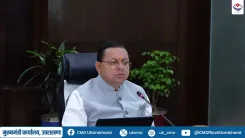
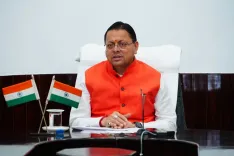
CM Dhami flags off youth Seva Yatra to Haryana from Dehradun
Synopsis
Uttarakhand CM Pushkar Singh Dhami flagged off a youth group from Dehradun to Haryana on 29 September 2026 under the Seva Sankalp Abhiyan, urging participants to learn from Haryana's development model while showcasing Uttarakhand's cultural heritage.
Key Takeaways
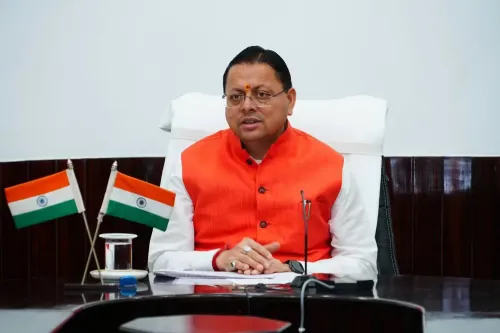
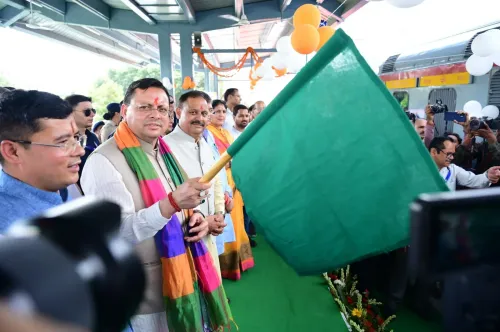
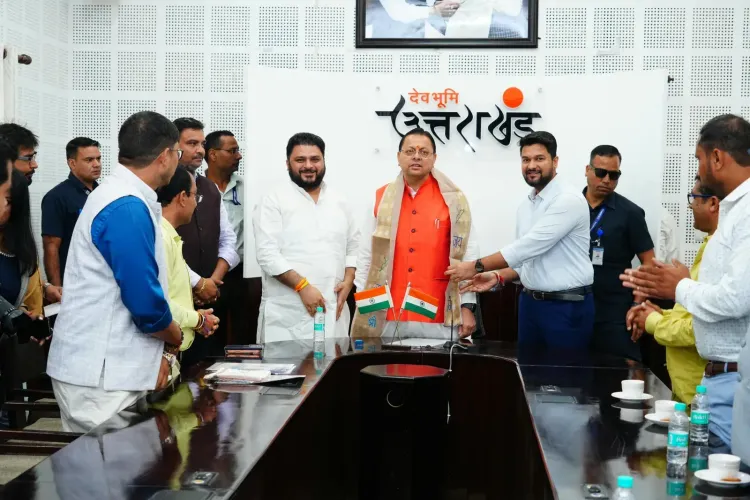
Pushkar Singh Dhami flagged off a youth Seva Yatra to Haryana from his camp office in Dehradun on 29 September 2026 .
The yatra is part of the Seva Sankalp Abhiyan , Uttarakhand's government-run service and outreach campaign.
Participants are expected to study Haryana's culture, governance practices, and development initiatives during the visit.
Dhami urged young creators in the group to simultaneously promote Uttarakhand's folk traditions, natural heritage, and development potential to Haryana audiences.
The programme aligns with the national Ek Bharat Shreshtha Bharat initiative, which has promoted inter-state cultural exchanges since 2015 .
The yatra reflects Uttarakhand's broader strategy of using youth outreach and digital content creation to amplify the state's cultural identity across India.
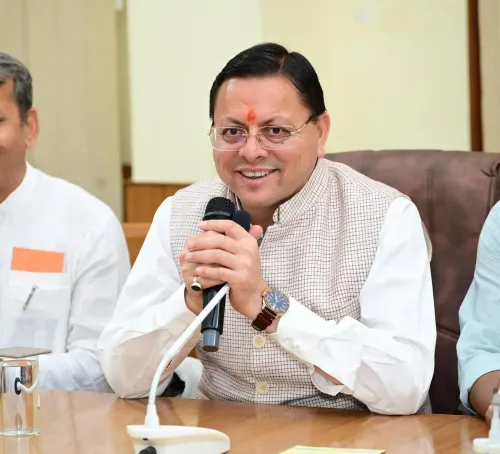
From his camp office in Dehradun on Tuesday, 29 September 2026, Uttarakhand Chief Minister Pushkar Singh Dhami flagged off a group of young participants heading to Haryana under the state's Seva Sankalp Abhiyan — a service and outreach campaign that doubles as a living bridge between India's diverse states.
What the Seva Yatra asks of Uttarakhand's youth
The Chief Minister interacted with the departing group before the flag-off, framing the journey as a two-way cultural transaction. In his post, Dhami said such programmes give the state's youth 'an opportunity to closely understand the culture, lifestyle, local specialities, development works and innovative initiatives of different states of the country.' At the same time, he called on participants to carry Uttarakhand outward — its folk traditions, natural heritage, and development potential — to audiences in Haryana.
Dhami specifically addressed the young creators in the group, urging them to document and share best governance practices they encounter while simultaneously acting as cultural ambassadors for the hills. The appeal signals an intent to turn the yatra into usable content — not just an exposure visit, but a soft-power exercise routed through social media.
Seva Sankalp Abhiyan and the Ek Bharat thread
The Seva Sankalp Abhiyan is the Uttarakhand government's broader service and outreach campaign, and inter-state youth journeys are among its most visible components. The programme sits within a wider national architecture: the Ek Bharat Shreshtha Bharat initiative, launched in 2015, which institutionalised state-to-state cultural and developmental exchanges across India. Flag-offs by senior leaders — and calls for participants to return as informed ambassadors — are standard features of such exchanges, now sharpened by the expectation that youth creators will amplify their experiences online.
Uttarakhand, a Himalayan state with a distinct cultural identity built around folk traditions, pilgrimage circuits, and natural heritage, has a particular stake in such visibility. With tourism a central plank of its development model, every young creator who showcases the state's traditions to a Haryana audience is, in effect, extending the state's reach without a rupee of advertising spend.
Dehradun to Haryana: the broader exchange calculus
Haryana, a northern state with an agricultural base and a dense administrative infrastructure, offers Uttarakhand's youth a window into a very different development model — one shaped by proximity to the national capital and decades of Green Revolution-era policy. The pairing is deliberately cross-sectoral: participants are expected to return not just with cultural impressions but with notes on governance practices worth replicating.
This is the logic that makes such yatras more than ceremonial tourism. Done well, they compress months of policy reading into days of direct observation — and the Chief Minister's call to young creators to translate that observation into content suggests the Uttarakhand government wants the learning to travel further than the participants themselves.
The next test is whether the Seva Sankalp Abhiyan produces structured feedback loops — youth reports, state-level exchanges, or follow-up cultural events — that convert goodwill into governance insight.
Point of View
High-visibility form of soft statecraft. For Uttarakhand, a state whose economic model depends heavily on tourism and its cultural brand, turning young creators into ambassadors is a strategic multiplier. The Ek Bharat Shreshtha Bharat framework provides the national scaffolding, but what determines impact is whether these visits produce structured learning rather than just ceremonial goodwill. Dhami's specific call to 'young creators' — rather than youth in general — signals a deliberate pivot toward content-driven outreach as a governance communication tool.
NationPress
29 Sept 2026
Frequently Asked Questions
What is the Seva Sankalp Abhiyan in Uttarakhand?
The Seva Sankalp Abhiyan is an Uttarakhand government campaign focused on service and outreach, including youth journeys to other Indian states to facilitate cultural and developmental exchange.
Why did CM Dhami flag off youth to Haryana?
CM Pushkar Singh Dhami flagged off the group as part of a Seva Yatra under the Seva Sankalp Abhiyan, aimed at exposing Uttarakhand youth to Haryana's culture, governance models, and development initiatives while spreading awareness of Uttarakhand's own heritage.
What is Ek Bharat Shreshtha Bharat?
Ek Bharat Shreshtha Bharat is a national initiative launched in 2015 to encourage cultural and developmental exchanges between Indian states, fostering national integration through structured inter-state visits and programmes.
What did CM Dhami ask youth creators to do during the Haryana visit?
Dhami urged young creators in the group to document Haryana's culture and best governance practices while also introducing local audiences to Uttarakhand's folk traditions, natural heritage, and development potential.
Where was the Seva Yatra flag-off held?
The flag-off took place at CM Dhami's camp office in Dehradun, Uttarakhand, on 29 September 2026.