CM Dhami frames Uttarakhand supplementary budget around self-reliance
Synopsis
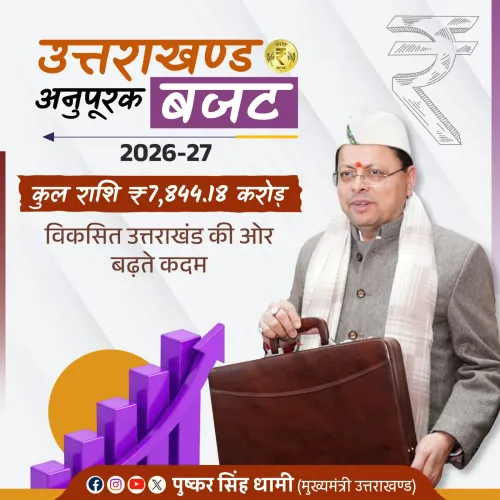
Chief Minister Pushkar Singh Dhami has anchored Uttarakhand's supplementary budget in a vision of self-reliance, development, and prosperity — aligning state fiscal policy with the national Atmanirbhar Bharat framework as the assembly prepares to debate additional allocations.
Key Takeaways
CM Pushkar Singh Dhami presented Uttarakhand's supplementary budget on October 28, 2026 under a three-pillar vision: self-reliant, developed, and prosperous.
Supplementary budgets in Indian states allow governments to seek additional grants beyond the original annual budget during assembly sessions.
Dhami's framing echoes the national Atmanirbhar Bharat initiative announced in 2020 , adapting it to Uttarakhand's specific economic context.
Uttarakhand , formed in 2000 , relies on tourism, agriculture, hydropower, and services as its primary economic pillars.
Specific sectoral allocations and assembly debates will be the key indicators of whether the vision has concrete fiscal backing.
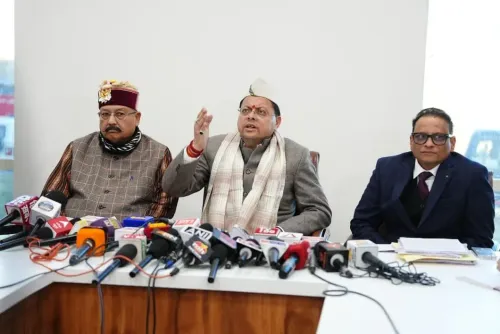
A supplementary budget is rarely headline news — until a Chief Minister uses it to plant a flag. On Wednesday, October 28, 2026, the Chief Minister's Office of Uttarakhand announced that Chief Minister Pushkar Singh Dhami has framed the state's supplementary budget around a three-part vision: an aatmanirbhar (self-reliant), viksit (developed), and samridh (prosperous) Uttarakhand.
What 'supplementary budget' means in Uttarakhand's fiscal cycle
Indian state governments present supplementary — or 'anupurak' — budgets during assembly sessions to seek additional grants beyond the original annual allocation. These documents allow governments to redirect resources toward unforeseen needs, new scheme launches, or mid-year development priorities. For Uttarakhand, a Himalayan state whose economy depends heavily on tourism, agriculture, hydropower, and services, such fiscal instruments carry real weight: the state's terrain limits its revenue base, making every supplementary allocation a deliberate choice about where growth comes from next.
Dhami's self-reliance framing and the Atmanirbhar thread
CM Dhami, who has led the state government since March 2021, has consistently aligned Uttarakhand's development narrative with the national Atmanirbhar Bharat initiative announced in 2020. The supplementary budget framing — self-reliant, developed, prosperous — mirrors that vocabulary, signalling that the state intends to build internal economic capacity rather than simply seek larger central transfers. Uttarakhand was carved out of Uttar Pradesh in 2000 and has spent much of its 25-year existence building the institutional infrastructure to match its natural resource advantages. Framing even a mid-year budget around these three pillars is a deliberate message to investors, state departments, and voters alike.
What to watch as the assembly takes it up
The specifics matter most now: which sectors receive enhanced allocations, whether any new schemes are launched alongside the budget, and how opposition benches respond during assembly debates will determine whether this vision statement has fiscal muscle behind it. Uttarakhand's development conversation typically circles around infrastructure connectivity, green energy expansion, and hill-district employment — watch for whether the supplementary figures match those priorities.
A supplementary budget is a government's mid-course correction. The question Uttarakhand's assembly must now answer is whether this one corrects course — or accelerates it.
Point of View
Reinforcing his alignment with the BJP's national development narrative ahead of the next electoral cycle. Uttarakhand's structural dependence on central transfers makes the 'aatmanirbhar' pitch both aspirational and strategically useful: it positions the state as a proactive growth actor rather than a beneficiary. The three-pillar formulation also gives the administration a communications framework to evaluate and publicise individual scheme outcomes. Whether the allocations inside the budget match the ambition of the language will be the real test.
NationPress
28 Oct 2026
Frequently Asked Questions
What is a supplementary budget in India?
A supplementary budget allows state governments to seek additional funds from the legislature beyond what was approved in the original annual budget, typically to address unforeseen needs or new development priorities mid-year.
What did CM Dhami say about the Uttarakhand supplementary budget?
CM Pushkar Singh Dhami stated that the supplementary budget reflects the vision of a self-reliant ('aatmanirbhar'), developed ('viksit'), and prosperous ('samridh') Uttarakhand.
What is Atmanirbhar Bharat and how does it relate to Uttarakhand's budget?
Atmanirbhar Bharat is a national self-reliance initiative announced in 2020. Uttarakhand, under CM Dhami, has aligned its fiscal and development framing with this initiative, including in the language used for its supplementary budget.
When was Uttarakhand formed and what is its economy based on?
Uttarakhand was formed on November 9, 2000, carved out of Uttar Pradesh. Its economy is primarily based on tourism, agriculture, hydropower, and the services sector.
What should we watch for after the Uttarakhand supplementary budget announcement?
Key things to watch include the specific sectoral allocations in the supplementary budget documents, any new scheme launches tied to the budget, and the opposition's response during the assembly debate.