CM Dhami Greets Uttarakhand on Children's Day 2026
Synopsis
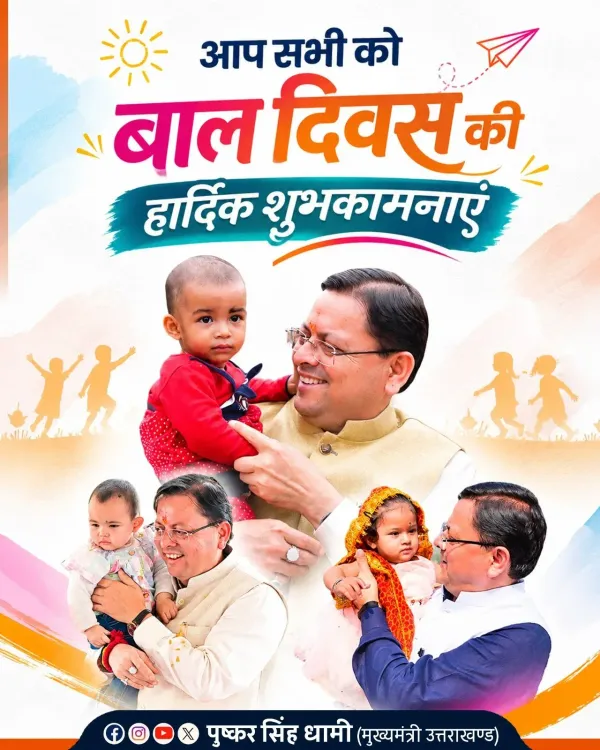
On Bal Diwas 2026, Uttarakhand Chief Minister Pushkar Singh Dhami extended Children's Day greetings and reiterated his government's commitment to quality education, healthcare, nutrition, scholarships, and talent development for every child in the state.
Key Takeaways
Uttarakhand CM Pushkar Singh Dhami posted Bal Diwas greetings on 14 November 2026 .
He described children as 'the hope of tomorrow' and the foundation of a 'strong and prosperous nation.' The government pledged to ensure every Uttarakhand child is safe, educated, healthy, and confident .
Specific commitments include quality education, healthcare, nutrition, scholarships, and talent opportunities.
Children's Day has been observed on 14 November in India since 1957 , marking Jawaharlal Nehru's birth anniversary.
The Right to Education Act (2009) guarantees free schooling for children aged 6 to 14 — the legal baseline state governments build upon.
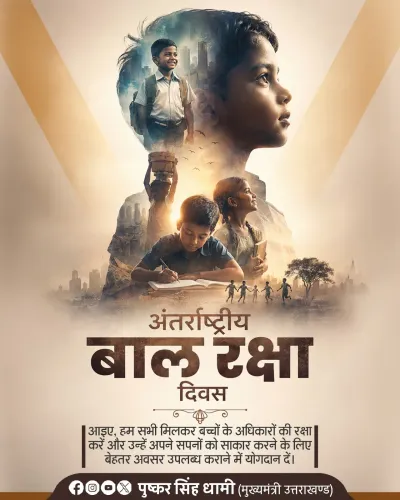
Every year on 14 November — the birth anniversary of India's first Prime Minister Jawaharlal Nehru — the nation pauses to place children at the centre of its story. This year, Uttarakhand Chief Minister Pushkar Singh Dhami used the occasion to renew his government's pledge to every child in the state, promising safe classrooms, better hospitals, nutrition, scholarships, and room to grow.
Writing in Hindi on Bal Diwas, CM Dhami described children as the hope of tomorrow: 'Bachche hamare aane waale kal ki umeed hain' ('Children are the hope of our tomorrow'), adding that 'their smiles reflect a prosperous society and in their dreams lies the foundation of a strong and developed nation.' The message committed to ensuring every child in Uttarakhand grows up 'safe, educated, healthy, and full of confidence.'
Bal Diwas and what it has meant since 1957
Children's Day has been observed on 14 November in India since 1957, chosen to honour Nehru — affectionately called Chacha Nehru — whose fondness for children became a defining part of his public image. The date carries a layered meaning: it is simultaneously a tribute to a founding-era statesman and a national checkpoint on child rights, education, and welfare.
The legal backbone for those rights was strengthened when the Right of Children to Free and Compulsory Education Act was enacted in 2009, guaranteeing schooling for every child between the ages of 6 and 14. That law set the floor; state governments are expected to build above it.
Dhami's four-pillar promise to Uttarakhand's children
The CM's message identified four specific areas where his government says it is 'continuously working': quality education, better healthcare, nutrition, and scholarships. He also pledged 'adequate opportunities' for children to sharpen their talents — a nod to skill development alongside academic learning.
Uttarakhand, carved out as a separate state in 2000, has long worked to align with central schemes on school enrolment, mid-day meals, and maternal and child health, particularly in its remote hill districts where access to services remains a live challenge. Children's Day messaging from state leaders serves both as a symbolic reaffirmation and a pressure point that civil society and educators use to hold governments accountable in budget season.
Point of View
But its consistency is not without purpose — it keeps child welfare visible on the political agenda at a moment when school administrators and civil-society groups are most likely to amplify demands. For Dhami, the pledge sits within the BJP's broader narrative of 'viksit Bharat' (developed India), where human capital — beginning with the child — is framed as the route to national strength. The more telling signal will come in Uttarakhand's next state budget: whether line items for school infrastructure, nutrition programmes, and scholarships in the state's mountainous districts grow in proportion to this rhetoric. Routine as these pledges appear, they create a public record against which policy delivery can be measured.
NationPress
14 Nov 2026
Frequently Asked Questions
Why is Children's Day celebrated on 14 November in India?
14 November is the birth anniversary of India's first Prime Minister Jawaharlal Nehru , who was famously fond of children. India has observed Bal Diwas on this date since 1957 to honour Nehru and promote awareness of child rights and welfare.
What did CM Dhami say on Children's Day 2026?
Uttarakhand CM Pushkar Singh Dhami extended greetings to all residents and pledged that his government would ensure every child in the state is safe, educated, healthy, and confident , with access to quality education, healthcare, nutrition, scholarships, and opportunities to develop their talents.
What is the Right to Education Act in India?
The Right of Children to Free and Compulsory Education Act , enacted in 2009 , guarantees free and compulsory schooling for every child in India between the ages of 6 and 14 . It forms the legal foundation on which state-level child welfare programmes are built.
When was Uttarakhand formed as a separate state?
Uttarakhand was carved out as a separate state in 2000 . Since then, successive governments have worked to align with central schemes on education, nutrition, and health, especially in the state's remote hill districts.
Who is Pushkar Singh Dhami?
Pushkar Singh Dhami is the Chief Minister of Uttarakhand and a senior BJP leader. He assumed office in 2021 and has led the state through elections and multiple development initiatives since then.