CM Dhami Hails Cabinet Nod to Semicon 2.0, MPMS, NIPU-2026
Synopsis
The Union Cabinet under PM Modi approved Semicon 2.0 (₹1,27,500 crore), the Mobile Phone Manufacturing Scheme (₹62,500 crore), and NIPU-2026 on 15 July 2026. Uttarakhand CM Dhami hailed the decisions as historic milestones toward a self-reliant, technology-powered Viksit Bharat.
Key Takeaways
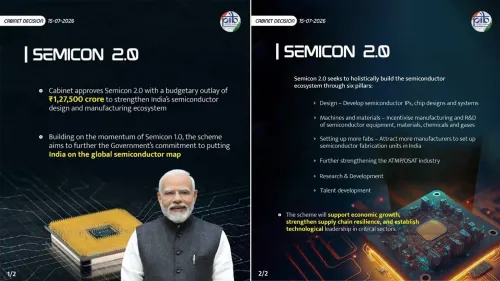
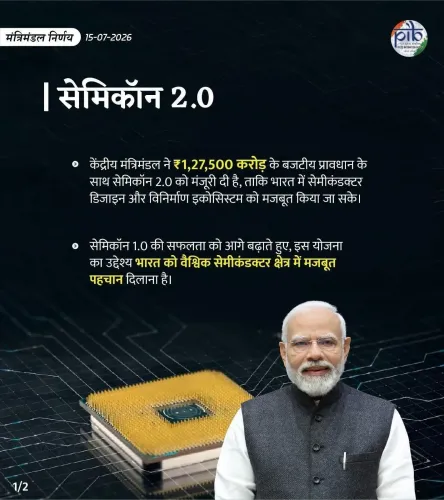
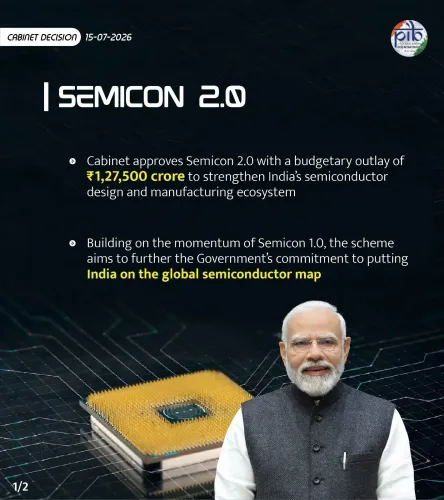
The Union Cabinet approved Semicon 2.0 with a budgetary outlay of ₹1,27,500 crore to accelerate semiconductor manufacturing and R&D in India.
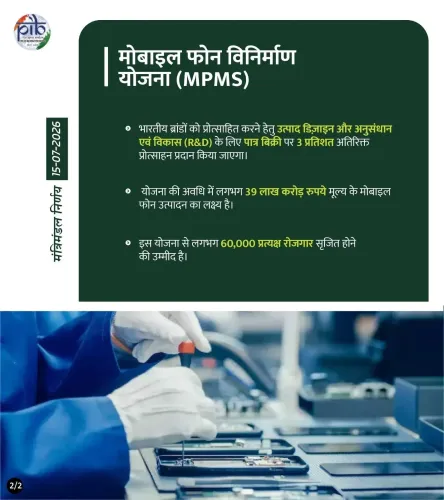
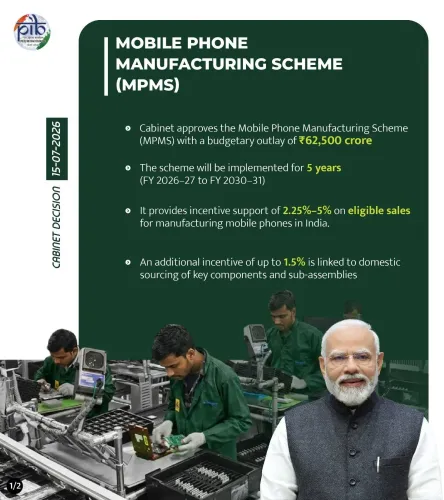
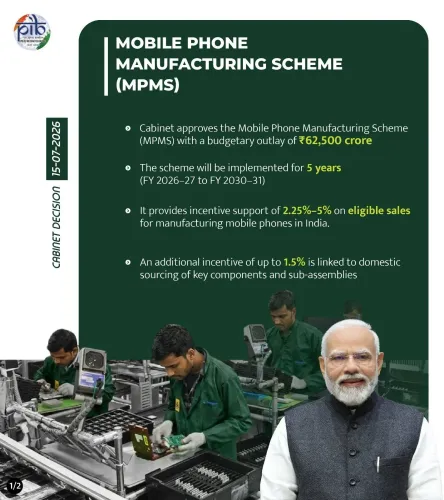
The Mobile Phone Manufacturing Scheme (MPMS) received Cabinet approval with an outlay of ₹62,500 crore to expand domestic handset production and attract investment.
The National Urea Investment Policy–2026 (NIPU–2026) was approved to boost domestic urea capacity and reduce dependence on fertiliser imports.
The two technology schemes together represent a combined budgetary commitment of ₹1,90,000 crore .
Uttarakhand Chief Minister Pushkar Singh Dhami described the decisions as a 'milestone' in building a self-reliant, technology-rich India aligned with the Viksit Bharat vision.
The approvals continue India's post-2020 Atmanirbhar Bharat drive, building on the PLI scheme for mobiles (2020) and the India Semiconductor Mission (2021).
Uttarakhand Chief Minister Pushkar Singh Dhami on Wednesday, 15 July 2026, welcomed three decisions taken by the Union Cabinet under Prime Minister Narendra Modi, describing them as historic milestones in India's journey toward becoming a global manufacturing and technology superpower. The Cabinet approved Semicon 2.0 with a budgetary outlay of ₹1,27,500 crore, the Mobile Phone Manufacturing Scheme (MPMS) with an outlay of ₹62,500 crore, and the National Urea Investment Policy–2026 (NIPU–2026) aimed at strengthening self-reliance in the agriculture sector.
Context
Posting on X, CM Dhami stated that the Cabinet decisions were taken 'भारत को वैश्विक विनिर्माण एवं प्रौद्योगिकी महाशक्ति बनाने की दिशा में' — 'in the direction of making India a global manufacturing and technology superpower.' He called the approvals 'visionary decisions' that would energise the resolve of a Viksit Bharat (Developed India) and serve as a 'milestone' in building a self-reliant, technology-rich, and empowered India.
The twin manufacturing schemes — Semicon 2.0 and MPMS — together carry a combined budgetary commitment of ₹1,90,000 crore, signalling one of the largest single-cabinet pushes for the electronics manufacturing sector in recent years.
Policy Backdrop
The approvals build on a chain of Atmanirbhar Bharat-era interventions. The Production Linked Incentive (PLI) scheme for mobile manufacturing, launched in 2020, helped India emerge as a significant smartphone assembly hub, with exports rising sharply in subsequent years. The India Semiconductor Mission, approved in 2021, laid the groundwork for a domestic chip ecosystem by offering financial support to fabrication and packaging units.
Semicon 2.0 is positioned as the next generation of that mission — deepening investment in chip design, fabrication, and research and development. MPMS extends the mobile-manufacturing push by targeting fresh investment, job creation, and indigenous technology development across the handset value chain.
On the agriculture front, NIPU–2026 addresses India's longstanding dependence on imported urea. By incentivising domestic urea capacity addition, the policy aims to reduce the fertiliser import bill and insulate farmers from global price volatility.
Stakeholders and Impact
Electronics manufacturers, semiconductor firms, and component suppliers stand to benefit directly from the two technology schemes through incentives, infrastructure support, and a larger domestic demand signal. The schemes are also expected to generate significant employment across the electronics value chain.
For the farming community, NIPU–2026 promises greater availability and price stability of urea — a critical input for crop production across India. The policy reinforces the government's stated goal of cutting input costs for farmers while reducing the fiscal burden of fertiliser subsidies tied to import prices.
CM Dhami's endorsement underscores the political salience of these decisions for Uttarakhand, a hill state with growing aspirations in electronics and agri-input sectors, and signals BJP's intent to amplify the Cabinet's economic messaging at the state level.
What's Next
Attention will now turn to the release of detailed scheme guidelines, eligibility criteria, and disbursement timelines for both Semicon 2.0 and MPMS. Industry observers will watch for announcements of new fabrication plants, assembly investments, or joint ventures that the schemes may catalyse.
For NIPU–2026, the key markers will be investment commitments from domestic fertiliser producers and the pace at which new urea capacity comes online. Together, these three decisions represent a significant policy signal — and their real-world impact will hinge on swift implementation and private-sector uptake.
Point of View
Mobile manufacturing, and fertilisers — reflects a deliberate effort to link high-technology industrial policy with grassroots agricultural security, broadening the political coalition behind the Atmanirbhar Bharat narrative. CM Dhami's swift endorsement is consistent with BJP's state-level strategy of amplifying central government economic announcements, particularly ahead of electoral cycles. The combined ₹1,90,000 crore outlay for the two electronics schemes is a strong signal to global supply chains that India is competing aggressively for investment shifting away from other Asian manufacturing hubs. Whether these schemes translate into on-ground capacity will depend on the speed of guideline issuance and the appetite of private players to commit capital at scale.
NationPress
16 Jul 2026
Frequently Asked Questions
What is Semicon 2.0 and what is its budget?
Semicon 2.0 is India's next-generation semiconductor development programme approved by the Union Cabinet with a budgetary outlay of ₹1,27,500 crore. It aims to accelerate chip manufacturing, design, and research and development within the country.
What is the Mobile Phone Manufacturing Scheme (MPMS)?
The Mobile Phone Manufacturing Scheme (MPMS) is a Cabinet-approved initiative with an outlay of ₹62,500 crore designed to expand domestic mobile phone production, attract investment, and promote indigenous technology and job creation in India's electronics sector.
What is NIPU-2026 and how does it help farmers?
The National Urea Investment Policy–2026 (NIPU–2026) is a policy approved by the Union Cabinet to incentivise domestic urea capacity addition, reducing India's dependence on fertiliser imports and helping stabilise urea availability and pricing for farmers.
Why did Uttarakhand CM Dhami comment on these Cabinet decisions?
CM Pushkar Singh Dhami, as a senior BJP leader and Uttarakhand Chief Minister, welcomed the Cabinet decisions chaired by PM Modi, calling them historic milestones aligned with the Viksit Bharat and Atmanirbhar Bharat vision. Such endorsements are part of the party's broader communication strategy.
How do these Cabinet decisions connect to India's Atmanirbhar Bharat policy?
The three approvals build directly on India's post-2020 Atmanirbhar Bharat drive, extending the PLI scheme for mobile manufacturing (launched 2020) and the India Semiconductor Mission (approved 2021) while adding a new urea policy to reduce agri-input import dependence.