CM Dhami Highlights House of Himalayas' Global Push
Synopsis
Uttarakhand CM Pushkar Singh Dhami spotlights the House of Himalayas initiative on 27 September 2026, saying the platform is giving the state's farmers, artisans, and self-help groups a strong brand and access to national and global markets, strengthening rural livelihoods and self-employment.
Key Takeaways
House of Himalayas is the Uttarakhand government's flagship platform to brand and market the state's local products, handicrafts, and rural enterprise goods nationally and internationally.
CM Pushkar Singh Dhami reaffirmed the initiative on 27 September 2026 , citing gains in demand, market reach, rural economy, and self-employment.
Direct beneficiaries include farmers, artisans, self-help groups (predominantly women-led), and local entrepreneurs across Uttarakhand's hill districts.
The initiative aligns with national frameworks including GI tagging, MSME promotion , and rural livelihood missions.
Products in scope include high-altitude agricultural produce such as mandua and jhangora , handwoven textiles, ringal crafts, aipan folk art, and copper metalwork.
Key metrics to track: export data, trade-fair participation, and future state budget allocations for scaling House of Himalayas outlets.
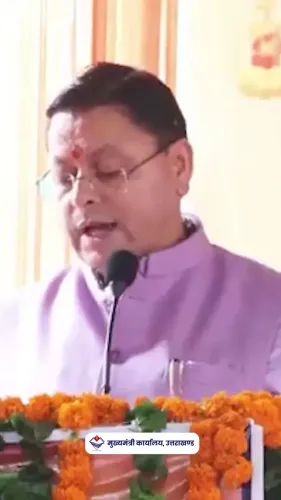
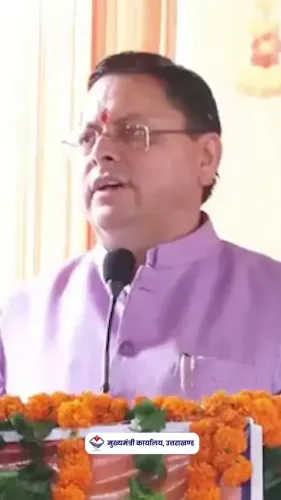
Himalayan honey, handwoven shawls, and wild-herb extracts from Uttarakhand's villages are finding shelves far beyond the state's borders — and Uttarakhand Chief Minister Pushkar Singh Dhami wants the world to know it. On Sunday, 27 September 2026, the Chief Minister took to X to reaffirm his government's commitment to giving the state's local products, traditional handicrafts, and rural enterprises a national and international stage through the flagship House of Himalayas branding initiative.
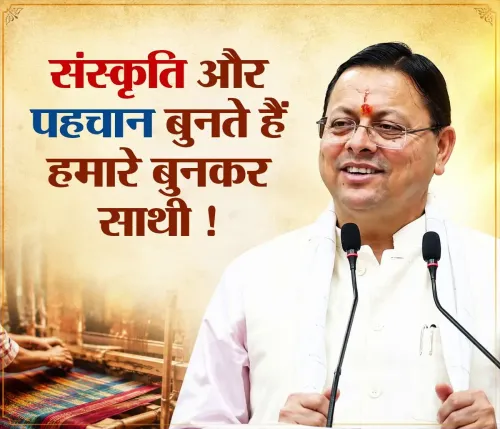
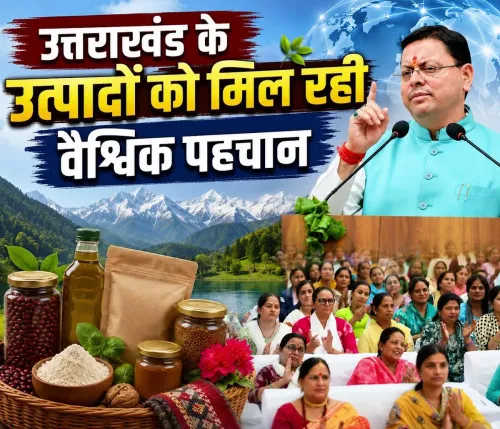
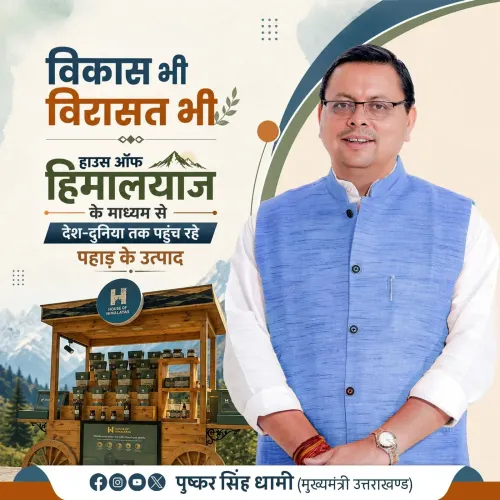
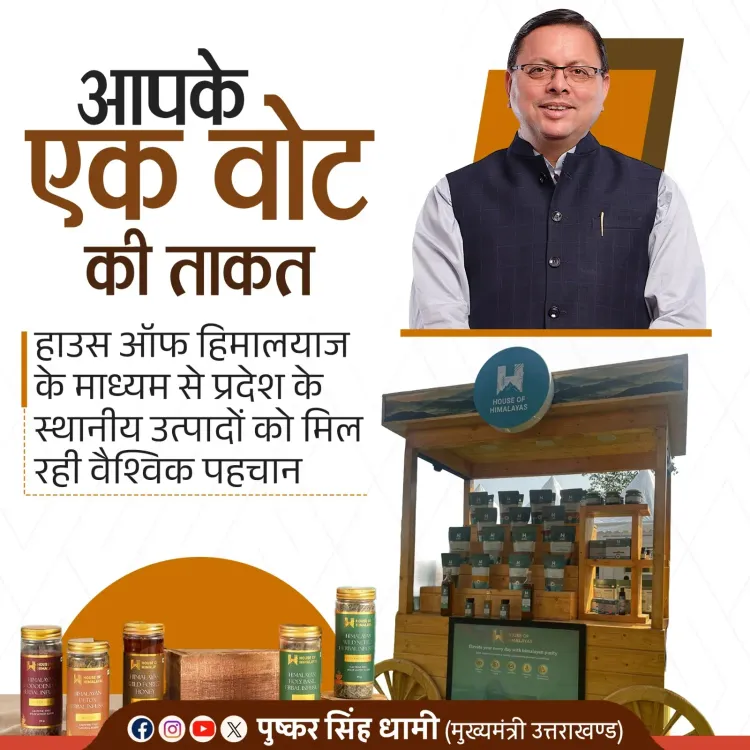
Posting in Hindi, CM Dhami wrote that continuous efforts are being made to provide better markets to Uttarakhand's local products, traditional handicrafts, and rural enterprises, and to give them a new identity at the national and international level. 'हाउस ऑफ हिमालयाज के माध्यम से प्रदेश के स्थानीय उत्पादों को वैश्विक पहचान मिल रही है' — ('Through the House of Himalayas, local products of the state are gaining global recognition') — he noted, adding that farmers, self-help groups, artisans, and local entrepreneurs are now backed by a strong brand and a wider marketplace.
What House of Himalayas Is Built to Do
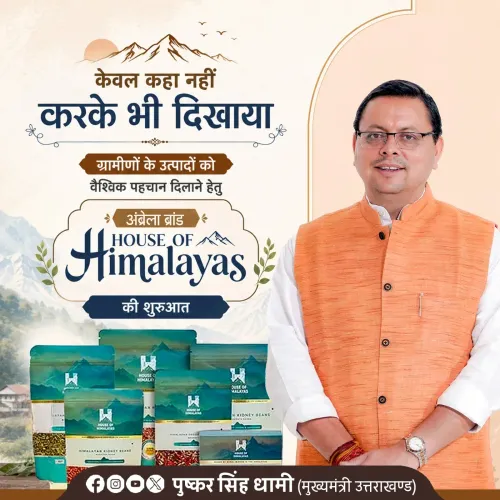
House of Himalayas is the Uttarakhand government's dedicated platform for aggregating and branding region-specific goods under a single, recognisable label. The logic is straightforward: a farmer in Pithoragarh or a weaver in Chamoli struggles to reach distant buyers alone, but a unified state brand can unlock retail partnerships, e-commerce listings, and trade-fair presence that no individual producer could negotiate. Uttarakhand has run state-supported marketing programmes for local produce and handicrafts since the early 2010s, with linkages to national rural livelihood missions — House of Himalayas represents the latest, and most brand-conscious, iteration of that effort.
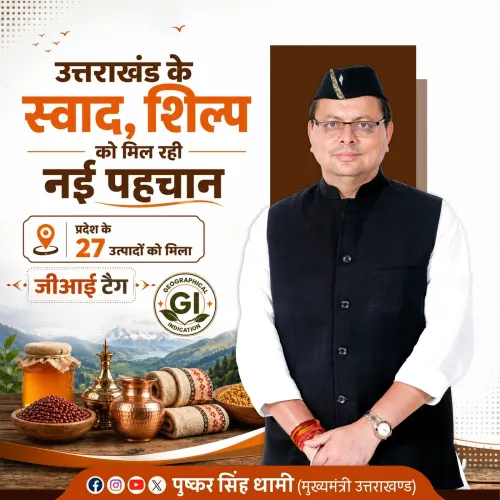
The initiative aligns with national policy currents: Geographical Indication (GI) tagging, MSME promotion, and rural self-employment schemes all push in the same direction, creating an ecosystem in which a distinctive Himalayan brand identity can carry real commercial weight. The Chief Minister's post specifically flags the ripple effects — rising demand, stronger rural economies, and expanded self-employment — as evidence the platform is delivering.
Farmers, Artisans, SHGs: Who Stands to Gain
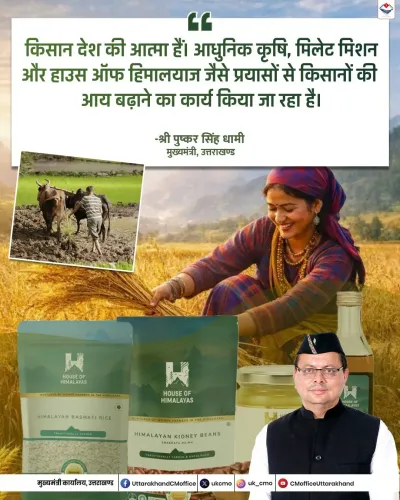
The beneficiary base is wide. Self-help groups — predominantly women-led collectives in Uttarakhand's hill districts — are among the most direct stakeholders, channelling products from pickle and jam units to handknitted woolens into the House of Himalayas supply chain. Artisans working in ringal bamboo crafts, aipan folk art, and copper metalwork gain access to buyers who would otherwise never encounter their work. Farmers producing mandua (finger millet), jhangora (barnyard millet), and high-altitude herbs get a premium-positioning story that commodity markets do not offer.
For a state where reverse migration and rural unemployment remain persistent pressures — a concern that sharpened through the pandemic years — a functional branding platform can be a meaningful livelihood anchor. The Chief Minister's framing connects market access directly to swayarozgar (self-employment) and local livelihoods, signalling that the programme is being positioned as an economic stabiliser, not just a marketing exercise.
The Road from Himalayan Villages to Global Shelves
Turning a state branding scheme into a genuinely global supply chain is the harder half of the equation. Observers will watch whether House of Himalayas secures meaningful participation in national trade fairs and international B2B platforms, whether state budget allocations are scaled to match the ambition, and whether GI-tagged products from Uttarakhand start appearing in export data. The Chief Minister's post plants a confident flag — converting that confidence into measurable export volumes is what will define the initiative's legacy.
Point of View
Consistently championing Uttarakhand's artisan and farming communities serves a dual purpose: it differentiates the hill state's development model from the plains, and it pre-empts opposition narratives around rural distress. The initiative's true test, however, lies in whether it generates verifiable export revenues and income growth for self-help groups — outcomes that branding alone cannot guarantee without sustained logistics, quality certification, and trade-linkage investment.
NationPress
27 Sept 2026
Frequently Asked Questions
What is House of Himalayas?
House of Himalayas is the Uttarakhand government's initiative to brand and market the state's local products, handicrafts, and rural enterprise goods under a single platform, giving them national and international visibility and market access.
Who benefits from House of Himalayas in Uttarakhand?
The primary beneficiaries are Uttarakhand's farmers, artisans, women-led self-help groups, and local entrepreneurs, particularly those in remote hill districts producing traditional handicrafts, millets, herbs, and folk-art items.
What did CM Pushkar Singh Dhami say about House of Himalayas?
On 27 September 2026, CM Dhami posted that the House of Himalayas is providing global recognition to local Uttarakhand products and strengthening the rural economy, self-employment, and local livelihoods by giving producers a strong brand and wider market.
How does House of Himalayas link to national schemes?
The initiative aligns with national programmes including Geographical Indication (GI) tagging, MSME promotion, and rural livelihood missions, which together create an ecosystem for marketing region-specific Himalayan products at scale.
What Uttarakhand products are marketed through House of Himalayas?
Products include high-altitude agricultural goods like mandua (finger millet) and jhangora (barnyard millet), handwoven textiles, ringal bamboo crafts, aipan folk art, copper metalwork, and processed goods made by self-help groups such as jams and pickles.