CM Dhami Holds NITI Aayog Talks on Uttarakhand Development
Synopsis
Uttarakhand CM Pushkar Singh Dhami met a NITI Aayog delegation led by Prof. M. Srinivas on 8 July 2026 to discuss sustainable development priorities including floating-population policy, women's empowerment, malnutrition elimination, water conservation, and innovation-driven livelihoods for the hill state.
Key Takeaways
CM Pushkar Singh Dhami held talks with a NITI Aayog delegation led by Prof. (Dr.) M.
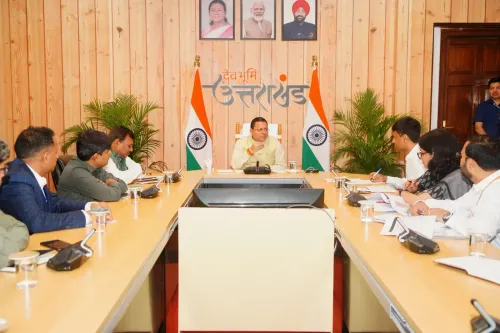
Srinivas at his official residence on 8 July 2026 .
The CM stressed that floating population — seasonal pilgrims and tourists — must be factored into policy design and resource allocation for Uttarakhand .
Discussions covered health education, women's empowerment, malnutrition and anaemia elimination , and rainwater harvesting .
Both sides agreed to hold regular seminars with domain experts in agriculture, horticulture, tourism, water resources, biodiversity , and skill development .
The meeting advances NITI Aayog's cooperative-federalism mandate of tailoring development strategy to state-specific geographic and economic conditions.
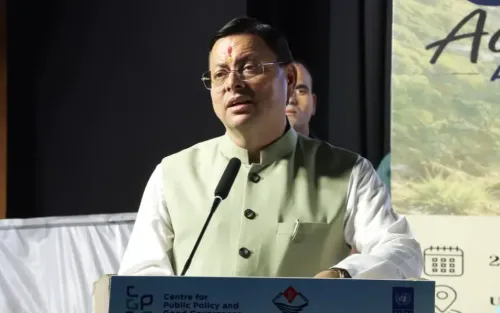
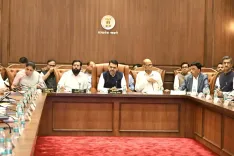
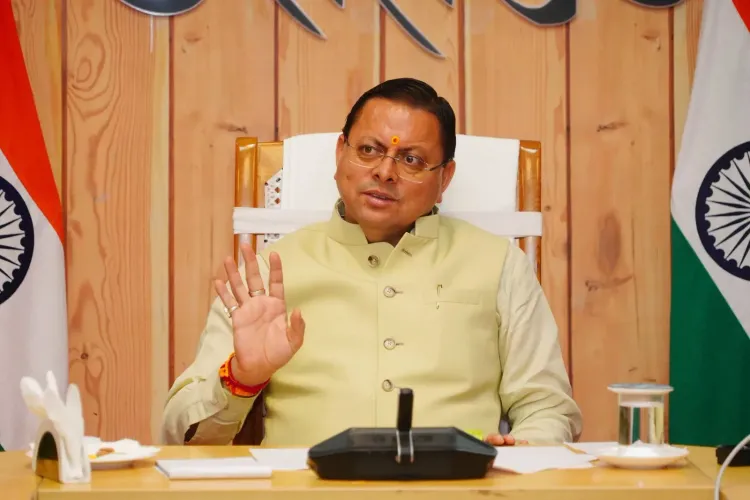
Uttarakhand Chief Minister Pushkar Singh Dhami met a delegation led by NITI Aayog member Prof. (Dr.) M. Srinivas at his official residence on Wednesday, 8 July 2026, for wide-ranging discussions on the state's holistic, balanced, and sustainable development. The talks spanned critical policy areas including healthcare, women's empowerment, malnutrition, water conservation, and local livelihoods.
Context
CM Dhami shared details of the meeting on X, noting that discussions covered 'समग्र, संतुलित एवं सतत विकास' (holistic, balanced and sustainable development) of Uttarakhand. A central theme was the demand that policy formulation and resource allocation must adequately account for the state's floating population — the large seasonal influx of pilgrims and tourists that strains infrastructure without being captured in permanent census figures.
Uttarakhand, formed in November 2000, hosts the Char Dham pilgrimage circuit and draws millions of visitors annually. The state's mountainous terrain and tourism-driven economy create development challenges distinct from those of plains states, making bespoke policy frameworks a recurring demand from Dehradun.
Policy Backdrop
NITI Aayog, constituted in January 2015 to replace the Planning Commission, has an established practice of state-specific consultations aimed at cooperative federalism and localisation of India's Sustainable Development Goals (SDGs). Hill states like Uttarakhand have long argued that standard per-capita resource formulas under-serve them because seasonal population surges — sometimes exceeding permanent resident counts at pilgrimage peaks — are invisible to planners.
The meeting also addressed strengthening health education alongside health services, women's empowerment, elimination of malnutrition and anaemia, promotion of rainwater harvesting and water conservation, and expansion of local employment and livelihood opportunities. These priorities align with national programmes targeting ecologically sensitive, tourism-reliant regions.
Stakeholders and Impact
Residents of Uttarakhand's hill districts stand to benefit most directly if floating-population metrics are factored into resource allocation, as improved infrastructure funding could ease pressure on health facilities and roads during peak pilgrimage seasons. Workers in the tourism and pilgrimage economy — guides, hoteliers, transport operators — could see gains from livelihoods-focused policy interventions discussed in the meeting.
Rural women and children are among the key stakeholders cited, with the talks specifically flagging anaemia and malnutrition elimination as priority areas. NITI Aayog's technical expertise is expected to support innovation-driven policies through regular seminars with subject-matter experts in sectors such as agriculture, horticulture, tourism, water resources, biodiversity, and skill development.
What's Next
The two sides agreed to organise regular seminars with domain experts and NITI Aayog support to develop innovation-based policies across promising sectors. The key outcome to watch is whether NITI Aayog formally recommends adjustments to Uttarakhand's resource allocation formula to incorporate floating-population data — a move that could set a precedent for other pilgrimage-heavy Himalayan states.
If adopted, such a framework could reshape how central transfers and scheme funding are calculated for hill states, making the Dehradun meeting a potentially significant step in India's cooperative federalism architecture.
Point of View
But raising it directly with a NITI Aayog member signals an attempt to institutionalise what has so far been an informal grievance of Himalayan states. If NITI Aayog acts on this, it could recalibrate central transfers not just for Uttarakhand but for every pilgrimage-heavy hill state — a structurally significant shift in India's fiscal federalism. The breadth of topics discussed, from anaemia to skill development, also reflects the BJP government's effort to align state priorities visibly with national welfare programmes ahead of future electoral cycles. The proof of the meeting's impact will lie in whether joint seminars materialise and whether any formula change reaches the Finance Commission's deliberations.
NationPress
8 Jul 2026
Frequently Asked Questions
Why did CM Dhami meet NITI Aayog?
CM Pushkar Singh Dhami met a NITI Aayog delegation led by Prof. M. Srinivas on 8 July 2026 to discuss Uttarakhand's holistic and sustainable development, covering topics from floating-population policy to malnutrition elimination and local livelihoods.
What is the floating population issue in Uttarakhand?
Uttarakhand's floating population refers to the millions of pilgrims and tourists who visit seasonally, especially for the Char Dham yatra. Because they are not counted in permanent census data, standard resource allocation formulas do not account for the infrastructure burden they create.
What is NITI Aayog's role in state development?
NITI Aayog, set up in January 2015, serves as the Government of India's policy think tank. It conducts state-specific consultations to support cooperative federalism and help states localise national development goals.
What development topics were discussed in the CM Dhami NITI Aayog meeting?
The meeting covered health education, women's empowerment, malnutrition and anaemia elimination, rainwater harvesting, water conservation, local employment, and innovation-based policies in agriculture, horticulture, tourism, biodiversity, and skill development.
What is the next step after the Dhami NITI Aayog meeting?
Both sides agreed to organise regular seminars with subject-matter experts and NITI Aayog support to develop innovation-driven policies for Uttarakhand. A key watch point is whether NITI Aayog formally recommends floating-population adjustments in the state's resource allocation formula.