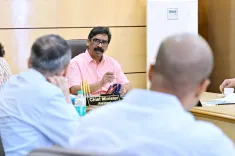
CM Dhami Holds Public Grievance Session at Camp Office
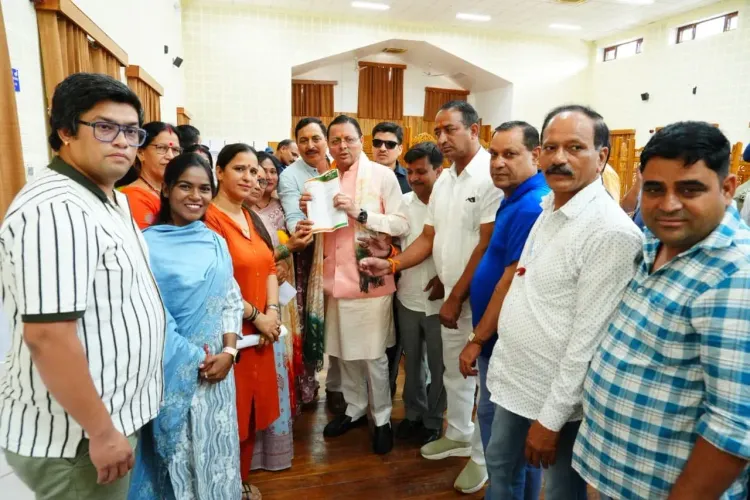
Synopsis
Chief Minister Pushkar Singh Dhami held a public grievance session at the Mukhya Sevak Sadan on 24 July 2026, personally hearing complaints from citizens across Uttarakhand and directing the Garhwal Commissioner and IG to ensure sensitive, transparent, and time-bound resolution of all cases.
Key Takeaways
CM Pushkar Singh Dhami held a public grievance hearing on 24 July 2026 at the Mukhya Sevak Sadan , CM's Camp Office, Dehradun .
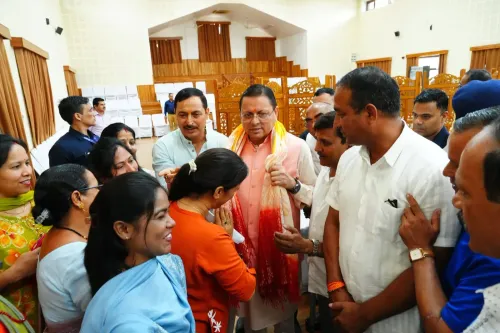
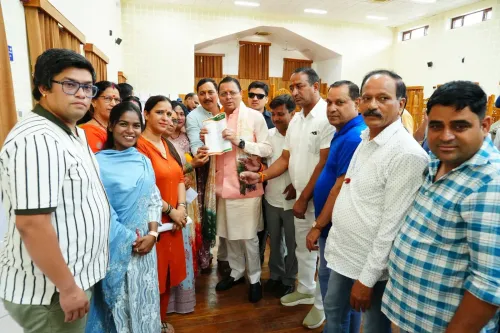
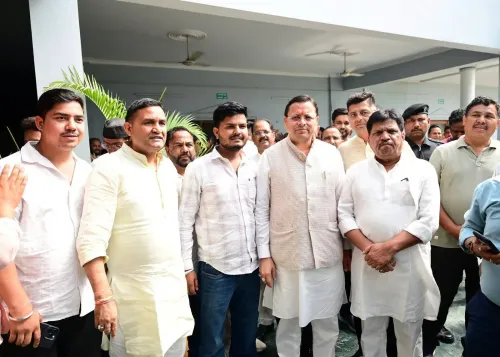
Citizens from various parts of Uttarakhand attended to present unresolved complaints and problems to the Chief Minister directly.
Commissioner of Garhwal Anand Swaroop and IG Garhwal Rajeev Swaroop were directed to resolve grievances on a priority basis.
Cases solvable at the district or departmental level are to be settled immediately; others are to be forwarded promptly to relevant departments.
CM Dhami stated that transparency, sensitivity, and time-bound resolution are non-negotiable, and that citizens must not be made to visit offices repeatedly.
The session reflects Uttarakhand's long-standing administrative practice of direct CM engagement with citizens, aligned with national good-governance frameworks.
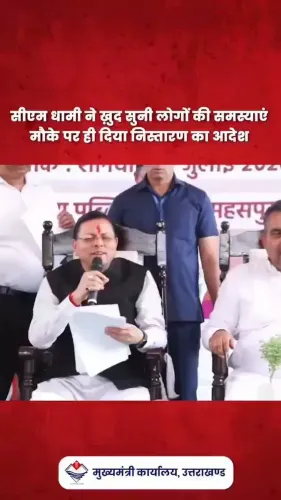
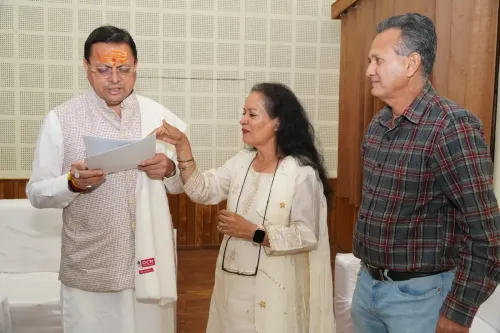
Chief Minister Pushkar Singh Dhami on Friday, 24 July 2026, personally heard complaints and grievances from citizens who had travelled from various parts of Uttarakhand, convening a dedicated public hearing at the Mukhya Sevak Sadan in the Chief Minister's Camp Office. He directed senior officials present to ensure time-bound, transparent, and sensitive resolution of every public complaint, so that ordinary citizens are not forced to make repeated visits to government offices.
Context
The session, held at the CM's Camp Office, brought together residents from across the state who carried unresolved grievances spanning administrative, civic, and law-and-order concerns. CM Dhami underscored that the state government operates on the twin principles of public welfare (janhit) and good governance (sushasan), stating that the swift resolution of people's problems is among the government's highest priorities.
Addressing officials, he said: 'It is the government's responsibility to live up to the expectations of the people of the state. Every officer must demonstrate complete sensitivity and accountability while working with a spirit of public service.' He stressed that citizens should not have to navigate bureaucratic delays for matters that can be resolved at the district or departmental level.
Policy Backdrop
Uttarakhand, since its formation in 2000, has maintained a tradition of CM-level public grievance hearings as a mechanism to bridge the gap between citizens and the administration. These sessions are part of a broader national effort to make governance more responsive and to reduce procedural bottlenecks that delay the delivery of services to common people.
The practice aligns with directives from multiple state and central government frameworks that mandate time-bound disposal of public complaints. CM Dhami, who has helmed the state since 2021, has repeatedly emphasised administrative reform and direct citizen engagement as cornerstones of his governance approach.
Stakeholders and Impact
Commissioner of Garhwal, Anand Swaroop, and Inspector General of Police (Garhwal), Rajeev Swaroop, were both present at the session and received specific directives from the Chief Minister to prioritise the disposal of grievances received. CM Dhami instructed that cases resolvable at the district or departmental level must be addressed immediately, while those requiring higher-level decisions should be forwarded promptly to the concerned departments for necessary action.
The direct beneficiaries are citizens from across Uttarakhand — particularly from the Garhwal region — who brought forward unresolved issues. By routing complaints through senior divisional and police administration officials in a single sitting, the process aims to compress resolution timelines significantly.
What's Next
The key measure of this session's effectiveness will be the actual disposal rate of grievances at the district and departmental levels in the days and weeks ahead. The CM's Office is expected to monitor follow-up action by Commissioner Anand Swaroop and IG Rajeev Swaroop to ensure that directives issued during the hearing translate into concrete outcomes for petitioners.
Should the administration demonstrate consistent, measurable improvement in grievance resolution, these sessions could be institutionalised at greater frequency — setting a benchmark for citizen-responsive governance in hill states across India.
Point of View
The CM is reinforcing a 'responsive government' narrative that has become central to his political identity since 2021. This fits a wider pattern seen across BJP-governed states, where CM-level grievance hearings serve both as a governance tool and a visible demonstration of proximity to the common citizen. The real test, however, lies in measurable disposal rates — a metric that will determine whether these sessions are substantive or ceremonial.
NationPress
24 Jul 2026
Frequently Asked Questions
What happened at CM Dhami's public grievance session on 24 July 2026?
Chief Minister Pushkar Singh Dhami personally heard complaints from citizens across Uttarakhand at the Mukhya Sevak Sadan in the CM's Camp Office on 24 July 2026, and directed senior officials to resolve all grievances in a time-bound, transparent, and sensitive manner.
Where is the Mukhya Sevak Sadan located?
The Mukhya Sevak Sadan is located within the Chief Minister's Camp Office in Dehradun, Uttarakhand, and serves as a venue for direct public hearings by the Chief Minister.
Which officials were directed to resolve public grievances?
Commissioner of Garhwal Anand Swaroop and Inspector General of Police (Garhwal) Rajeev Swaroop were both present and received direct instructions from CM Dhami to prioritise and dispose of grievances on a priority basis.
What did CM Dhami say about resolving citizen complaints?
CM Dhami said that swift resolution of public problems is among the government's highest priorities, and that every officer must work with complete sensitivity and accountability so that citizens do not have to make repeated visits to government offices.
How does Uttarakhand handle public grievances at the state level?
Uttarakhand has maintained CM-level public grievance hearings since the state's formation in 2000. These sessions allow citizens to directly present unresolved complaints, with senior divisional officials directed to ensure time-bound disposal at the district or departmental level.