CM Majhi Greets Bahuda Yatra as Deities Return to Puri
Synopsis
Odisha Chief Minister Mohan Charan Majhi extended greetings on the Bahuda Yatra, the sacred return procession of Lord Jagannath, Balabhadra and Subhadra from Gundicha Temple to the Jagannath Temple in Puri, praying for peace and prosperity for all devotees.
Key Takeaways
Odisha Chief Minister Mohan Charan Majhi posted a devotional message in Odia on Friday, 4 July 2025 marking the commencement of the Bahuda Yatra .
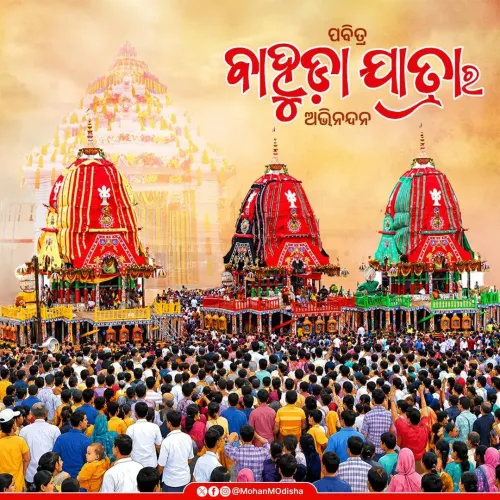
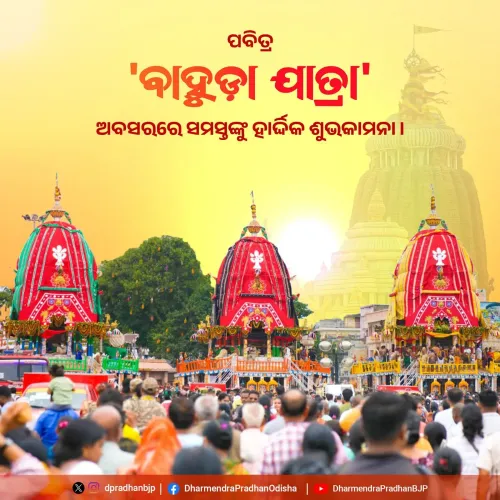
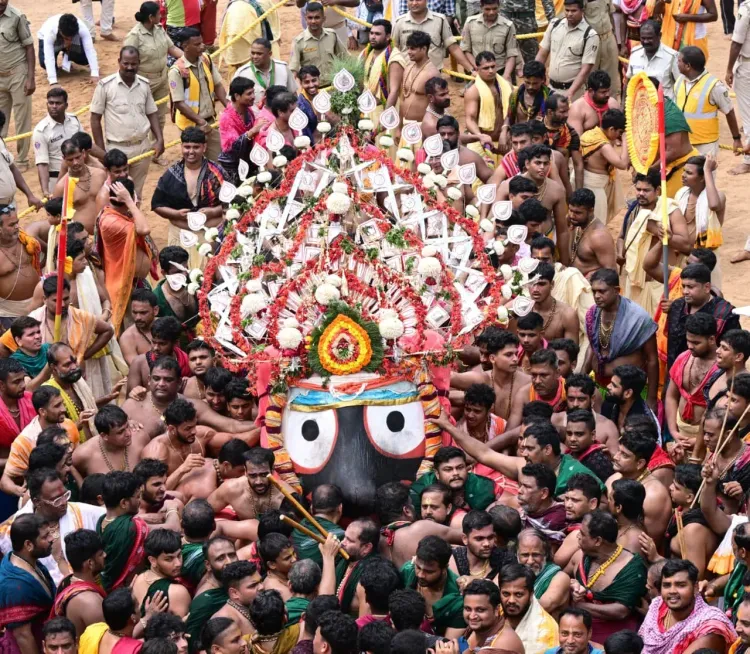
The Bahuda Yatra is the return chariot procession of Lord Jagannath, Goddess Subhadra and Lord Balabhadra from Gundicha Temple back to the Jagannath Temple in Puri .
The Chief Minister described the journey as a divine message of 'devotion, peace, love and surrender' to the entire world.
He prayed that the grace of Mahaprabhu Jagannath fill all lives with happiness, peace and prosperity.
The Rath Yatra and Bahuda Yatra together constitute one of India's largest annual religious gatherings, drawing millions of pilgrims to Puri .
Temple administration and pilgrim infrastructure for the festival are overseen by the Shri Jagannath Temple Administration in coordination with the Odisha state government.
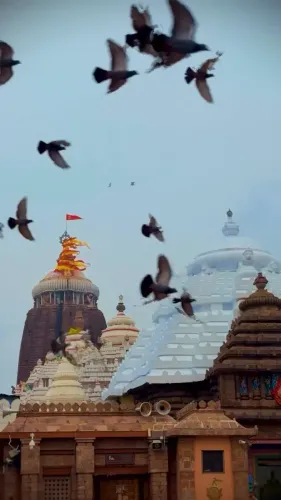
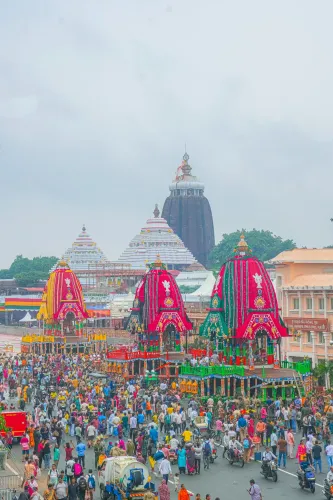
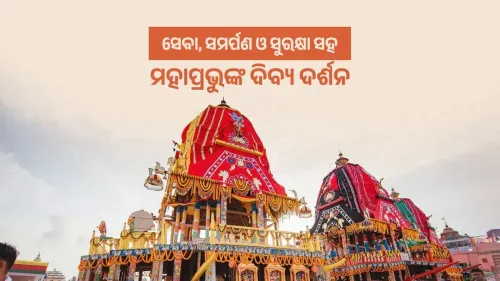
Odisha Chief Minister Mohan Charan Majhi on Friday, 4 July 2025 extended devotional greetings as the sacred Bahuda Yatra — the return chariot procession of Lord Jagannath — commenced from Gundicha Temple toward the Jagannath Temple in Puri, marking one of the holiest moments in the annual Rath Yatra cycle.
Writing in Odia on X, the Chief Minister said: 'ଶ୍ରୀଗୁଣ୍ଡିଚା ମନ୍ଦିରରୁ ନୀଳାଚଳ ଅଭିମୁଖେ ଆରମ୍ଭ ହୋଇଛି ମହାପ୍ରଭୁଙ୍କ ପବିତ୍ର ବାହୁଡ଼ା ଯାତ୍ରା' ('The sacred Bahuda Yatra of Mahaprabhu has begun from Shri Gundicha Temple toward Nilachala'). He added that Lord Jagannath, affectionately called Bhaktabatsala Kalia Saanta (the devotee-loving dark lord), is returning to the Shri Mandir accompanied by Ma Subhadra and Bada Thakur Prabhu Balabhadra. Majhi concluded with a prayer that the grace of Mahaprabhu fill every life with happiness, peace and prosperity, signing off with 'Jai Jagannath'.
Context
The Bahuda Yatra is the concluding leg of the celebrated Jagannath Rath Yatra, held annually in Puri, Odisha. After spending approximately nine days at the Gundicha Temple — considered the aunt's house of the deities — Lord Jagannath, Lord Balabhadra and Goddess Subhadra are ceremonially brought back to the main Jagannath Temple on Nilachala Hill in a grand chariot procession. The return journey is considered as auspicious as the outward one and draws enormous crowds of pilgrims from across India and the world.
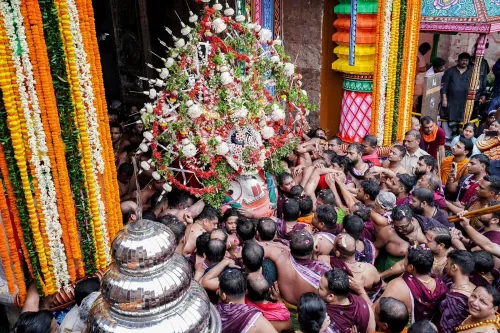
The Rath Yatra festival, rooted in centuries of tradition, is one of India's largest religious gatherings. Puri — one of the four sacred dhams in Hinduism — transforms into a focal point of national and global devotion during this period, with millions of devotees converging on the coastal city to witness the chariots of the three deities roll through the main avenue known as Bada Danda.
Policy Backdrop
The administration of the Jagannath Temple and the conduct of the Rath Yatra fall under the purview of the Shri Jagannath Temple Administration (SJTA), which coordinates with state government agencies on security, crowd management, sanitation and pilgrim facilities. Successive Odisha governments have invested in infrastructure upgrades around the Puri temple corridor to improve the experience for lakhs of pilgrims who visit each year.
Chief Minister Majhi, who leads the BJP government in Odisha that came to power in 2024, has made the Jagannath temple corridor and pilgrim welfare a stated priority. His government has continued and expanded several initiatives related to the upkeep of the Srimandir and the smooth conduct of major festivals. Public messaging by the Chief Minister during the Rath Yatra and Bahuda Yatra is consistent with the administration's emphasis on the cultural and spiritual heritage of Odisha.
Stakeholders and Impact
The Bahuda Yatra draws millions of devotees — both domestic pilgrims and members of the Odia diaspora abroad — who follow the procession live or through broadcasts. For the local economy of Puri, the festival period generates significant activity in hospitality, retail, and the traditional craft sector, particularly among artisans who make chariot decorations and religious offerings.
The message from the Chief Minister carries institutional weight, signalling the state government's active acknowledgement of the festival and its commitment to ensuring orderly and respectful conduct of the proceedings. Devotees and temple servitors (sevayats) view such official recognition as an affirmation of the state's role as custodian of this ancient tradition.
What's Next
Following the Bahuda Yatra, the deities will be reinstalled inside the Jagannath Temple through further rituals, including the Suna Besha (golden attire ceremony), before the festival cycle formally concludes. Attention will then shift to preparations for the next annual Rath Yatra, as well as ongoing work on the Puri Heritage Corridor project aimed at improving infrastructure and the overall pilgrim experience around the Srimandir. The state government is expected to review the arrangements and crowd management measures from this year's festival to inform planning for future editions.
Point of View
Reinforcing the BJP government's positioning as a steward of Odisha's foremost religious tradition. The message follows a broader pattern in which the state administration has sought to align itself closely with the Jagannath faith, which holds deep emotional and electoral resonance across Odisha. By invoking the imagery of the deities' homecoming and extending a universal prayer for peace and prosperity, the Chief Minister frames governance through the lens of devotion — a consistent communication strategy in the state since the BJP's 2024 electoral victory. The Bahuda Yatra message also serves as a soft-power moment, projecting Odisha's spiritual heritage to a national and global audience.
NationPress
24 Jul 2026
Frequently Asked Questions
What is Bahuda Yatra?
Bahuda Yatra is the return chariot procession of Lord Jagannath, Lord Balabhadra and Goddess Subhadra from the Gundicha Temple back to the main Jagannath Temple in Puri, Odisha. It marks the conclusion of the outward Rath Yatra journey and is considered equally sacred by devotees.
Where does the Bahuda Yatra start and end?
The Bahuda Yatra begins at the Gundicha Temple in Puri, where the deities reside for approximately nine days, and concludes at the Jagannath Temple on Nilachala Hill — also called the Shri Mandir or Srimandir.
What did Odisha CM Mohan Majhi say about the Bahuda Yatra?
Chief Minister Mohan Charan Majhi posted in Odia that the sacred Bahuda Yatra had commenced and described it as a divine journey conveying a message of devotion, peace, love and surrender to the world. He prayed for happiness, peace and prosperity for all, signing off with 'Jai Jagannath.'
Who are the three deities in the Jagannath Rath Yatra?
The three deities are Lord Jagannath (also called Mahaprabhu or Kalia), Lord Balabhadra (his elder brother, referred to as Bada Thakur) and Goddess Subhadra (their sister, referred to as Ma Subhadra). All three travel together in separate chariots during the Rath Yatra and Bahuda Yatra.
Why is Puri important for the Jagannath festival?
Puri is one of the four sacred dhams in Hinduism and is home to the historic Jagannath Temple. The city hosts the annual Rath Yatra, which draws millions of pilgrims from India and abroad, making it one of the country's largest religious gatherings each year.