Goyal Announces Chemical Parks Scheme, Rail Project for South India
Synopsis
The government approved the BHAVYA Rasayan scheme to build three dedicated chemical parks aimed at boosting exports, and a multitracking rail project to connect 99 villages across Karnataka and Andhra Pradesh, Commerce Minister Piyush Goyal announced on 24 July 2026.
Key Takeaways
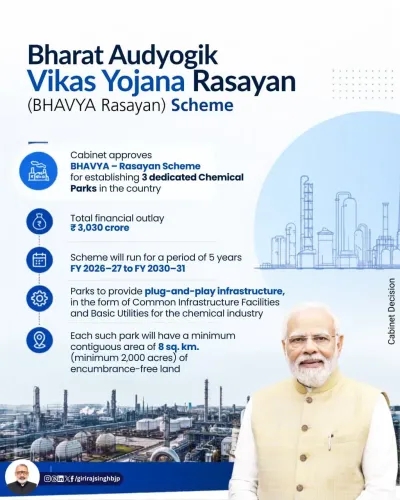
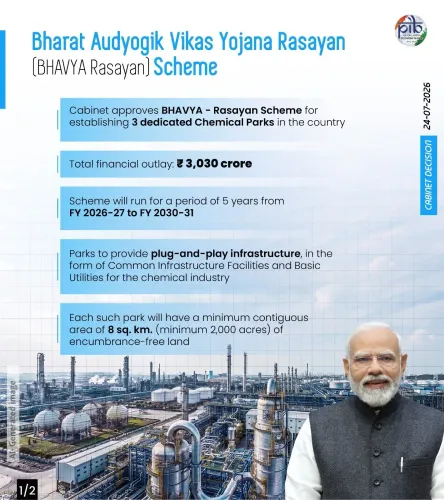
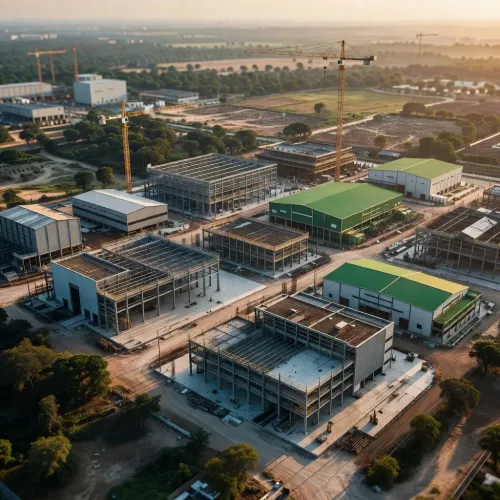
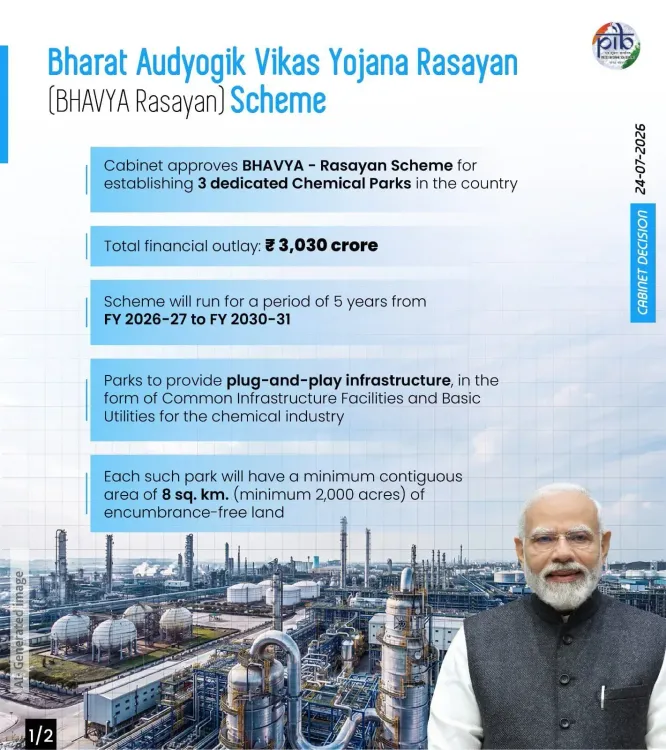
The government approved the BHAVYA Rasayan (Bharat Audyogik Vikas Yojana Rasayan) scheme to establish three dedicated chemical parks in India.
The chemical parks scheme is designed to help Indian chemical industry integrate into global value chains and increase exports.
A multitracking railway project covering three districts across Karnataka and Andhra Pradesh was also approved.
The rail project will enhance connectivity to approximately 99 villages , improving ease of living.
Both approvals were announced by Commerce Minister Piyush Goyal on 24 July 2026 , attributed to PM Modi 's leadership.
The decisions continue a decade-long policy pattern combining industrial cluster development with railway capacity expansion in southern India.
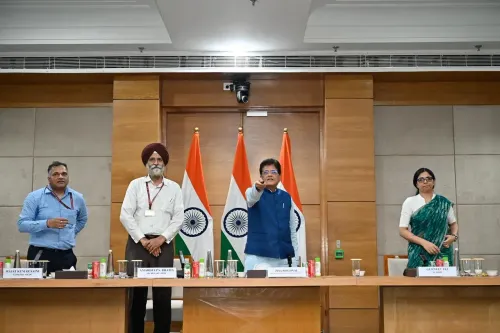
Union Commerce and Industry Minister Piyush Goyal on Friday, 24 July 2026 announced that the government has approved two major decisions: the launch of a dedicated chemical parks scheme called Bharat Audyogik Vikas Yojana Rasayan (BHAVYA Rasayan) to establish three chemical parks across India, and a multitracking railway project spanning three districts across Karnataka and Andhra Pradesh to improve connectivity for nearly 99 villages.
Context
Goyal, posting on X, credited the approvals to Prime Minister Narendra Modi's leadership, stating the decisions would help the Indian chemical industry 'better integrate into global value chains, leading to greater exports' and would 'provide seamless connectivity for the movement of people, goods and services.' The two approvals address distinct but complementary policy goals — industrial export competitiveness and physical infrastructure — announced on the same day.
The BHAVYA Rasayan scheme targets the creation of three dedicated chemical parks in the country. The rail multitracking project is designed to enhance connectivity to approximately 99 villages across districts in Karnataka and Andhra Pradesh, with the stated aim of boosting ease of living for residents in those regions.
Policy Backdrop
India's chemical sector cluster policy has roots stretching back to the 2007 Petroleum, Chemicals and Petrochemicals Investment Regions (PCPIR) framework, which sought to develop integrated chemical clusters to attract investment and raise export capacity. The BHAVYA Rasayan scheme represents an evolution of that approach, now framed explicitly around global value chain integration under the Make in India campaign launched in 2014.
On the railway side, the approval fits within the National Infrastructure Pipeline unveiled in 2019, which prioritised track doubling, tripling, and multitracking projects to expand freight and passenger capacity across India. Southern states including Karnataka and Andhra Pradesh have been recurring beneficiaries of such rail capacity augmentation programmes over the past decade.
Stakeholders and Impact
Chemical exporters stand to benefit most directly from the BHAVYA Rasayan scheme, which aims to reduce India's import dependence in the sector while creating dedicated infrastructure for production and logistics. Dedicated chemical parks are expected to attract both domestic and foreign investment by offering plug-and-play industrial infrastructure with shared utilities and regulatory facilitation.
For the rail project, rural communities across the three districts in Karnataka and Andhra Pradesh are the primary beneficiaries. Connectivity to approximately 99 villages is projected to improve access to markets, healthcare, and employment, while also easing freight movement for agricultural and industrial produce from the region.
What's Next
Detailed implementation guidelines, site selection, and tendering timelines for the three chemical parks under BHAVYA Rasayan are awaited. For the railway project, formal sanction orders, land acquisition processes, and construction schedules across the three Karnataka-Andhra Pradesh districts will be closely tracked by stakeholders and state governments.
Both approvals signal the Centre's intent to simultaneously advance manufacturing competitiveness and physical connectivity — a dual-track approach that has defined infrastructure and industrial policy under the current administration. How quickly the chemical parks move from approval to ground-breaking, and whether the rail project avoids the land acquisition delays that have slowed similar projects in southern India, will determine the real-world impact of Friday's announcements.
Point of View
Now rebranded with a sharper export-integration mandate at a time when India is competing aggressively to capture chemical supply chains shifting out of China. The southern rail project, meanwhile, signals continued federal attention to Karnataka and Andhra Pradesh ahead of a politically sensitive period in both states. The real test will be execution speed: chemical park schemes in India have historically faced long gaps between approval and operational readiness.
NationPress
24 Jul 2026
Frequently Asked Questions
What is the BHAVYA Rasayan scheme?
BHAVYA Rasayan, short for Bharat Audyogik Vikas Yojana Rasayan, is a government scheme approved in July 2026 to establish three dedicated chemical parks in India, aimed at helping the chemical industry integrate into global value chains and boost exports.
Which districts in Karnataka and Andhra Pradesh are covered by the new rail project?
The government announcement covers three districts spanning Karnataka and Andhra Pradesh, but the specific district names have not been officially confirmed in public disclosures available at the time of this report.
How many villages will benefit from the Karnataka-Andhra Pradesh multitracking project?
Approximately 99 villages across the three districts in Karnataka and Andhra Pradesh are expected to receive improved connectivity through the newly approved multitracking railway project.
What is the policy background of India's chemical parks initiative?
India's chemical cluster policy dates to the 2007 Petroleum, Chemicals and Petrochemicals Investment Regions (PCPIR) framework. The BHAVYA Rasayan scheme is the latest iteration, aligned with the Make in India campaign's goal of boosting domestic manufacturing and export competitiveness.
Who announced the BHAVYA Rasayan scheme and the rail project?
Union Commerce and Industry Minister Piyush Goyal announced both approvals on 24 July 2026 via a post on X, attributing the decisions to Prime Minister Narendra Modi's leadership.