2 lakh Anganwadi Centres to be upgraded under Mission Poshan 2.0
Synopsis
India is upgrading 2 lakh Anganwadi Centres into full-service Saksham Anganwadis — with LED screens, water filters, and nutrition gardens — under Mission Poshan 2.0. The government says child anaemia has already dropped 8.5 percentage points, but the real test is whether grassroots delivery matches the infrastructure push.
Key Takeaways
2 lakh Anganwadi Centres have been approved for upgradation as Saksham Anganwadis under Mission Poshan 2.0 .
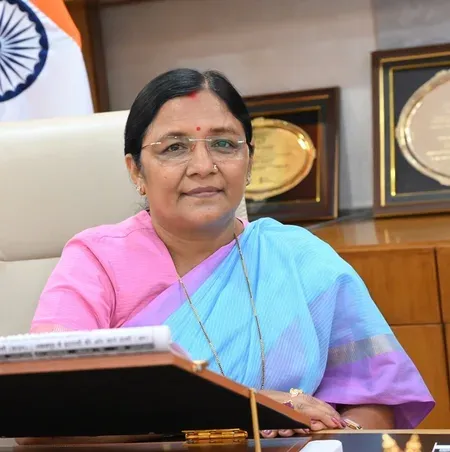
MoS Savitri Thakur made the announcement in the Lok Sabha on 24 July .
Upgraded centres will have LED screens , water filtration systems, Poshan Vatikas, and ECCE materials.
Nutrition norms were revised in January 2023 to emphasise diet diversity over calorie-only benchmarks.
Anaemia prevalence among children aged 6–59 months declined by 8.5 percentage points under the Mission.
The scheme is digitally tracked via the Poshan Tracker app with near real-time data entry.
The Centre has approved the upgradation of 2 lakh Anganwadi Centres (AWCs) as Saksham Anganwadis to strengthen nutrition delivery and Early Childhood Care and Education (ECCE) services across India, Minister of State for Women and Child Development Savitri Thakur informed the Lok Sabha on Friday, 24 July. The announcement was made in response to a parliamentary question, underscoring the government's continued focus on combating child malnutrition.
What Mission Poshan 2.0 Covers
To consolidate the fight against malnutrition, the government has subsumed Anganwadi Services, Poshan Abhiyaan, and the Scheme for Adolescent Girls under the umbrella Mission Saksham Anganwadi and Poshan 2.0, commonly referred to as Mission Poshan 2.0. The Mission is being implemented across all states and Union Territories, with a specific focus on high-burden districts.
Beneficiaries covered under the Mission include children under 6 years of age, pregnant women, lactating mothers, and adolescent girls aged 14–18 years in Aspirational Districts and the North-Eastern region.
Infrastructure Upgrades at Saksham Anganwadis
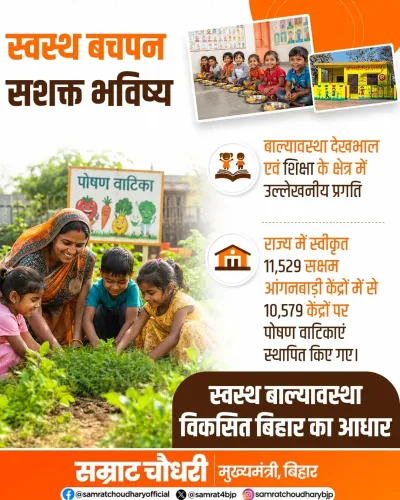
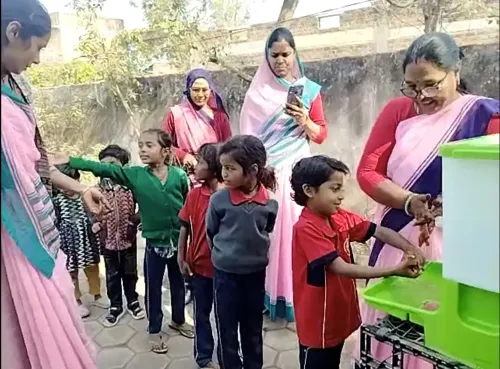
The upgraded AWCs are being equipped with improved infrastructure, including LED screens, water filtration systems, Poshan Vatikas (nutrition gardens), ECCE learning materials, and Building as Learning Aid (BaLA) wall paintings. These enhancements aim to transform Anganwadi Centres from basic nutrition posts into holistic early childhood development hubs.
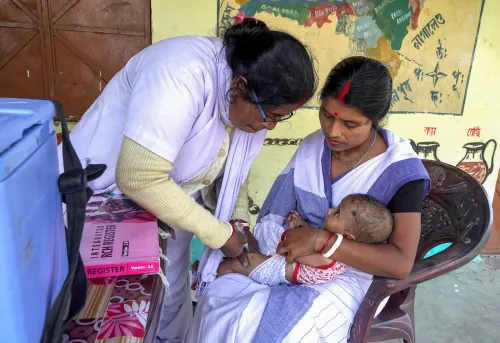
Supplementary Nutrition is provided to children aged 6 months to 6 years, pregnant women, lactating mothers, and adolescent girls in line with norms under Schedule-II of the National Food Security Act, 2013. Crucially, these norms were revised in January 2023 — shifting from largely calorie-specific benchmarks to a more comprehensive framework based on diet diversity, covering both quantity and quality of nutrition. Additionally, Extra Supplementary Nutrition (Take Home Ration) is provided to Severely Acute Malnourished (SAM) children.
Digital Monitoring Through Poshan Tracker
The scheme is monitored digitally through the Poshan Tracker application, an ICT-based governance tool that enables near real-time data entry and tracking of all AWC activities, Anganwadi Workers (AWWs), and beneficiaries across defined indicators. The Ministry regularly reviews progress using this platform, with state-wise beneficiary data publicly accessible on the Poshan Tracker portal.
Progress on Malnutrition Indicators
Evidence from institutional assessments and household surveys suggests the Mission is beginning to show results. According to Thakur, the prevalence of anaemia among children aged 6–59 months has declined by 8.5 percentage points, a trend attributed to iron-folic acid supplementation, fortified foods, and improved outreach under the Supplementary Nutrition Programme (SNP) and related interventions.
This comes amid longstanding concerns over India's child nutrition indicators, where progress has historically been uneven across states. The convergence of multiple schemes under a single mission framework represents the government's attempt to address fragmentation that has hampered past efforts.
With guidelines now in place and digital monitoring operational, the pace of physical upgradation of the 2 lakh AWCs and the consistency of nutrition delivery at the grassroots level will be the key metrics to watch in the months ahead.
Point of View
Poshan Abhiyaan, and the Adolescent Girls scheme under one umbrella is a structurally sound move — fragmentation has long been cited as a reason past nutrition programmes underdelivered. The 8.5 percentage-point decline in child anaemia is a meaningful signal, but a single indicator cannot capture the full picture of malnutrition, which in India has multiple overlapping drivers including sanitation, maternal health, and food access. The real accountability question is whether the 2 lakh physical upgrades are proceeding on schedule and whether Anganwadi Workers — chronically underpaid and overstretched — have the capacity to deliver the expanded ECCE mandate alongside nutrition duties. Poshan Tracker data is only as reliable as the workers entering it.
NationPress
22 Oct 2026
Frequently Asked Questions
What is Mission Poshan 2.0 and what does it cover?
Mission Poshan 2.0, formally known as Mission Saksham Anganwadi and Poshan 2.0, is an umbrella programme that consolidates Anganwadi Services, Poshan Abhiyaan, and the Scheme for Adolescent Girls. It targets children under 6, pregnant women, lactating mothers, and adolescent girls aged 14–18 in Aspirational Districts and the North-Eastern region, and is implemented across all states and Union Territories including high-burden districts.
What is a Saksham Anganwadi?
A Saksham Anganwadi is an upgraded Anganwadi Centre equipped with improved infrastructure such as LED screens, water filtration systems, Poshan Vatikas, Early Childhood Care and Education (ECCE) materials, and BaLA wall paintings. The government has approved 2 lakh centres to be upgraded to this standard to deliver better nutrition and early childhood development services.
How have nutrition norms changed under the Mission?
Supplementary nutrition norms under Schedule-II of the National Food Security Act, 2013 were revised in January 2023. The older norms focused primarily on calorie targets, while the revised norms adopt a diet diversity approach, addressing both the quantity and quality of nutrition provided to beneficiaries.
What progress has been made on child malnutrition under Mission Poshan 2.0?
According to MoS Savitri Thakur, anaemia prevalence among children aged 6–59 months has declined by 8.5 percentage points, attributed to iron-folic acid supplementation, fortified foods, and improved outreach under the Supplementary Nutrition Programme. Evidence from institutional assessments and household surveys also indicates positive trends.
How is Mission Poshan 2.0 monitored?
The Mission is digitally monitored through the Poshan Tracker application, an ICT-based governance tool that allows near real-time data entry and tracking of Anganwadi Centre activities, workers, and beneficiaries. The Ministry of Women and Child Development regularly reviews progress using this platform, and state-wise data is publicly accessible on the Poshan Tracker portal.